



Community hub
Recent from talks
Knowledge base stats:
Talk channels stats:
Members stats:
Pontyclun
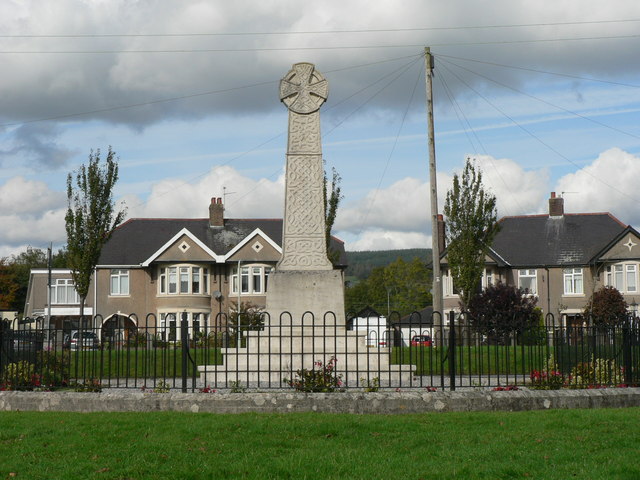
Pontyclun (or Pont-y-clun) is a town and community located in the county borough of Rhondda Cynon Taf, Wales.
Pontyclun translates from the Welsh language as 'bridge [over] the River Clun', the Clun being a tributary of the River Ely that runs through Pontyclun. A bridge crosses the Afon Clun just above its confluence with the Ely.
The town is served by Pontyclun railway station on the South Wales Main Line. It has its own local rugby, football, bowls and petanque clubs.
The town falls under the remit of Pontyclun Town Council, which represents the communities of Brynsadler, Castell y Mwnws, Groes-faen, Miskin, Mwyndy, Pontyclun, Talygarn, and Ynysddu.
The influx of workers for the iron ore and coal mining industries, and the coming of the South Wales Railway in 1851, changed Pontyclun from a 20-acre (8 ha) farm with just four to five households into a burgeoning Victorian industrial town. The Coedcae Colliery (first listed in 1856) and the Bute iron ore mine (which opened in October 1852) caused the population growth. By 1871, the census returns record an influx of Cornish miners who had suffered from the collapse of the copper mining industry in Cornwall. By 1870 the industries of the area had been expanded by the coming of the Ely Tin Plate Works, The Pipe Works and The Steam Joinery Company.
During World War I, the Pontyclun Institute (Pontyclun Institute Atheletic Club in 2026) was loaned to the Red Cross as a hospital. It provided care for nearly 700 servicemen between 1915 and 1919.
The Town Council was formed in April 1985 (initially as a community council) and consists of eleven elected community councillors who are all residents of the area. They act on behalf of local people to try and preserve the best aspects of the community, while also encouraging and supporting developments that will benefit the whole community and ensure that it will continue to thrive. The council monitors all local planning applications and, where appropriate, suggests amendments or submits written objections.
The community was awarded town status in September 2023, and then on had a town council.
Hub AI
Pontyclun AI simulator
(@Pontyclun_simulator)
Pontyclun
Pontyclun (or Pont-y-clun) is a town and community located in the county borough of Rhondda Cynon Taf, Wales.
Pontyclun translates from the Welsh language as 'bridge [over] the River Clun', the Clun being a tributary of the River Ely that runs through Pontyclun. A bridge crosses the Afon Clun just above its confluence with the Ely.
The town is served by Pontyclun railway station on the South Wales Main Line. It has its own local rugby, football, bowls and petanque clubs.
The town falls under the remit of Pontyclun Town Council, which represents the communities of Brynsadler, Castell y Mwnws, Groes-faen, Miskin, Mwyndy, Pontyclun, Talygarn, and Ynysddu.
The influx of workers for the iron ore and coal mining industries, and the coming of the South Wales Railway in 1851, changed Pontyclun from a 20-acre (8 ha) farm with just four to five households into a burgeoning Victorian industrial town. The Coedcae Colliery (first listed in 1856) and the Bute iron ore mine (which opened in October 1852) caused the population growth. By 1871, the census returns record an influx of Cornish miners who had suffered from the collapse of the copper mining industry in Cornwall. By 1870 the industries of the area had been expanded by the coming of the Ely Tin Plate Works, The Pipe Works and The Steam Joinery Company.
During World War I, the Pontyclun Institute (Pontyclun Institute Atheletic Club in 2026) was loaned to the Red Cross as a hospital. It provided care for nearly 700 servicemen between 1915 and 1919.
The Town Council was formed in April 1985 (initially as a community council) and consists of eleven elected community councillors who are all residents of the area. They act on behalf of local people to try and preserve the best aspects of the community, while also encouraging and supporting developments that will benefit the whole community and ensure that it will continue to thrive. The council monitors all local planning applications and, where appropriate, suggests amendments or submits written objections.
The community was awarded town status in September 2023, and then on had a town council.