Hubbry Logo
Pop IvyPop IvyMain
Open search
Pop Ivy
Community hub
Pop Ivy
logo
8 pages, 0 posts
0 subscribers
Be the first to start a discussion here.
Pop Ivy
Pop Ivy
from Wikipedia

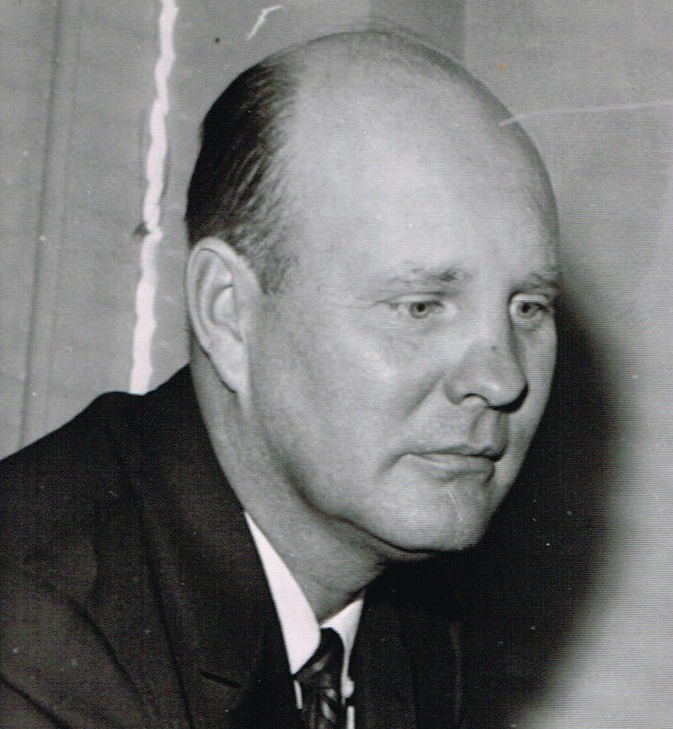
Lee Frank "Pop" Ivy (January 25, 1916 – May 17, 2003) was an American football player and coach who was the only person to serve as a head coach in the National Football League (NFL), the American Football League (AFL) and the Western Interprovincial Football Union. He led the Edmonton Eskimos to three consecutive Grey Cup championships in the 1950s.[1]

Key Information

College

[edit]

A native of Skiatook, Oklahoma, Ivy was part Native American and earned his nickname because of premature baldness during his playing days. In three years of college football at the University of Oklahoma beginning in 1937, Ivy played both offense and defense for the Sooners, earning All-American honors in 1939 as an end. Ivy never missed a game with the Sooners because of injury, and showed his clutch ability in a 1939 game against the arch-rival Texas Longhorns. Catching a deflected pass late in the contest, Ivy scored the go-ahead touchdown.

NFL

[edit]

Ivy was drafted by the Pittsburgh Steelers in the 1940 NFL draft, but was traded to the Chicago Cardinals on October 17.[2] He would continue to see action on both sides of the ball throughout the rest of his NFL career, and in 1942, he had his best season with 27 receptions, second behind the legendary Don Hutson. His time on the gridiron was interrupted for more than two years by his service in World War II, but he closed out his career in 1947 by helping the franchise to its only NFL title. Ivy was on the sidelines for the NFL Championship, having separated his shoulder just weeks earlier.

Coaching

[edit]

College

[edit]

In 1948, Ivy entered the coaching ranks when he was hired as an assistant to Bud Wilkinson at his alma mater, spending six seasons with the Sooners. During this time, the team popularized the Split-T formation, helping the 1950 squad capture the national championship.

Canadian football

[edit]

Ivy headed north on March 10, 1954, to become head coach of the Edmonton Eskimos of the WIFU. Over the next four years, Ivy compiled a record of 50–14, starting off his tenure with three consecutive Grey Cup championships. His most daring move came prior to the 1956 title game, when he moved quarterback Jackie Parker to running back and inserted Canadian Don Getty. The result was a 50–27 victory over the Montreal Alouettes.

He also became known as an innovator in Canadian football, taking advantage of the more wide-open game by using strategies such as the twin fullback system, the quick snap and the short kickoff. In addition, he came up with the formation known as the "lonesome quarterback", later to be renamed the "shotgun".

NFL

[edit]

Following a 14–2 season with the Eskimos in 1957, Ivy's old team, the Cardinals, induced him to accept the head coaching position on January 9, 1958.[3] During his first two seasons in Chicago, Ivy struggled with a 4–19–1 mark, with one rumor in December 1958 having Ivy ready to return to Canada to coach the BC Lions. Following the Cardinals' relocation to St. Louis after the 1959 NFL season, the team improved to 6–5–1 in 1960, but then fell to 5–7 before Ivy resigned on December 6, 1961. While he publicly stated that he had "not accomplished the desired results", Ivy's decision reportedly stemmed from a growing feud with team Director of Operations Walter Wolfner.

Ivy was first sought by the AFL's Denver Broncos, but instead signed with the two-time AFL champion Houston Oilers on March 5, 1962, where he coached the next two seasons. The coaching change completed an odd "trade" of sorts: Oilers coach Wally Lemm resigned to become head coach of the Cardinals.

During Ivy's first year, the team again won the conference title with an 11–3 record, but dropped a classic 20–17 double overtime decision in the 1962 AFL Championship to the Dallas Texans. That success resulted in the CFL Alouettes team seeking his services, but on February 14, 1963, Ivy signed a two-year deal with the Oilers that gave him complete personnel authority.

The team slipped to 6–8 that season, the team's first-ever losing season, but Ivy's job security appeared to be in good shape. He hired Sammy Baugh as an assistant the following May, but was shocked when he was fired on June 1 and replaced by Baugh.

Scouting

[edit]

Ivy soon found work as a scout for the New York Giants, then was hired as an assistant coach with the team on February 3, 1965. After two seasons, the last a disastrous 1–12–1 campaign, Owner Wellington Mara enacted a new Club rule stating that all coaching staff must live in the New York/New Jersey area year round. A lifelong resident of Oklahoma, Ivy and his wife Inez did not want to leave Norman, Oklahoma for good. Mara asked Ivy to stay on as a scout which Ivy agreed to, but then returned to coaching in 1971 for three more seasons. Following the firing of head coach Alex Webster, Ivy again returned to scouting, where he spent the next decade before announcing his retirement in 1984.

References

[edit]
Revisions and contributorsEdit on WikipediaRead on Wikipedia
from Grokipedia
Pop Ivy is an American football player and coach known for being the only individual to serve as a head coach in the Canadian Football League (CFL), American Football League (AFL), and National Football League (NFL). He achieved his greatest success in the CFL, leading the Edmonton Eskimos to three consecutive Grey Cup championships from 1954 to 1956 while compiling a 48–16 regular-season record over four years. He is also credited with introducing the slotback formation to the CFL, a key innovation in Canadian football strategy. His pioneering career bridged multiple professional leagues during a transformative era in North American football. Born Frank Ivy on January 25, 1916, in Skiatook, Oklahoma, Pop Ivy played college football at the University of Oklahoma before being selected by the Pittsburgh Steelers in the fourth round of the 1940 NFL Draft. He played six seasons in the NFL as an end, primarily with the Chicago Cardinals after a brief stint with the Steelers, and earned Pro Bowl honors in 1942. Following his playing days and military service, he transitioned to coaching, beginning with an assistant role at his alma mater before moving north to Canada. Ivy's head coaching tenure began with the Edmonton Eskimos in the CFL from 1954 to 1957, where he established a dominant run that included Grey Cup victories over the Montreal Alouettes each year. He returned to the United States to coach the Chicago Cardinals (later relocated to St. Louis) in the NFL from 1958 until his abrupt resignation late in the 1961 season, amassing a 15–31–2 record amid team challenges and injuries. He then joined the AFL's Houston Oilers from 1962 to 1963, posting a 17–11 mark and leading the team to the 1962 AFL Championship game. In later years, Ivy served as an assistant coach and scout with the New York Giants until his retirement. He died on May 17, 2003, in Norman, Oklahoma, at the age of 87, leaving a legacy as a versatile figure whose career spanned playing and coaching across three major professional leagues.

Early life and college playing career

Youth in Oklahoma

Lee Frank Ivy was born on January 25, 1916, in Skiatook, Oklahoma. Ivy attended high school in Skiatook. Due to premature baldness that became evident during his playing days, he acquired the nickname "Pop." He later went on to attend the University of Oklahoma.

Playing for the University of Oklahoma

Ivy played end on both offense and defense for the Oklahoma Sooners from 1937 to 1939. In a crucial 1939 contest against the Texas Longhorns, Ivy caught a deflected pass late in the game to score the go-ahead touchdown, helping secure the victory for Oklahoma. For his outstanding performance in 1939, Ivy was named a first-team All-American as an end and earned first-team All-Big Six Conference honors. Following his senior season, he was selected by the Pittsburgh Steelers in the fourth round (27th overall) of the 1940 NFL Draft.

Professional playing career

NFL tenure with the Chicago Cardinals

Frank "Pop" Ivy was selected by the Pittsburgh Steelers in the fourth round (27th overall) of the 1940 NFL Draft but was assigned to the Chicago Cardinals on waivers in October 1940. He spent the majority of his professional playing career with the Cardinals from 1940 to 1947 as an end, though his tenure was interrupted by military service during World War II. Ivy missed the entire 1943 and 1944 seasons while serving in the United States Army and appeared in only three games in 1945 upon his return. His most productive offensive season came in 1942, when he caught 27 passes for 259 yards. This performance earned Ivy selection to the Pro Bowl that year. Ivy contributed to the Cardinals' success in 1947 as a member of the team that captured the NFL Championship. However, he suffered a shoulder separation during the final regular-season game against the Chicago Bears and missed the championship game itself. His playing career ended after the 1947 season. Following his retirement as a player, Ivy transitioned to coaching at the University of Oklahoma.

Coaching career

Assistant coach at Oklahoma Sooners

Pop Ivy served as an assistant coach for the Oklahoma Sooners from 1948 to 1953 under head coach Bud Wilkinson. He joined the staff following his earlier playing days at the university and contributed during a highly successful period for the program. Ivy was among Wilkinson's key assistants, including Gomer Jones and George Jennings, who became renowned for highly organized practices and the expansion and popularization of the Split-T offense, a scheme originally developed by Don Faurot. This offensive approach helped drive the team's performance, including the Sooners' 1950 national championship season.

Head coach of the Edmonton Eskimos

Frank "Pop" Ivy was hired as head coach of the Edmonton Eskimos in the Western Interprovincial Football Union (WIFU) on March 10, 1954, and he led the team through the 1954–1957 seasons. During his tenure, Ivy compiled a regular-season record of 50–14 for a .781 winning percentage and a postseason record of 11–4 (.733). He guided the Eskimos to three consecutive Grey Cup championships in 1954, 1955, and 1956, all against the Montreal Alouettes. Ivy's time in Edmonton was marked by significant offensive innovations that revolutionized Canadian football. He introduced the twin fullback formation, which allowed stars like Normie Kwong and Johnny Bright to play simultaneously, along with the quick snap, short kickoff, and the "lonesome quarterback" formation—a precursor to the modern shotgun formation. In the 1956 Grey Cup, Ivy made a bold lineup adjustment by shifting star Jackie Parker to running back and inserting Don Getty at quarterback, leading to a decisive 50–27 victory over the Montreal Alouettes. Following a strong 14–2 regular season in 1957, Ivy departed Edmonton to return to the NFL.

Head coach of the Chicago/St. Louis Cardinals

Frank "Pop" Ivy was hired as head coach of the Chicago Cardinals on January 9, 1958, returning to the NFL after his successful stint with the Edmonton Eskimos. He coached the franchise through its relocation to St. Louis, serving from 1958 to 1961 and compiling an overall regular season record of 15–31–2 (.333). His first two seasons in Chicago proved difficult, with the team posting a combined 4–19–1 record in 1958 and 1959. The Cardinals showed improvement after moving to St. Louis, achieving a 6–5–1 mark in 1960. In 1961, Ivy guided the team to a 5–7 record through the first 12 games before stepping down. Ivy resigned on December 6, 1961, stating he believed he had not achieved the desired results with the injury-riddled squad. Reports indicated tensions with Cardinals executive Walter Wolfner contributed to the decision, though management publicly expressed no dissatisfaction with his performance and had planned to discuss a new contract.

Head coach of the Houston Oilers

Frank "Pop" Ivy served as head coach of the Houston Oilers in the American Football League during the 1962 and 1963 seasons after signing with the team shortly following his resignation from the St. Louis Cardinals in December 1961. In his debut season of 1962, Ivy guided the Oilers to an 11–3 regular season record that captured the AFL Eastern Conference title. The team advanced to the AFL Championship Game but lost a grueling contest to the Dallas Texans by a score of 20–17 in double overtime. The 1963 campaign proved more challenging, as the Oilers finished 6–8, marking the first losing season in franchise history. Across his two years with Houston, Ivy compiled a regular season record of 17–11 for a winning percentage of .607. On June 1, 1964, owner K. S. "Bud" Adams Jr. dismissed Ivy as head coach and general manager, stating that fans believed Ivy could not do the job and emphasizing that the city did not support losers following the recent performance. Sammy Baugh, whom Ivy had hired as an assistant coach two weeks earlier, was promptly named as his replacement on a one-year contract.

Assistant coach and scout with the New York Giants

After the conclusion of his head coaching tenure with the Houston Oilers in 1963, Pop Ivy joined the New York Giants organization, initially serving as a scout in 1964. He transitioned to an assistant coach role in 1965, where he functioned as defensive coordinator under head coach Allie Sherman. Ivy continued in that capacity for the 1966 season, again as defensive coordinator. The Giants endured a difficult 1-12-1 campaign in 1966. Following that season, owner Wellington Mara implemented a requirement that all assistant coaches maintain year-round residence in the New York area, leading Ivy to step away from the assistant position because he preferred to remain based in Norman, Oklahoma. Ivy resumed scouting duties for the Giants from 1967 through 1970. He returned to the assistant coaching staff from 1971 to 1973, including a stint coaching the offensive line in 1971. After 1973, he reverted to scouting for the team from 1974 onward. Ivy remained in the scouting role until retiring from the New York Giants organization in 1984.

Personal life

Family and residence

Pop Ivy married Inez Anita Daniel on June 26, 1936, while attending the University of Oklahoma. Inez preceded him in death in 1994. The couple established their home in Norman, Oklahoma, where Ivy remained a longtime resident throughout his life. They had two children: son Lee Ivy of Norman and daughter Sue MacHugh of Oklahoma City. Ivy maintained strong ties to Norman despite his coaching positions requiring extended time away in locations such as Edmonton, Chicago, St. Louis, Houston, and New York. He was born near Skiatook, Oklahoma, and spent his final years in Norman, reinforcing his lifelong connection to the state. After his time with the Houston Oilers, Ivy joined the New York Giants as a scout. He was promoted to assistant coach on February 3, 1965. He and Inez did not want to relocate permanently from Norman after the team implemented a requirement for coaches to live in the New York/New Jersey area year-round in 1966. Giants owner Wellington Mara then offered Ivy a scouting position instead, which allowed him to continue working for the organization while staying based in Norman. Ivy agreed and served as a scout, with a return to assistant coaching from 1971 to 1973, before resuming scouting duties until retiring in 1984.

Death and legacy

Death

Pop Ivy died on May 17, 2003, at the age of 87 in Norman, Oklahoma. A memorial service was held on May 28, 2003, at St. John's Episcopal Church in Norman.

Legacy and innovations

Frank "Pop" Ivy holds a unique place in professional football history as the only head coach to lead teams in the National Football League (NFL), American Football League (AFL), and the Western Interprovincial Football Union/Canadian Football League (WIFU/CFL West). This distinction underscores his adaptability across different leagues and eras of the sport. Ivy achieved his greatest success with the Edmonton Eskimos, guiding them to three consecutive Grey Cup championships in 1954, 1955, and 1956, establishing one of the early dynasties in Canadian professional football. Ivy was celebrated for his innovative offensive strategies, particularly during his Edmonton tenure, where he revolutionized Canadian football through creative plays and formations regarded as among the most inventive in the game's history. He introduced the twin-fullback formation, which allowed fullbacks Normie Kwong and Johnny Bright to play simultaneously on the field, contributing to their dominance in league rushing yards for years afterward. Ivy also developed the "lonesome quarterback" set, a forerunner to the modern shotgun formation that influenced offensive alignments in subsequent decades. These innovations produced a powerful, unstoppable attack that, according to former Eskimo Bob Dean, "set the league on fire" and could not be contained by opponents. Across his career, Ivy compiled a successful coaching record of 93–61–2 (.603) across multiple leagues, reflecting his overall effectiveness as a head coach.

References

Add your contribution
Related Hubs
User Avatar
No comments yet.