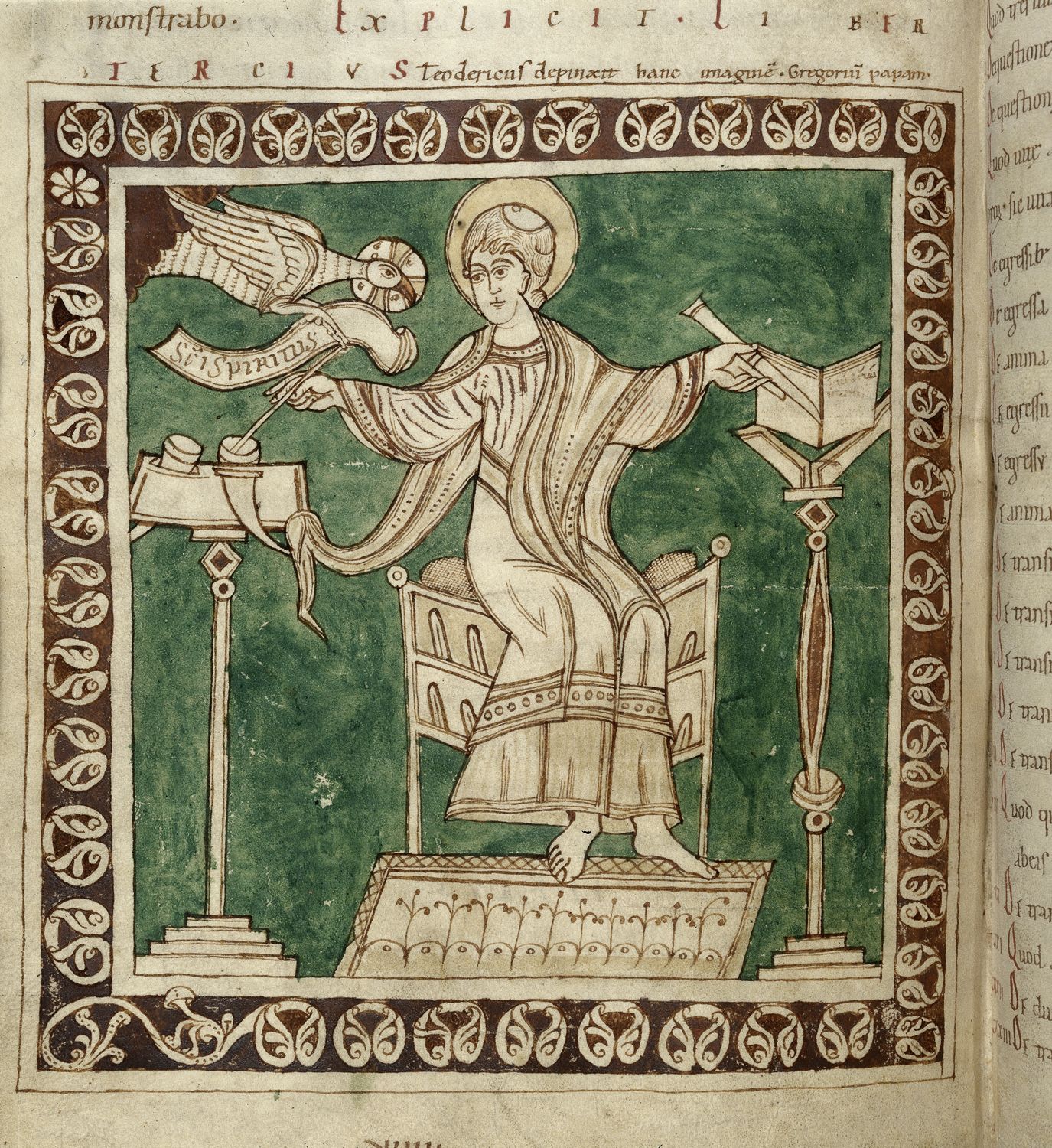

Recent from talks
Pope Gregory I
Knowledge base stats:
Talk channels stats:
Members stats:
Pope Gregory I
Pope Gregory I (Latin: Gregorius I; Gregorio I; c. 540 – 12 March 604), commonly known as Saint Gregory the Great (Latin: Sanctus Gregorius Magnus; Italian: San Gregorio Magno), was the 64th Bishop of Rome from 3 September 590 until his death on 12 March 604. He is known for instituting the first recorded large-scale mission from Rome, the Gregorian mission, to convert the then largely pagan Anglo-Saxons to Christianity. Gregory is also well known for his writings, which were more prolific than those of any of his predecessors as pope. The epithet Saint Gregory the Dialogist has been attached to him in Eastern Christianity because of his Dialogues. English translations of Eastern texts sometimes list him as Gregory "Dialogos" from the Greek διάλογος (dialogos, conversation), or the Anglo-Latinate equivalent "Dialogus". He is the second of the three Popes listed in the Annuario Pontificio with the title "the Great", alongside Popes Leo I and Nicholas I.
A Roman senator's son and himself the prefect of Rome at 30, Gregory lived in a monastery that he established on his family estate before becoming a papal ambassador and then pope. Before becoming Pope, he challenged the theological views of Patriarch Eutychius of Constantinople before the emperor Tiberius II. Although he was the first pope from a monastic background, his prior political experiences may have helped him to be a talented administrator. During his papacy, his administration greatly surpassed that of the emperors Maurice and Theodosius in improving the welfare of the people of Rome. Gregory regained papal authority in Spain and France and sent missionaries to England, including Augustine of Canterbury and Paulinus of York. The realignment of barbarian allegiance to Rome from their Arian Christian alliances shaped medieval Europe. Gregory saw Franks, Lombards, and Visigoths align with Rome in religion. He also combated the Donatist heresy, popular particularly in North Africa at the time.
Throughout the Middle Ages, he was known as "the Father of Christian Worship" because of his exceptional efforts in revising the Roman worship of his day. His contributions to the development of the Divine Liturgy of the Presanctified Gifts, still in use in the Byzantine Rite, were so significant that he is generally recognized as its de facto author.
Gregory is honored, along with Augustine, Jerome and Ambrose, as one of the four Great Latin Church Fathers, and is a Doctor of the Church. He is considered a saint in the Catholic Church, Eastern Orthodox Church, Anglican Communion, various Lutheran denominations, and other Protestant denominations. Immediately after his death, Gregory was canonized by popular acclaim. The Protestant reformer John Calvin admired Gregory greatly and declared in his Institutes that Gregory was the last good pope. He is the patron saint of musicians and teachers.
Gregory was born c. 540 in Rome, at that time recently reconquered by the Eastern Roman Empire from the Ostrogoths. His parents named him Gregorius, which according to Ælfric of Eynsham in An Homily on the Birth-Day of S. Gregory, "is a Greek Name, which signifies in the Latin Tongue, Vigilantius, that is in English, Watchful". The medieval writer who provided this etymology did not hesitate to apply it to the life of Gregory. Ælfric states, "He was very diligent in God's Commandments."
Gregory was born into a wealthy noble Roman family with close connections to the church. His father, Gordianus, a patrician who served as a senator and for a time was the Prefect of the City of Rome, also held the position of Regionarius in the church, though nothing further is known about that position. Gregory's mother, Silvia, was well-born, and had a married sister, Pateria, in Sicily. His mother and two paternal aunts, Trasilla and Emiliana, are honored by Catholic and Orthodox churches as saints. Gregory's great-great-grandfather had been Pope Felix III. Gregory's election to the throne of St. Peter made his family the most distinguished clerical dynasty of the period.
The family owned and resided in a villa suburbana on the Clivus Scauri on the Caelian Hill, (now the Via di San Gregorio). It branched from the road having the former palaces of the Roman emperors on the Palatine Hill opposite. The north of the street runs into the Colosseum; the south, the Circus Maximus. In Gregory's day the ancient buildings were in ruins and were privately owned. Villas covered the area. Gregory's family also owned working estates in Sicily and around Rome. Gregory later had portraits of his parents frescoed in their former home on the Caelian and these were described 300 years later by John the Deacon. Gordianus was tall with a long face and light eyes. He wore a beard. Silvia was tall, had a round face, blue eyes and a cheerful look. They had another son whose name and fate are unknown.
Gregory was born into a period of upheaval in Italy. From 542 the Plague of Justinian swept through the provinces of the empire, including Italy. The plague caused famine, panic, and sometimes rioting. In some parts of the country, over a third of the population was wiped out or destroyed, with heavy spiritual and emotional effects on the people of the empire. Politically, although the Western Roman Empire had long since vanished in favor of the Gothic kings of Italy, during the 540s Italy was gradually retaken from the Goths by Justinian I, emperor of the Eastern Roman Empire ruling from Constantinople. As the fighting was mainly in the north, the young Gregory probably saw little of it. Totila sacked and vacated Rome in 546, destroying most of its population, but in 549 he invited those who were still alive to return to the empty and ruined streets. It has been hypothesized that young Gregory and his parents retired during that intermission to their Sicilian estates, to return in 549. The war was over in Rome by 552, and a subsequent invasion of the Franks was defeated in 554.
Hub AI
Pope Gregory I AI simulator
(@Pope Gregory I_simulator)
Pope Gregory I
Pope Gregory I (Latin: Gregorius I; Gregorio I; c. 540 – 12 March 604), commonly known as Saint Gregory the Great (Latin: Sanctus Gregorius Magnus; Italian: San Gregorio Magno), was the 64th Bishop of Rome from 3 September 590 until his death on 12 March 604. He is known for instituting the first recorded large-scale mission from Rome, the Gregorian mission, to convert the then largely pagan Anglo-Saxons to Christianity. Gregory is also well known for his writings, which were more prolific than those of any of his predecessors as pope. The epithet Saint Gregory the Dialogist has been attached to him in Eastern Christianity because of his Dialogues. English translations of Eastern texts sometimes list him as Gregory "Dialogos" from the Greek διάλογος (dialogos, conversation), or the Anglo-Latinate equivalent "Dialogus". He is the second of the three Popes listed in the Annuario Pontificio with the title "the Great", alongside Popes Leo I and Nicholas I.
A Roman senator's son and himself the prefect of Rome at 30, Gregory lived in a monastery that he established on his family estate before becoming a papal ambassador and then pope. Before becoming Pope, he challenged the theological views of Patriarch Eutychius of Constantinople before the emperor Tiberius II. Although he was the first pope from a monastic background, his prior political experiences may have helped him to be a talented administrator. During his papacy, his administration greatly surpassed that of the emperors Maurice and Theodosius in improving the welfare of the people of Rome. Gregory regained papal authority in Spain and France and sent missionaries to England, including Augustine of Canterbury and Paulinus of York. The realignment of barbarian allegiance to Rome from their Arian Christian alliances shaped medieval Europe. Gregory saw Franks, Lombards, and Visigoths align with Rome in religion. He also combated the Donatist heresy, popular particularly in North Africa at the time.
Throughout the Middle Ages, he was known as "the Father of Christian Worship" because of his exceptional efforts in revising the Roman worship of his day. His contributions to the development of the Divine Liturgy of the Presanctified Gifts, still in use in the Byzantine Rite, were so significant that he is generally recognized as its de facto author.
Gregory is honored, along with Augustine, Jerome and Ambrose, as one of the four Great Latin Church Fathers, and is a Doctor of the Church. He is considered a saint in the Catholic Church, Eastern Orthodox Church, Anglican Communion, various Lutheran denominations, and other Protestant denominations. Immediately after his death, Gregory was canonized by popular acclaim. The Protestant reformer John Calvin admired Gregory greatly and declared in his Institutes that Gregory was the last good pope. He is the patron saint of musicians and teachers.
Gregory was born c. 540 in Rome, at that time recently reconquered by the Eastern Roman Empire from the Ostrogoths. His parents named him Gregorius, which according to Ælfric of Eynsham in An Homily on the Birth-Day of S. Gregory, "is a Greek Name, which signifies in the Latin Tongue, Vigilantius, that is in English, Watchful". The medieval writer who provided this etymology did not hesitate to apply it to the life of Gregory. Ælfric states, "He was very diligent in God's Commandments."
Gregory was born into a wealthy noble Roman family with close connections to the church. His father, Gordianus, a patrician who served as a senator and for a time was the Prefect of the City of Rome, also held the position of Regionarius in the church, though nothing further is known about that position. Gregory's mother, Silvia, was well-born, and had a married sister, Pateria, in Sicily. His mother and two paternal aunts, Trasilla and Emiliana, are honored by Catholic and Orthodox churches as saints. Gregory's great-great-grandfather had been Pope Felix III. Gregory's election to the throne of St. Peter made his family the most distinguished clerical dynasty of the period.
The family owned and resided in a villa suburbana on the Clivus Scauri on the Caelian Hill, (now the Via di San Gregorio). It branched from the road having the former palaces of the Roman emperors on the Palatine Hill opposite. The north of the street runs into the Colosseum; the south, the Circus Maximus. In Gregory's day the ancient buildings were in ruins and were privately owned. Villas covered the area. Gregory's family also owned working estates in Sicily and around Rome. Gregory later had portraits of his parents frescoed in their former home on the Caelian and these were described 300 years later by John the Deacon. Gordianus was tall with a long face and light eyes. He wore a beard. Silvia was tall, had a round face, blue eyes and a cheerful look. They had another son whose name and fate are unknown.
Gregory was born into a period of upheaval in Italy. From 542 the Plague of Justinian swept through the provinces of the empire, including Italy. The plague caused famine, panic, and sometimes rioting. In some parts of the country, over a third of the population was wiped out or destroyed, with heavy spiritual and emotional effects on the people of the empire. Politically, although the Western Roman Empire had long since vanished in favor of the Gothic kings of Italy, during the 540s Italy was gradually retaken from the Goths by Justinian I, emperor of the Eastern Roman Empire ruling from Constantinople. As the fighting was mainly in the north, the young Gregory probably saw little of it. Totila sacked and vacated Rome in 546, destroying most of its population, but in 549 he invited those who were still alive to return to the empty and ruined streets. It has been hypothesized that young Gregory and his parents retired during that intermission to their Sicilian estates, to return in 549. The war was over in Rome by 552, and a subsequent invasion of the Franks was defeated in 554.
Recent media