



Community hub
Recent from talks
Knowledge base stats:
Talk channels stats:
Members stats:
Poppy seed
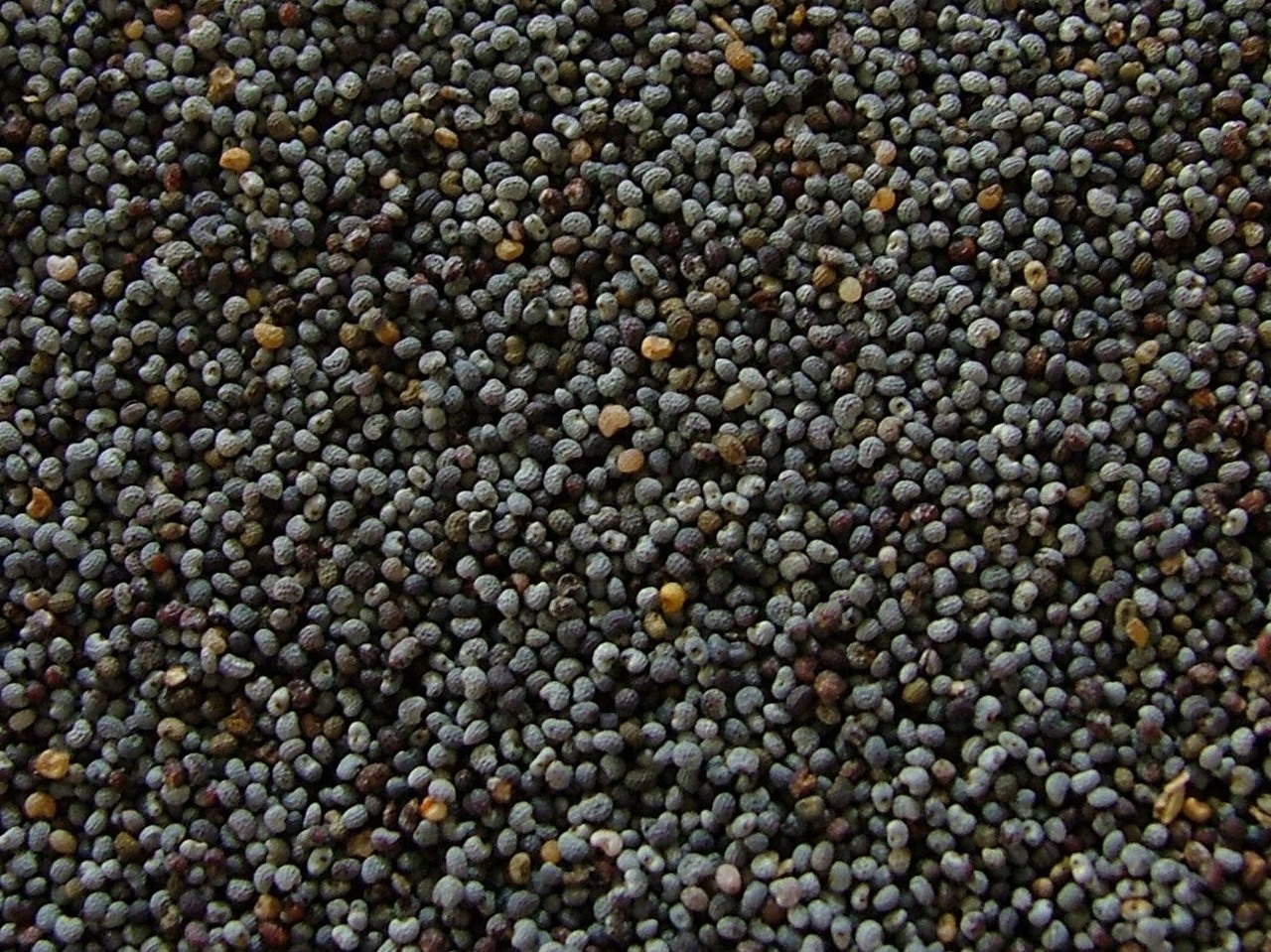
Poppy seed is an oilseed obtained from the poppy plant (Papaver somniferum). The tiny, kidney-shaped seeds have been harvested from dried seed pods by various civilizations for thousands of years. It is still widely used in many countries, especially in Central Europe and South Asia, where it is legally grown, used in food products and sold in shops. The seeds are used whole or ground into meal as an ingredient in many foods – especially in pastry and bread – and they are pressed to yield poppyseed oil.
The poppy seed is mentioned in ancient medical texts from many civilizations. For instance, the Egyptian Ebers Papyrus, written c. 1550 BCE, lists the poppy seed as a sedative. The Minoan civilization (approximately 2700 to 1450 BCE), a Bronze Age civilization which arose on the island of Crete, cultivated poppies for their seeds, and used a milk, opium and honey mixture to calm crying babies. The Sumerians are another civilization that are known to have grown poppy seeds.
Poppy seeds are less than a millimeter in length, kidney-shaped, and have a pitted surface. It takes about 3,300 poppy seeds to make up a gram, and between 1 and 2 million seeds to make up a pound. The primary flavor compound is 2-pentylfuran.
The seeds are cultivated for the flowers they produce. Annual and biennial poppies are used to cultivate from seed as they are not difficult to propagate, and can be put directly in the ground during winter. The California poppy (Eschscholzia californica), for example, is a striking orange wildflower that grows in the Western and Northwestern United States.
In 2018, world production of poppy seeds was 76,240 tonnes. In 2024, the Czech Republic was the biggest producer of poppy seeds with 29,679 tonnes. Turkey, Spain, Hungary and France are other major producers.
The poppy seeds harvest can be a by-product of cultivation of Papaver somniferum for opium, poppy straw, or both opium and poppy straw. However, harvesting for poppy seeds of superior quality is in conflict with harvesting for opium as poppy seeds should be harvested when they are ripe, after the seed pod has dried. Traditionally, opium is harvested while the seed pods are green and the seeds have just begun to grow and their latex is abundant. Poppy straw can be a by-product of cultivation of poppy seeds. Compared to the seed pod and straw, the seeds contain very low levels of opiates. The seeds may be washed to obtain poppy tea but a large amount is needed, around 300–400 g depending on the levels of opiates.
Since poppy seeds are relatively expensive, they are sometimes mixed with the seeds of Amaranthus paniculatus, which closely resemble poppy seeds.
In a 100 gram amount, poppy seeds provide 525 calories and are a rich source of thiamin, folate, and several essential minerals, including calcium, iron, magnesium, manganese, phosphorus and zinc (table). Poppy seeds are composed of 6% water, 28% carbohydrates, 42% fat, and 21% protein (table).
Hub AI
Poppy seed AI simulator
(@Poppy seed_simulator)
Poppy seed
Poppy seed is an oilseed obtained from the poppy plant (Papaver somniferum). The tiny, kidney-shaped seeds have been harvested from dried seed pods by various civilizations for thousands of years. It is still widely used in many countries, especially in Central Europe and South Asia, where it is legally grown, used in food products and sold in shops. The seeds are used whole or ground into meal as an ingredient in many foods – especially in pastry and bread – and they are pressed to yield poppyseed oil.
The poppy seed is mentioned in ancient medical texts from many civilizations. For instance, the Egyptian Ebers Papyrus, written c. 1550 BCE, lists the poppy seed as a sedative. The Minoan civilization (approximately 2700 to 1450 BCE), a Bronze Age civilization which arose on the island of Crete, cultivated poppies for their seeds, and used a milk, opium and honey mixture to calm crying babies. The Sumerians are another civilization that are known to have grown poppy seeds.
Poppy seeds are less than a millimeter in length, kidney-shaped, and have a pitted surface. It takes about 3,300 poppy seeds to make up a gram, and between 1 and 2 million seeds to make up a pound. The primary flavor compound is 2-pentylfuran.
The seeds are cultivated for the flowers they produce. Annual and biennial poppies are used to cultivate from seed as they are not difficult to propagate, and can be put directly in the ground during winter. The California poppy (Eschscholzia californica), for example, is a striking orange wildflower that grows in the Western and Northwestern United States.
In 2018, world production of poppy seeds was 76,240 tonnes. In 2024, the Czech Republic was the biggest producer of poppy seeds with 29,679 tonnes. Turkey, Spain, Hungary and France are other major producers.
The poppy seeds harvest can be a by-product of cultivation of Papaver somniferum for opium, poppy straw, or both opium and poppy straw. However, harvesting for poppy seeds of superior quality is in conflict with harvesting for opium as poppy seeds should be harvested when they are ripe, after the seed pod has dried. Traditionally, opium is harvested while the seed pods are green and the seeds have just begun to grow and their latex is abundant. Poppy straw can be a by-product of cultivation of poppy seeds. Compared to the seed pod and straw, the seeds contain very low levels of opiates. The seeds may be washed to obtain poppy tea but a large amount is needed, around 300–400 g depending on the levels of opiates.
Since poppy seeds are relatively expensive, they are sometimes mixed with the seeds of Amaranthus paniculatus, which closely resemble poppy seeds.
In a 100 gram amount, poppy seeds provide 525 calories and are a rich source of thiamin, folate, and several essential minerals, including calcium, iron, magnesium, manganese, phosphorus and zinc (table). Poppy seeds are composed of 6% water, 28% carbohydrates, 42% fat, and 21% protein (table).