



Community hub
Recent from talks
Knowledge base stats:
Talk channels stats:
Members stats:
Prajadhipok
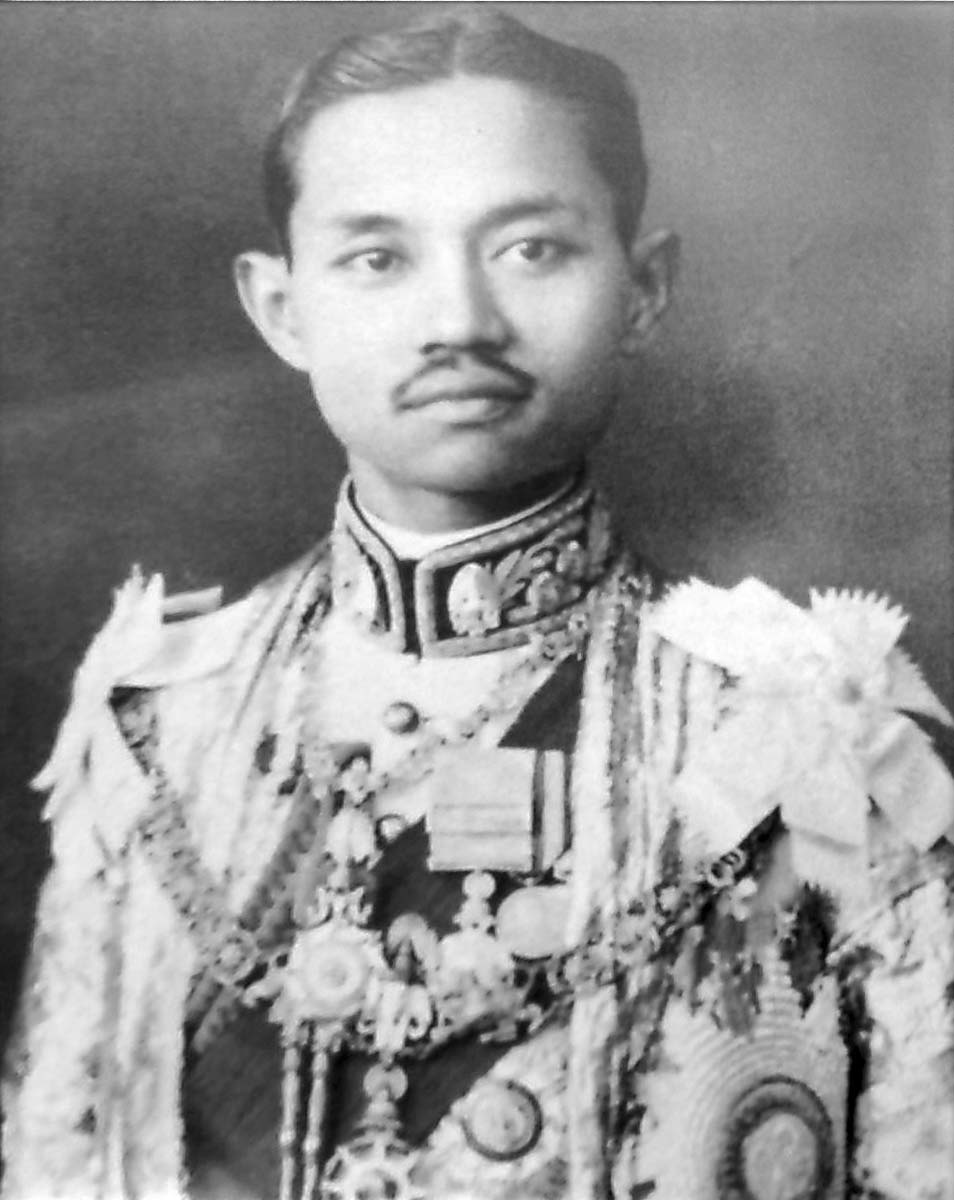
Prajadhipok (8 November 1893 – 30 May 1941) was the seventh king of Siam from the Chakri dynasty, titled Rama VII. His reign was a turbulent time for Siam due to political and social changes during the 1932 Siamese revolution. He is to date the only Siamese monarch of the Chakri dynasty to abdicate.
Somdet Chaofa Prajadhipok Sakdidej (Thai: สมเด็จเจ้าฟ้าประชาธิปกศักดิเดชน์) was born on 8 November 1893 in Bangkok, Siam (now Thailand) to King Chulalongkorn and Queen Saovabha Phongsri. Prince Prajadhipok was the youngest of nine children born to the couple. Overall he was the king's second-youngest child (of a total of 77), and the 33rd and youngest of Chulalongkorn's sons.
Unlikely to succeed to the throne, Prince Prajadhipok chose to pursue a military career. Like many of the king's children, he was sent abroad to study, going to Eton College in 1906, then to the Woolwich Military Academy from which he graduated in 1913. He received a commission in the Royal Horse Artillery in the British Army based in Aldershot. In 1910 Chulalongkorn died and was succeeded by Prajadhipok's older brother (also a son of Queen Saovabha), Crown Prince Vajiravudh, who became King Rama VI. Prince Prajadhipok was by then commissioned in both the British Army and the Royal Siamese Army. With the outbreak of the First World War and the declaration of Siamese neutrality, King Vajiravudh ordered his younger brother to resign his British commission and return to Siam immediately, a great embarrassment to the prince, who wanted to serve with his men on the Western front. Once home, Prajadhipok became a high-ranking military official in Siam. In 1917 he was ordained temporarily as a monk, as was customary for most Buddhist Siamese men.
In 26 August 1918 Prince Prajadhipok married his childhood friend and cousin Rambai Barni, a descendant of King Mongkut (Prajadhipok's grandfather) and his Royal Consort Piam. They were married at Sukhothai Palace which was a wedding gift to the couple from Queen Saovabha.
After the war in Europe ended, he attended the École Superieure de Guerre in France, returning to Siam to the Siamese military. During this time, he was granted the additional title Krom Luang Sukhothai (Prince of Sukhothai). Prajadhipok lived a generally quiet life with his wife at their residence, Sukhothai Palace, next to the Chao Phraya River. The couple had no children. Prajadhipok soon found himself rising rapidly in succession to the throne, as his brothers all died within a relatively short period. In 1925, King Vajiravudh himself died at the age of 44. Prajadhipok became absolute monarch at only thirty-two. He was crowned King of Siam on 25 February 1926.
Relatively unprepared for his new responsibilities, Prajadhipok was nevertheless intelligent, diplomatic in his dealings with others, modest, and eager to learn. However, he had inherited serious political and economic problems from his predecessor. The budget was heavily in deficit, and the royal financial accounts were in serious disorder. The entire world was in the throes of the Great Depression.
In an institutional innovation intended to restore confidence in the monarchy and government, Prajadhipok, in what was virtually his first act as king, announced the creation of the Supreme Council of the State of Siam. This council was made up of five experienced members of the royal family, although to emphasise the break with the previous reign the selected five had all fallen out of favour with the previous monarch. The council thus comprised three of the king's uncles, Prince Bhanurangsi, Prince Naris and Prince Damrong Rajanubhab and two of his half-brothers, Prince Kitiyakon (Prince Chantaburi) and Prince Boriphat.
Many of the Princes of the Supreme Council felt that it was their duty to make amends for the mistakes of the previous reign, but their acts were not generally appreciated, for the government failed to communicate to the public the purpose of the policies they pursued to rectify Vajiravudh's extreme financial extravagances. Gradually these princes arrogated power to themselves, monopolising all the main ministerial positions and appointing their sons and brothers to both administrative and military posts. By April 1926 almost the entire cabinet of ministry heads had been replaced with newly appointed Princes or nobles, with only three former members being re-appointed. While the family appointments brought back men of talent and experience, they also signalled a return to royal oligarchy.
Hub AI
Prajadhipok AI simulator
(@Prajadhipok_simulator)
Prajadhipok
Prajadhipok (8 November 1893 – 30 May 1941) was the seventh king of Siam from the Chakri dynasty, titled Rama VII. His reign was a turbulent time for Siam due to political and social changes during the 1932 Siamese revolution. He is to date the only Siamese monarch of the Chakri dynasty to abdicate.
Somdet Chaofa Prajadhipok Sakdidej (Thai: สมเด็จเจ้าฟ้าประชาธิปกศักดิเดชน์) was born on 8 November 1893 in Bangkok, Siam (now Thailand) to King Chulalongkorn and Queen Saovabha Phongsri. Prince Prajadhipok was the youngest of nine children born to the couple. Overall he was the king's second-youngest child (of a total of 77), and the 33rd and youngest of Chulalongkorn's sons.
Unlikely to succeed to the throne, Prince Prajadhipok chose to pursue a military career. Like many of the king's children, he was sent abroad to study, going to Eton College in 1906, then to the Woolwich Military Academy from which he graduated in 1913. He received a commission in the Royal Horse Artillery in the British Army based in Aldershot. In 1910 Chulalongkorn died and was succeeded by Prajadhipok's older brother (also a son of Queen Saovabha), Crown Prince Vajiravudh, who became King Rama VI. Prince Prajadhipok was by then commissioned in both the British Army and the Royal Siamese Army. With the outbreak of the First World War and the declaration of Siamese neutrality, King Vajiravudh ordered his younger brother to resign his British commission and return to Siam immediately, a great embarrassment to the prince, who wanted to serve with his men on the Western front. Once home, Prajadhipok became a high-ranking military official in Siam. In 1917 he was ordained temporarily as a monk, as was customary for most Buddhist Siamese men.
In 26 August 1918 Prince Prajadhipok married his childhood friend and cousin Rambai Barni, a descendant of King Mongkut (Prajadhipok's grandfather) and his Royal Consort Piam. They were married at Sukhothai Palace which was a wedding gift to the couple from Queen Saovabha.
After the war in Europe ended, he attended the École Superieure de Guerre in France, returning to Siam to the Siamese military. During this time, he was granted the additional title Krom Luang Sukhothai (Prince of Sukhothai). Prajadhipok lived a generally quiet life with his wife at their residence, Sukhothai Palace, next to the Chao Phraya River. The couple had no children. Prajadhipok soon found himself rising rapidly in succession to the throne, as his brothers all died within a relatively short period. In 1925, King Vajiravudh himself died at the age of 44. Prajadhipok became absolute monarch at only thirty-two. He was crowned King of Siam on 25 February 1926.
Relatively unprepared for his new responsibilities, Prajadhipok was nevertheless intelligent, diplomatic in his dealings with others, modest, and eager to learn. However, he had inherited serious political and economic problems from his predecessor. The budget was heavily in deficit, and the royal financial accounts were in serious disorder. The entire world was in the throes of the Great Depression.
In an institutional innovation intended to restore confidence in the monarchy and government, Prajadhipok, in what was virtually his first act as king, announced the creation of the Supreme Council of the State of Siam. This council was made up of five experienced members of the royal family, although to emphasise the break with the previous reign the selected five had all fallen out of favour with the previous monarch. The council thus comprised three of the king's uncles, Prince Bhanurangsi, Prince Naris and Prince Damrong Rajanubhab and two of his half-brothers, Prince Kitiyakon (Prince Chantaburi) and Prince Boriphat.
Many of the Princes of the Supreme Council felt that it was their duty to make amends for the mistakes of the previous reign, but their acts were not generally appreciated, for the government failed to communicate to the public the purpose of the policies they pursued to rectify Vajiravudh's extreme financial extravagances. Gradually these princes arrogated power to themselves, monopolising all the main ministerial positions and appointing their sons and brothers to both administrative and military posts. By April 1926 almost the entire cabinet of ministry heads had been replaced with newly appointed Princes or nobles, with only three former members being re-appointed. While the family appointments brought back men of talent and experience, they also signalled a return to royal oligarchy.