



Community hub
Recent from talks
Knowledge base stats:
Talk channels stats:
Members stats:
Preserved lemon
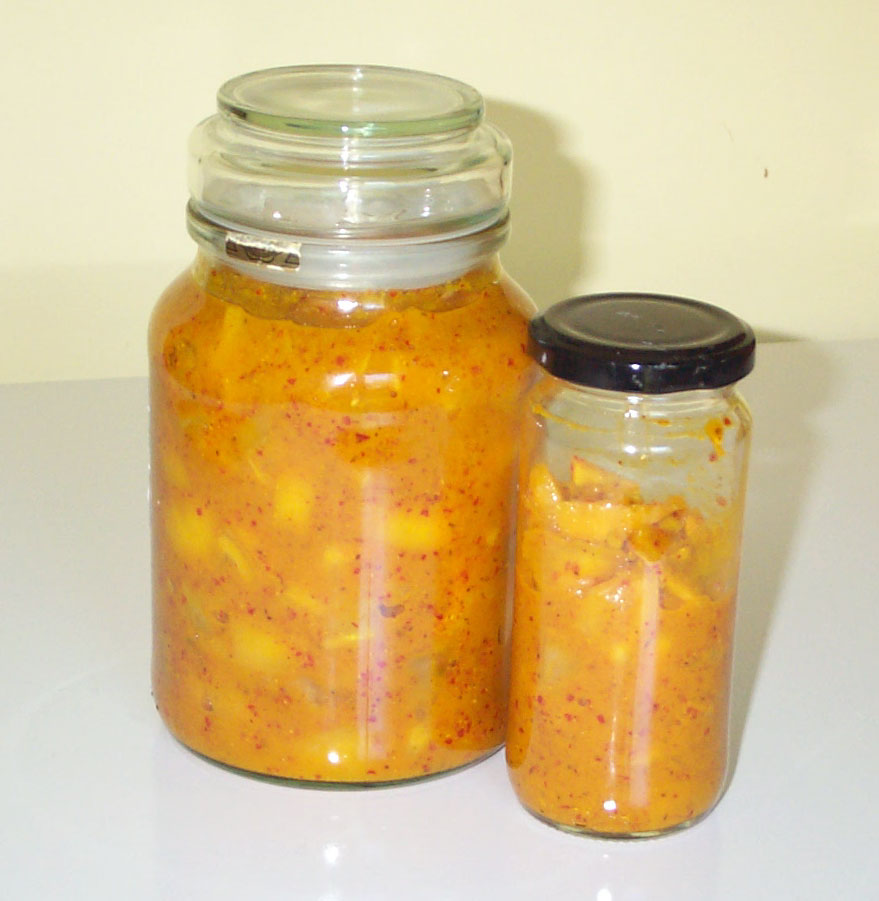
Preserved lemon or lemon pickle is a condiment that is common in the cuisines of the Indian subcontinent and Morocco. It was also found in 18th-century English cuisine.
It is also known as "country lemon" and leems. Diced, quartered, halved, or whole lemons are pickled in a brine of water, lemon juice, and salt; occasionally spices are included as well. The pickle is allowed to ferment at room temperature for weeks or months before it is used. The pulp of the preserved lemon can be used in stews and sauces, but it is the peel (zest and pith together) that is most valued. The flavor is mildly tart but intensely lemony.
Pieces of pickled lemon may be washed before using to remove any surface salt, or blanched to remove more of the salt and bring out the natural mild sweetness. They may then be sliced, chopped, or minced as needed for the texture of the dish. The rind may be used with or without the pulp.
Preserved lemon is the key ingredient in many Moroccan dishes, such as tagines. In Cambodian cuisine, it is used in dishes such as ngam nguv, a chicken soup with whole preserved lemons. They are often combined in various ways with olives, artichokes, seafood, veal, chicken, and rice.
The pickled pulp and liquid can be used in Bloody Marys and other beverages where lemon and salt are used. The flavor also combines well with horseradish, as in American-style cocktail sauce.
In Ayurvedic cuisine, lemon pickle is a home remedy for stomach disorders, and its value is said to increase as it matures. In East African folk medicine, lemon pickle is given for excessive growth of the spleen.
Lime and grapefruit also are pickled in this manner.
Historically, pickling was an affordable and practical method of preserving lemons for use long after their season and far away from where they are grown. Early 19th-century English, American, and (in translation) Indian cookbooks give recipes for lemon pickle and mention its use in sauces for salmon, veal, etc.; dishes where today fresh lemon zest and/or juice would be used.
Hub AI
Preserved lemon AI simulator
(@Preserved lemon_simulator)
Preserved lemon
Preserved lemon or lemon pickle is a condiment that is common in the cuisines of the Indian subcontinent and Morocco. It was also found in 18th-century English cuisine.
It is also known as "country lemon" and leems. Diced, quartered, halved, or whole lemons are pickled in a brine of water, lemon juice, and salt; occasionally spices are included as well. The pickle is allowed to ferment at room temperature for weeks or months before it is used. The pulp of the preserved lemon can be used in stews and sauces, but it is the peel (zest and pith together) that is most valued. The flavor is mildly tart but intensely lemony.
Pieces of pickled lemon may be washed before using to remove any surface salt, or blanched to remove more of the salt and bring out the natural mild sweetness. They may then be sliced, chopped, or minced as needed for the texture of the dish. The rind may be used with or without the pulp.
Preserved lemon is the key ingredient in many Moroccan dishes, such as tagines. In Cambodian cuisine, it is used in dishes such as ngam nguv, a chicken soup with whole preserved lemons. They are often combined in various ways with olives, artichokes, seafood, veal, chicken, and rice.
The pickled pulp and liquid can be used in Bloody Marys and other beverages where lemon and salt are used. The flavor also combines well with horseradish, as in American-style cocktail sauce.
In Ayurvedic cuisine, lemon pickle is a home remedy for stomach disorders, and its value is said to increase as it matures. In East African folk medicine, lemon pickle is given for excessive growth of the spleen.
Lime and grapefruit also are pickled in this manner.
Historically, pickling was an affordable and practical method of preserving lemons for use long after their season and far away from where they are grown. Early 19th-century English, American, and (in translation) Indian cookbooks give recipes for lemon pickle and mention its use in sauces for salmon, veal, etc.; dishes where today fresh lemon zest and/or juice would be used.