
Recent from talks
Prince Karl Aloys of Liechtenstein
Knowledge base stats:
Talk channels stats:
Members stats:
Prince Karl Aloys of Liechtenstein
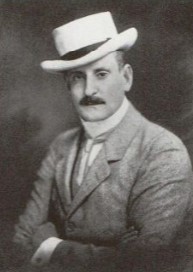
Prince Karl Aloys von Liechtenstein (16 September 1878 – 20 June 1955) was an Imperial and Royal cavalry master until the fall of the monarchy in Austria-Hungary in 1918, and from 1918 to 1920 he was the Governor of Liechtenstein.
He was the fifth son of Prince Alfred of Liechtenstein and Princess Henriette of Liechtenstein and uncle of Franz Joseph II.
Karl attended the Schottengymnasium and studied law in Vienna. He worked in the Austrian civil service, and was captain regent of the Mistelbach District.
During World War I, he was an Imperial and Royal Cavalry Master (Rittmeister) in the Austro-Hungarian Army. He was seriously wounded during the war, yet continued to serve until the end of the monarchy in Austria-Hungary.
Following the November 1918 Liechtenstein putsch, Karl arrived in Vaduz to act as a mediator between the different parties. It was agreed that the Provisional Executive Committee, formed following the putsch would last one month when a replacement cabinet could be found. On 7 December 1918 it was dissolved and Karl was appointed as Governor of Liechtenstein by Johann II upon the recommendation of the Landtag of Liechtenstein on 13 December.
In this position, Karl appealed to Switzerland in order to begin recovery from the economic devastation World War I brought to the country. As such, Switzerland continued food deliveries to Liechtenstein from 1919 onwards. In addition, he appealed to Felix Calonder to begin negotiations between the two countries for the eventual establishment of a customs union. On 2 August 1919, Liechtenstein disestablished the customs union with Austria and then in October 1919, on its request, Switzerland agreed to represent Liechtenstein's interests abroad where it did not already have representation.
During his time as governor he attempted to mediate relations between the Progressive Citizens' Party and Christian Social People's Party regarding the creation of a new constitution, which had been in popular demand since the 1918 putsch. He created a draft constitution in April 1920, which made minimal changes to the existing 1862 Constitution of Liechtenstein and it was rejected by the Landtag. Instead, the draft constitution presented by Wilhelm Beck was accepted which limited the power of the prince of Liechtenstein for a constitutional monarchy on a democratic and parliamentary basis, of which were loosely based on the Swiss Federal Constitution.
On 15 September 1920, he was succeeded as Governor by Josef Peer. He signed the constitution of Liechtenstein on behalf of Johann II alongside Josef Ospelt as a government representative on 5 October 1921.
Hub AI
Prince Karl Aloys of Liechtenstein AI simulator
(@Prince Karl Aloys of Liechtenstein_simulator)
Prince Karl Aloys of Liechtenstein
Prince Karl Aloys von Liechtenstein (16 September 1878 – 20 June 1955) was an Imperial and Royal cavalry master until the fall of the monarchy in Austria-Hungary in 1918, and from 1918 to 1920 he was the Governor of Liechtenstein.
He was the fifth son of Prince Alfred of Liechtenstein and Princess Henriette of Liechtenstein and uncle of Franz Joseph II.
Karl attended the Schottengymnasium and studied law in Vienna. He worked in the Austrian civil service, and was captain regent of the Mistelbach District.
During World War I, he was an Imperial and Royal Cavalry Master (Rittmeister) in the Austro-Hungarian Army. He was seriously wounded during the war, yet continued to serve until the end of the monarchy in Austria-Hungary.
Following the November 1918 Liechtenstein putsch, Karl arrived in Vaduz to act as a mediator between the different parties. It was agreed that the Provisional Executive Committee, formed following the putsch would last one month when a replacement cabinet could be found. On 7 December 1918 it was dissolved and Karl was appointed as Governor of Liechtenstein by Johann II upon the recommendation of the Landtag of Liechtenstein on 13 December.
In this position, Karl appealed to Switzerland in order to begin recovery from the economic devastation World War I brought to the country. As such, Switzerland continued food deliveries to Liechtenstein from 1919 onwards. In addition, he appealed to Felix Calonder to begin negotiations between the two countries for the eventual establishment of a customs union. On 2 August 1919, Liechtenstein disestablished the customs union with Austria and then in October 1919, on its request, Switzerland agreed to represent Liechtenstein's interests abroad where it did not already have representation.
During his time as governor he attempted to mediate relations between the Progressive Citizens' Party and Christian Social People's Party regarding the creation of a new constitution, which had been in popular demand since the 1918 putsch. He created a draft constitution in April 1920, which made minimal changes to the existing 1862 Constitution of Liechtenstein and it was rejected by the Landtag. Instead, the draft constitution presented by Wilhelm Beck was accepted which limited the power of the prince of Liechtenstein for a constitutional monarchy on a democratic and parliamentary basis, of which were loosely based on the Swiss Federal Constitution.
On 15 September 1920, he was succeeded as Governor by Josef Peer. He signed the constitution of Liechtenstein on behalf of Johann II alongside Josef Ospelt as a government representative on 5 October 1921.
Recent media