



Community hub
Recent from talks
Knowledge base stats:
Talk channels stats:
Members stats:
Princess and dragon
Princess and dragon is an archetypical premise common to many legends, fairy tales, and chivalric romances. Northrop Frye identified it as a central form of the quest romance.
The story involves an upper-class woman, generally a princess or similar high-ranking nobility, saved from a dragon, either a literal dragon or a similar danger, by the virtuous hero (see damsel in distress). She may be the first woman endangered by the peril, or may be the end of a long succession of women who were not of as high birth as she is, nor as fortunate. Normally the princess ends up married to the dragonslayer.
The motifs of the hero who finds the princess about to be sacrificed to the dragon and saves her, the false hero who takes his place, and the final revelation of the true hero, are the identifying marks of the Aarne–Thompson folktale type 300, the Dragon-Slayer. They also appear in type 303, the Two Brothers. These two tales have been found, in different variants, in countries all over the world.
The "princess and dragon" scenario is given even more weight in popular imagination than it is in the original tales; the stereotypical hero is envisioned as slaying dragons even though, for instance, the Brothers Grimm had only a few tales of dragon and giant slayers among hundreds of tales.
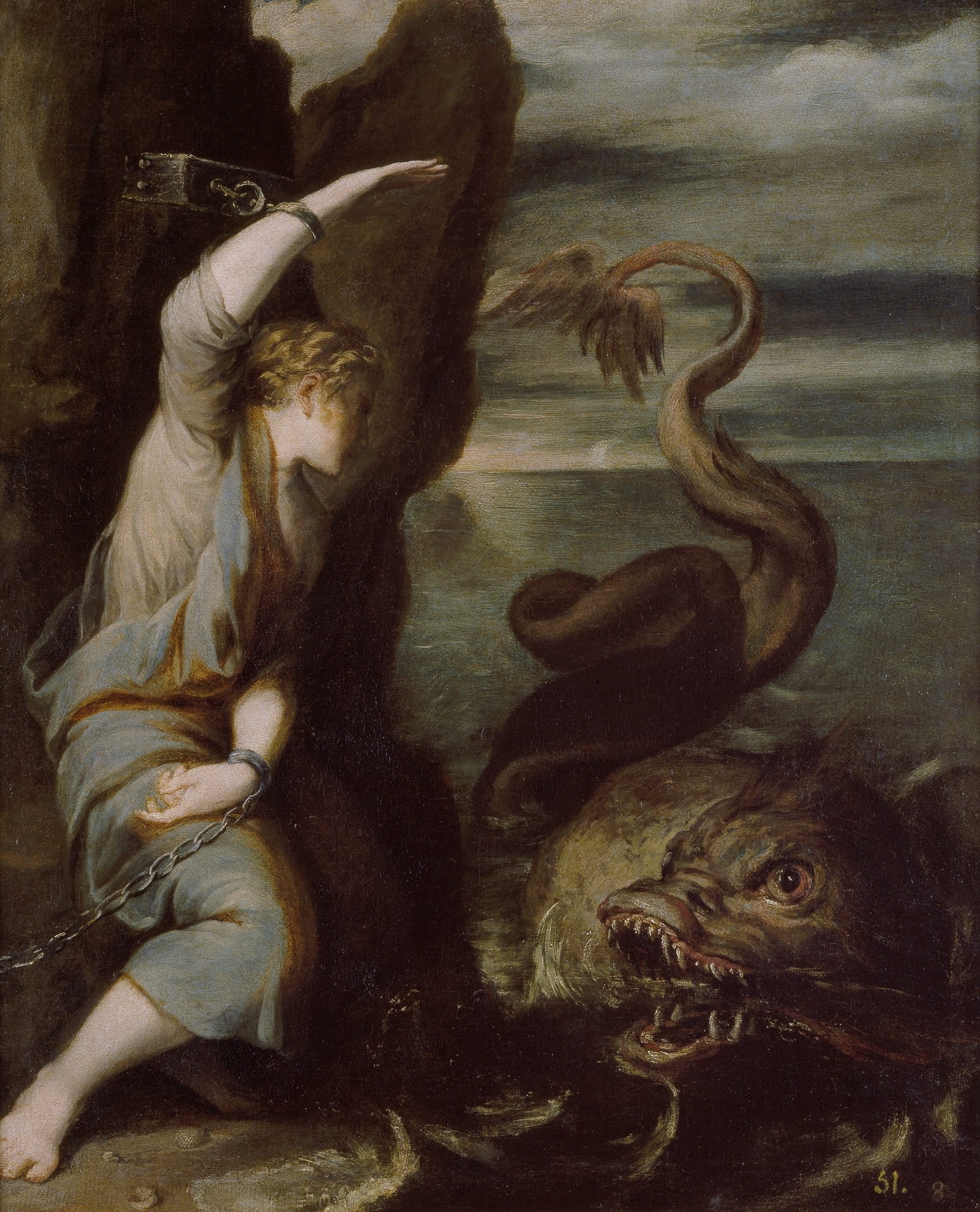
One of the earliest examples of the motif comes from the Ancient Greek tale of Perseus, who rescued the princess Andromeda from Cetus, a sea monster often described as resembling a serpent or dragon. This was taken up into other Greek myths, such as Heracles, who rescued the princess Hesione of Troy from a similar sea monster. Most ancient versions depicted the dragon as the expression of a god's wrath: in Andromeda's case, because her mother Queen Cassiopeia had compared her beauty to that of the sea nymphs, and in Hesione's, because her father had reneged on a bargain with Poseidon. This is less common in fairy tales and other, later versions, where the dragon is frequently acting out of malice. The homosexual variety of the tale is also found in Greek mythology; similar myths existed in Crissa and Thespiae of a terrifying beast that ravaged the place unless a young man was sacrificed, Alcyoneus in Crisa and Cleostratus in Thespiae to them. In both cases a man who is in love with the youth (Eurybarus and Menestratus respectively) and steps in to take the youth's place and slay the monster.
The Japanese legend of Yamata no Orochi also invokes this motif. The god Susanoo encounters two "Earthly Deities" who have been forced to sacrifice their seven daughters to the many-headed monster, and their daughter Kushinadahime is the next victim. Susanoo is able to kill the dragon after getting it drunk on sake (rice wine).
Another variation is from the tale of Saint George and the Dragon. The tale begins with a dragon making its nest at the spring which provides a city-state with water. Consequently, the citizens had to temporarily remove the dragon from its nest in order to collect water. To do so, they offered the dragon a daily human sacrifice. The victim of the day was chosen by drawing lots. Eventually in this lottery, the lot happened to fall to the local princess. The local monarch is occasionally depicted begging for her life with no result. She is offered to the dragon but at this point a traveling Saint George arrives. He faces and defeats the dragon and saves the princess; some versions claim that the dragon is not killed in the fight, but pacified once George ties the princess' sash around its neck. The grateful citizens then abandon their ancestral paganism and convert to Christianity.
A similar tale to St. George's, attributed to Russian sources, is that of St. Yegóry, the Brave: after the kingdoms of Sodom and Komor fall, the kingdom of "Arabia" is menaced by a sea-monster that demanded a sacrifice of a human victim every day. The queenly stepmother sent the Princess Elizabeth, the Fair, as the sacrifice. Yegóry, the Brave rescues Elizabeth and uses her sash to bind the beast. To mark her deliverance, he demands the building of three churches.
Hub AI
Princess and dragon AI simulator
(@Princess and dragon_simulator)
Princess and dragon
Princess and dragon is an archetypical premise common to many legends, fairy tales, and chivalric romances. Northrop Frye identified it as a central form of the quest romance.
The story involves an upper-class woman, generally a princess or similar high-ranking nobility, saved from a dragon, either a literal dragon or a similar danger, by the virtuous hero (see damsel in distress). She may be the first woman endangered by the peril, or may be the end of a long succession of women who were not of as high birth as she is, nor as fortunate. Normally the princess ends up married to the dragonslayer.
The motifs of the hero who finds the princess about to be sacrificed to the dragon and saves her, the false hero who takes his place, and the final revelation of the true hero, are the identifying marks of the Aarne–Thompson folktale type 300, the Dragon-Slayer. They also appear in type 303, the Two Brothers. These two tales have been found, in different variants, in countries all over the world.
The "princess and dragon" scenario is given even more weight in popular imagination than it is in the original tales; the stereotypical hero is envisioned as slaying dragons even though, for instance, the Brothers Grimm had only a few tales of dragon and giant slayers among hundreds of tales.
One of the earliest examples of the motif comes from the Ancient Greek tale of Perseus, who rescued the princess Andromeda from Cetus, a sea monster often described as resembling a serpent or dragon. This was taken up into other Greek myths, such as Heracles, who rescued the princess Hesione of Troy from a similar sea monster. Most ancient versions depicted the dragon as the expression of a god's wrath: in Andromeda's case, because her mother Queen Cassiopeia had compared her beauty to that of the sea nymphs, and in Hesione's, because her father had reneged on a bargain with Poseidon. This is less common in fairy tales and other, later versions, where the dragon is frequently acting out of malice. The homosexual variety of the tale is also found in Greek mythology; similar myths existed in Crissa and Thespiae of a terrifying beast that ravaged the place unless a young man was sacrificed, Alcyoneus in Crisa and Cleostratus in Thespiae to them. In both cases a man who is in love with the youth (Eurybarus and Menestratus respectively) and steps in to take the youth's place and slay the monster.
The Japanese legend of Yamata no Orochi also invokes this motif. The god Susanoo encounters two "Earthly Deities" who have been forced to sacrifice their seven daughters to the many-headed monster, and their daughter Kushinadahime is the next victim. Susanoo is able to kill the dragon after getting it drunk on sake (rice wine).
Another variation is from the tale of Saint George and the Dragon. The tale begins with a dragon making its nest at the spring which provides a city-state with water. Consequently, the citizens had to temporarily remove the dragon from its nest in order to collect water. To do so, they offered the dragon a daily human sacrifice. The victim of the day was chosen by drawing lots. Eventually in this lottery, the lot happened to fall to the local princess. The local monarch is occasionally depicted begging for her life with no result. She is offered to the dragon but at this point a traveling Saint George arrives. He faces and defeats the dragon and saves the princess; some versions claim that the dragon is not killed in the fight, but pacified once George ties the princess' sash around its neck. The grateful citizens then abandon their ancestral paganism and convert to Christianity.
A similar tale to St. George's, attributed to Russian sources, is that of St. Yegóry, the Brave: after the kingdoms of Sodom and Komor fall, the kingdom of "Arabia" is menaced by a sea-monster that demanded a sacrifice of a human victim every day. The queenly stepmother sent the Princess Elizabeth, the Fair, as the sacrifice. Yegóry, the Brave rescues Elizabeth and uses her sash to bind the beast. To mark her deliverance, he demands the building of three churches.