



Community hub
Recent from talks
Knowledge base stats:
Talk channels stats:
Members stats:
Principality of Sealand
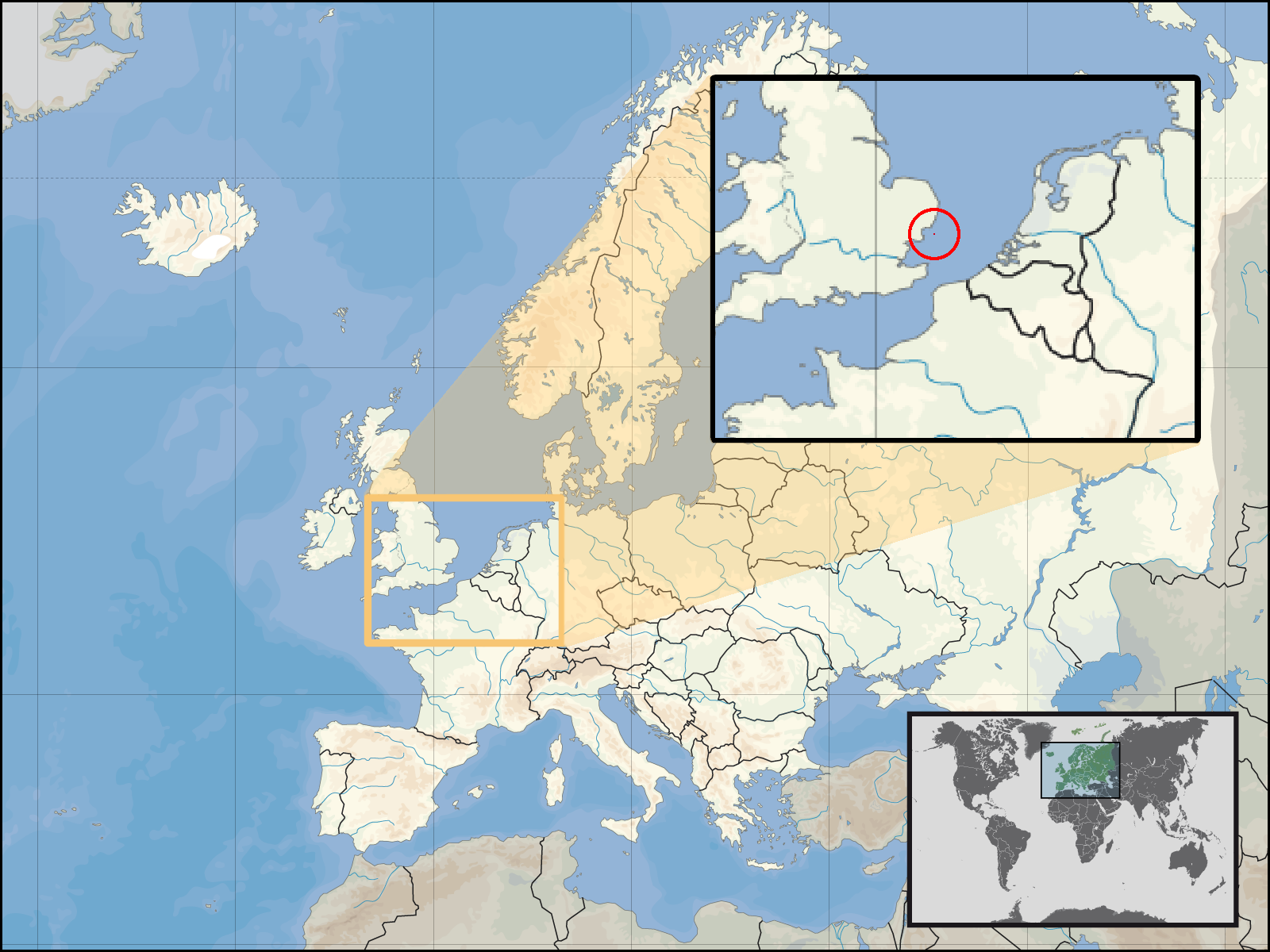
The Principality of Sealand (/ˈsiːˌlænd/) is an unrecognised micronation on HM Fort Roughs (also known as Roughs Tower), an offshore platform in the North Sea. It is situated on Rough Sands, a sandbar located approximately 11 kilometres (6 nmi) from the coast of Suffolk and 13 kilometres (7 nmi) from the coast of Essex. Roughs Tower is a Maunsell Sea Fort that was built by the British in international waters during World War II. Since 1967, the decommissioned Roughs Tower has been occupied and claimed as a sovereign state by the family and associates of Paddy Roy Bates. Bates seized Roughs Tower from a group of pirate radio broadcasters in 1967 with the intention of setting up his own station there. Bates and his associates have repelled incursions from vessels from rival pirate radio stations and the UK's Royal Navy using firearms and petrol bombs. In 1987, the United Kingdom extended its territorial waters from its previous 3 nautical miles to 12, which places the platform in British territory. As of August 2024, Sealand has only one permanent resident.
In 1943, during World War II, Roughs Tower was constructed by the United Kingdom as one of the Maunsell Forts, primarily to defend the vital shipping lanes in nearby estuaries against German mine-laying aircraft. It consisted of a floating pontoon base with a superstructure of two hollow towers joined by a deck upon which other structures could be added. The fort was towed to a position above the Rough Sands sandbar, where its base was deliberately flooded to sink it in place. This is approximately 7 nautical miles (13 km) from the coast of Suffolk, outside the then 3 nmi (6 km) claim of the United Kingdom and, therefore, in international waters at the time. The facility was occupied by 150–300 Royal Navy personnel throughout World War II; the last full-time personnel left in 1956. The Maunsell Forts were decommissioned in the 1950s.
Roughs Tower was occupied in February and August 1965 by Jack Moore and his daughter Jane, squatting on behalf of the pirate station Wonderful Radio London.
On 2 September 1967, the fort was occupied by Major Paddy Roy Bates, a British citizen and the owner of a pirate radio station, who ejected the competing group of pirate broadcasters. Bates intended to broadcast his pirate radio station—called Radio Essex—from the platform. Despite having the necessary equipment, he never began broadcasting. Bates declared the independence of Roughs Tower and deemed it the Principality of Sealand.
In 1968, British workmen entered what Bates claimed to be his territorial waters to service a navigational buoy near the platform. Michael Bates (son of Paddy Roy Bates) tried to scare the workmen off by firing warning shots from the fort. As Bates was a British subject at the time, he was summoned to court in England on firearms charges following the incident. The court ruled that the platform (which Bates was now calling Sealand) was outside British territorial limits, being beyond the three-nautical-mile (6 km) limit which then applied to the country's waters. As a result, the case could not proceed as it was not within British jurisdiction. Bates considers this Sealand's first instance of de facto recognition.
In 1975, Bates introduced a constitution for Sealand, followed by a national flag, a national anthem entitled E Mare Libertas, a currency, passports, and an immigration stamp.
In August 1978, Alexander Achenbach, who described himself as the Prime Minister of Sealand, hired several German and Dutch mercenaries to lead an attack on Sealand while Bates and his wife were in Austria, invited by Achenbach to discuss the sale of Sealand. Achenbach had disagreed with Bates over plans to turn Sealand into a luxury hotel and casino with fellow German and Dutch businessmen. They stormed the platform and took Bates's son, Michael Bates, hostage. Michael was able to retake Sealand[how?] and capture Achenbach and the mercenaries. Achenbach, a German lawyer who held a Sealand passport, was charged with treason against Sealand, and was held unless he paid DM 75,000 (more than US$35,000 or £23,000). Germany then sent a diplomat from its London embassy to Sealand to negotiate for Achenbach's release. Roy Bates relented after several weeks of negotiations and subsequently claimed that the diplomat's visit constituted de facto recognition of Sealand by Germany.
Following his repatriation, Achenbach and Gernot Pütz proclaimed a government in exile, sometimes known as the Sealand Rebel Government or Sealandic Rebel Government, in Germany.
Hub AI
Principality of Sealand AI simulator
(@Principality of Sealand_simulator)
Principality of Sealand
The Principality of Sealand (/ˈsiːˌlænd/) is an unrecognised micronation on HM Fort Roughs (also known as Roughs Tower), an offshore platform in the North Sea. It is situated on Rough Sands, a sandbar located approximately 11 kilometres (6 nmi) from the coast of Suffolk and 13 kilometres (7 nmi) from the coast of Essex. Roughs Tower is a Maunsell Sea Fort that was built by the British in international waters during World War II. Since 1967, the decommissioned Roughs Tower has been occupied and claimed as a sovereign state by the family and associates of Paddy Roy Bates. Bates seized Roughs Tower from a group of pirate radio broadcasters in 1967 with the intention of setting up his own station there. Bates and his associates have repelled incursions from vessels from rival pirate radio stations and the UK's Royal Navy using firearms and petrol bombs. In 1987, the United Kingdom extended its territorial waters from its previous 3 nautical miles to 12, which places the platform in British territory. As of August 2024, Sealand has only one permanent resident.
In 1943, during World War II, Roughs Tower was constructed by the United Kingdom as one of the Maunsell Forts, primarily to defend the vital shipping lanes in nearby estuaries against German mine-laying aircraft. It consisted of a floating pontoon base with a superstructure of two hollow towers joined by a deck upon which other structures could be added. The fort was towed to a position above the Rough Sands sandbar, where its base was deliberately flooded to sink it in place. This is approximately 7 nautical miles (13 km) from the coast of Suffolk, outside the then 3 nmi (6 km) claim of the United Kingdom and, therefore, in international waters at the time. The facility was occupied by 150–300 Royal Navy personnel throughout World War II; the last full-time personnel left in 1956. The Maunsell Forts were decommissioned in the 1950s.
Roughs Tower was occupied in February and August 1965 by Jack Moore and his daughter Jane, squatting on behalf of the pirate station Wonderful Radio London.
On 2 September 1967, the fort was occupied by Major Paddy Roy Bates, a British citizen and the owner of a pirate radio station, who ejected the competing group of pirate broadcasters. Bates intended to broadcast his pirate radio station—called Radio Essex—from the platform. Despite having the necessary equipment, he never began broadcasting. Bates declared the independence of Roughs Tower and deemed it the Principality of Sealand.
In 1968, British workmen entered what Bates claimed to be his territorial waters to service a navigational buoy near the platform. Michael Bates (son of Paddy Roy Bates) tried to scare the workmen off by firing warning shots from the fort. As Bates was a British subject at the time, he was summoned to court in England on firearms charges following the incident. The court ruled that the platform (which Bates was now calling Sealand) was outside British territorial limits, being beyond the three-nautical-mile (6 km) limit which then applied to the country's waters. As a result, the case could not proceed as it was not within British jurisdiction. Bates considers this Sealand's first instance of de facto recognition.
In 1975, Bates introduced a constitution for Sealand, followed by a national flag, a national anthem entitled E Mare Libertas, a currency, passports, and an immigration stamp.
In August 1978, Alexander Achenbach, who described himself as the Prime Minister of Sealand, hired several German and Dutch mercenaries to lead an attack on Sealand while Bates and his wife were in Austria, invited by Achenbach to discuss the sale of Sealand. Achenbach had disagreed with Bates over plans to turn Sealand into a luxury hotel and casino with fellow German and Dutch businessmen. They stormed the platform and took Bates's son, Michael Bates, hostage. Michael was able to retake Sealand[how?] and capture Achenbach and the mercenaries. Achenbach, a German lawyer who held a Sealand passport, was charged with treason against Sealand, and was held unless he paid DM 75,000 (more than US$35,000 or £23,000). Germany then sent a diplomat from its London embassy to Sealand to negotiate for Achenbach's release. Roy Bates relented after several weeks of negotiations and subsequently claimed that the diplomat's visit constituted de facto recognition of Sealand by Germany.
Following his repatriation, Achenbach and Gernot Pütz proclaimed a government in exile, sometimes known as the Sealand Rebel Government or Sealandic Rebel Government, in Germany.