



Community hub
Recent from talks
Knowledge base stats:
Talk channels stats:
Members stats:
Prison education
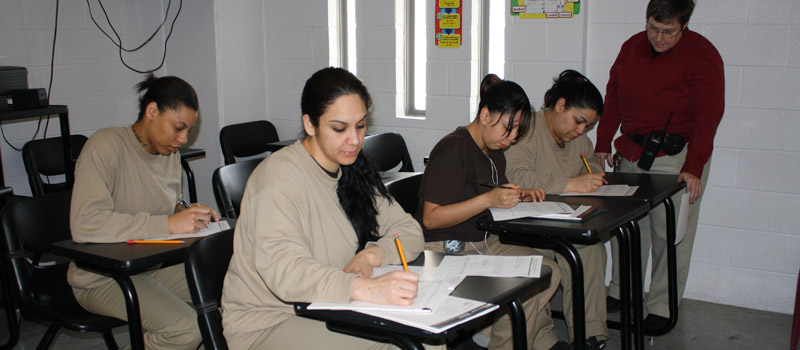
Prison education is any educational activity that occurs inside prison. Courses can include basic literacy programmes, secondary school equivalency programmes, vocational education, and tertiary education. Other activities such as rehabilitation programs, physical education, and arts and crafts programmes may also be considered a form of prison education. Programmes are typically provided, managed, and funded by the prison system, though inmates may be required to pay for distance education programmes. The history of and current practices in prison education vary greatly among countries.
Those entering prison systems worldwide have, on average, lower levels of education than the general population. Prison education often aims to make the inmate more employable after release. Administrating and attending educational programmes in prisons can be difficult. Staff and budget shortages, a lack of educational resources and computers, and the transfer of prisoners between facilities are common barriers. Prisoners may be reluctant to participate, often due to past educational failures or a lack of motivation.
Studies consistently show that education in prison is an effective way of reducing the rates of recidivism, which saves the expense of future prison sentences. In the United Kingdom, it is estimated that every pound spent on prison education saves taxpayers more than two pounds, and in the United States, the rate is four to five dollars saved for every dollar spent. Despite the benefits of prison education programmes, rates of education within prisons remain low in many countries, and attempts to increase funding for prison education have been opposed. Opponents argue that prison education is a waste of money and that prisoners are not deserving of the benefit.
The history and availability of prison education in Europe varies greatly between countries. Nordic countries have a long history of providing education to prisoners, and Sweden in particular is considered to be a pioneer in the field. Prison education became mandatory for inmates under 35 in 1842, and vocational education can be traced back to at least 1874, when the Uppsala County prison hired a carpenter to teach inmates woodworking. In Denmark, juvenile offenders have had access to education since the 1850s, and educational programmes became mandatory for them in 1930. Adult prisons have had educational programmes since 1866, and legislation requiring all inmates under the age of 30 to participate in educational courses was implemented in 1952. Norway opened its first prison to focus on education as a form of rehabilitation in 1851. By 1875, all eight prisons in the country were providing education to inmates, and by the end of the century, legislation was in effect ensuring that any prisoner who had not completed primary and lower secondary schooling should do so while in prison. As of 2007, every prison in Norway has a school for inmates. In Finland, legislation was adopted in 1866 which ensured that all prisoners would receive primary education, though the implementation of the order faced practical difficulties. A more successful education reform was implemented in 1899, which remained unchanged until 1975. However Iceland, which as of 2011 averaged only 137 prisoners in the country, only began implementing education programmes in 1971.
Between 1939 and 1975, while under the rule of Francisco Franco, prisons in Spain were infamous for their harsh conditions and levels of repression. Attitudes later softened, with the 1978 Constitution declaring that prisons should be oriented at re-education rather than forced labor. While university access existed, a 1992 Human Rights Watch report found that most prisons only offered basic education and some vocational training, and female inmates had less access to education than males. As of 2018, the National University of Distance Education is the only institution allowed to provide university education to inmates. In 1976, laws in Italy clarified that prisoners were entitled to university education. However, prisoners were unable to complete courses as correctional facilities neither provided entry for teachers, or leave for students to complete exams. Prisoners were only effectively allowed to study at university from 1986 when laws were relaxed, and further rights were enabled in 2000, greatly improving educational access. Many partnerships between prisons and universities were established between the early 2000s and mid 2010s.
The first significant development of prison education in England was Robert Peel's Gaols Act 1823 (4 Geo. 4. c. 64), which called for reading and writing classes in all prisons. While prison staff in the 1850s recognised the importance of basic literacy, they opposed giving prisoners any form of higher education on the grounds that education itself would not provide any "moral elevation". The Prison Act 1877 (40 & 41 Vict. c. 21) is considered to have established the prison system that remained in effect until the 1990s, which only offered education of a "narrow and selective kind". In 1928, the majority of prisons in the UK were still only offering the most basic education courses. By 1958, while the number of educational staff in prisons had increased, there had been no other significant advancements in prison education. Education programmes did not improve until 1992, when the decision was made to outsource educational instruction on a competitive basis. More than 150 organizations applied, and by 1994, there were 45 educational providers across 125 prisons, providing various forms of education including secondary and tertiary.
Attempts to rehabilitate prisoners in Russia were made in 1819, possibly for the first time in the country's history. Reforms included instructing them in "piety and good morals", though this proved impossible due to the cramped conditions, extreme poverty and lack of other services. Instead, general improvements to conditions were first made, after which "religious and moral education" were gradually introduced. In 1918, it was recommended that children in Russian prisons should receive education alongside punishment. However, few educational programmes were implemented, because of the competing agendas of various jurisdictions and agencies. In the 1920s, efforts were made within the Gulag prison camps to eradicate illiteracy. Almost all the camps had classes on "political education", and some also had classes such as natural science, history of culture and foreign languages.
In the United States, prisoners were given religious instruction by chaplains in the early 19th century, and secular prison education programmes were first developed in order to help inmates to read Bibles and other religious texts. The first major education programme aimed at rehabilitating prisoners was launched in 1876. Zebulon Brockway, the superintendent of Elmira Reformatory in New York, was the initial person to implement such a programme. He believed prison education would "discipline the mind and fit it to receive ... the thoughts and principles that constitute their possessors good citizens". By 1900, the states of Massachusetts, Ohio, Pennsylvania, Indiana, Illinois and Minnesota had adopted the "Elmira system" of education, and by the 1930s, educational programmes could be found in most prisons. Tertiary education programmes did not appear until much later. In 1960, only nine states were offering college-level education to inmates; by 1983, such programmes were available in most states.
Hub AI
Prison education AI simulator
(@Prison education_simulator)
Prison education
Prison education is any educational activity that occurs inside prison. Courses can include basic literacy programmes, secondary school equivalency programmes, vocational education, and tertiary education. Other activities such as rehabilitation programs, physical education, and arts and crafts programmes may also be considered a form of prison education. Programmes are typically provided, managed, and funded by the prison system, though inmates may be required to pay for distance education programmes. The history of and current practices in prison education vary greatly among countries.
Those entering prison systems worldwide have, on average, lower levels of education than the general population. Prison education often aims to make the inmate more employable after release. Administrating and attending educational programmes in prisons can be difficult. Staff and budget shortages, a lack of educational resources and computers, and the transfer of prisoners between facilities are common barriers. Prisoners may be reluctant to participate, often due to past educational failures or a lack of motivation.
Studies consistently show that education in prison is an effective way of reducing the rates of recidivism, which saves the expense of future prison sentences. In the United Kingdom, it is estimated that every pound spent on prison education saves taxpayers more than two pounds, and in the United States, the rate is four to five dollars saved for every dollar spent. Despite the benefits of prison education programmes, rates of education within prisons remain low in many countries, and attempts to increase funding for prison education have been opposed. Opponents argue that prison education is a waste of money and that prisoners are not deserving of the benefit.
The history and availability of prison education in Europe varies greatly between countries. Nordic countries have a long history of providing education to prisoners, and Sweden in particular is considered to be a pioneer in the field. Prison education became mandatory for inmates under 35 in 1842, and vocational education can be traced back to at least 1874, when the Uppsala County prison hired a carpenter to teach inmates woodworking. In Denmark, juvenile offenders have had access to education since the 1850s, and educational programmes became mandatory for them in 1930. Adult prisons have had educational programmes since 1866, and legislation requiring all inmates under the age of 30 to participate in educational courses was implemented in 1952. Norway opened its first prison to focus on education as a form of rehabilitation in 1851. By 1875, all eight prisons in the country were providing education to inmates, and by the end of the century, legislation was in effect ensuring that any prisoner who had not completed primary and lower secondary schooling should do so while in prison. As of 2007, every prison in Norway has a school for inmates. In Finland, legislation was adopted in 1866 which ensured that all prisoners would receive primary education, though the implementation of the order faced practical difficulties. A more successful education reform was implemented in 1899, which remained unchanged until 1975. However Iceland, which as of 2011 averaged only 137 prisoners in the country, only began implementing education programmes in 1971.
Between 1939 and 1975, while under the rule of Francisco Franco, prisons in Spain were infamous for their harsh conditions and levels of repression. Attitudes later softened, with the 1978 Constitution declaring that prisons should be oriented at re-education rather than forced labor. While university access existed, a 1992 Human Rights Watch report found that most prisons only offered basic education and some vocational training, and female inmates had less access to education than males. As of 2018, the National University of Distance Education is the only institution allowed to provide university education to inmates. In 1976, laws in Italy clarified that prisoners were entitled to university education. However, prisoners were unable to complete courses as correctional facilities neither provided entry for teachers, or leave for students to complete exams. Prisoners were only effectively allowed to study at university from 1986 when laws were relaxed, and further rights were enabled in 2000, greatly improving educational access. Many partnerships between prisons and universities were established between the early 2000s and mid 2010s.
The first significant development of prison education in England was Robert Peel's Gaols Act 1823 (4 Geo. 4. c. 64), which called for reading and writing classes in all prisons. While prison staff in the 1850s recognised the importance of basic literacy, they opposed giving prisoners any form of higher education on the grounds that education itself would not provide any "moral elevation". The Prison Act 1877 (40 & 41 Vict. c. 21) is considered to have established the prison system that remained in effect until the 1990s, which only offered education of a "narrow and selective kind". In 1928, the majority of prisons in the UK were still only offering the most basic education courses. By 1958, while the number of educational staff in prisons had increased, there had been no other significant advancements in prison education. Education programmes did not improve until 1992, when the decision was made to outsource educational instruction on a competitive basis. More than 150 organizations applied, and by 1994, there were 45 educational providers across 125 prisons, providing various forms of education including secondary and tertiary.
Attempts to rehabilitate prisoners in Russia were made in 1819, possibly for the first time in the country's history. Reforms included instructing them in "piety and good morals", though this proved impossible due to the cramped conditions, extreme poverty and lack of other services. Instead, general improvements to conditions were first made, after which "religious and moral education" were gradually introduced. In 1918, it was recommended that children in Russian prisons should receive education alongside punishment. However, few educational programmes were implemented, because of the competing agendas of various jurisdictions and agencies. In the 1920s, efforts were made within the Gulag prison camps to eradicate illiteracy. Almost all the camps had classes on "political education", and some also had classes such as natural science, history of culture and foreign languages.
In the United States, prisoners were given religious instruction by chaplains in the early 19th century, and secular prison education programmes were first developed in order to help inmates to read Bibles and other religious texts. The first major education programme aimed at rehabilitating prisoners was launched in 1876. Zebulon Brockway, the superintendent of Elmira Reformatory in New York, was the initial person to implement such a programme. He believed prison education would "discipline the mind and fit it to receive ... the thoughts and principles that constitute their possessors good citizens". By 1900, the states of Massachusetts, Ohio, Pennsylvania, Indiana, Illinois and Minnesota had adopted the "Elmira system" of education, and by the 1930s, educational programmes could be found in most prisons. Tertiary education programmes did not appear until much later. In 1960, only nine states were offering college-level education to inmates; by 1983, such programmes were available in most states.