



Community hub
Recent from talks
Knowledge base stats:
Talk channels stats:
Members stats:
Project Plowshare
Project Plowshare was the overall United States program for the development of techniques to use nuclear explosives and large non-nuclear explosions for peaceful construction purposes. The program was organized in June 1957 as part of the worldwide Atoms for Peace efforts. As part of the program, 35 nuclear warheads were detonated in 27 separate tests. A similar program was carried out in the Soviet Union under the name Nuclear Explosions for the National Economy, although the Soviet program consisted of 124 tests.
Successful demonstrations of non-combat uses for nuclear explosives include rock blasting, stimulation of tight gas, chemical element manufacture, unlocking some of the mysteries of the R-process of stellar nucleosynthesis and probing the composition of the Earth's deep crust, creating reflection seismology vibroseis data which has helped geologists and follow-on mining company prospecting.
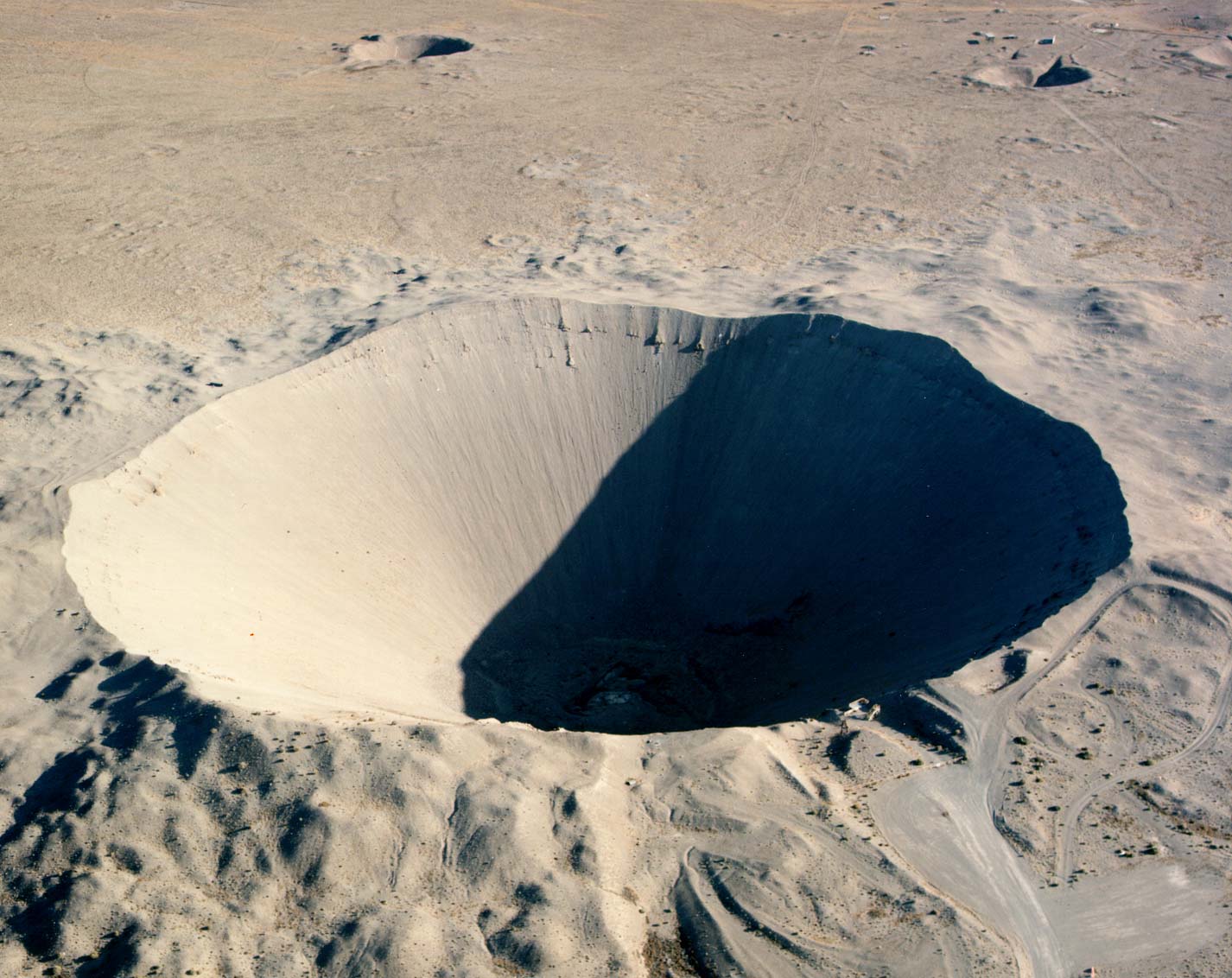
The project's uncharacteristically large and atmospherically vented Sedan nuclear test also led geologists to determine that Barringer crater was formed as a result of a meteor impact and not from a volcanic eruption, as had earlier been assumed. This became the first crater on Earth definitely proven to be from an impact event.
Negative impacts from Project Plowshare's tests generated significant public opposition, which eventually led to the program's termination in 1977. These consequences included tritiated water (projected to increase by CER Geonuclear Corporation to a level of 2% of the then-maximum level for drinking water) and the deposition of fallout from radioactive material being injected into the atmosphere before underground testing was mandated by treaty.
By exploiting the peaceful uses of the "friendly atom" in medical applications, earth removal, and later in nuclear power plants, the nuclear industry and government sought to allay public fears about nuclear technology and promote the acceptance of nuclear weapons. At the peak of the Atomic Age, the United States Federal government initiated Project Plowshare, involving "peaceful nuclear explosions". The United States Atomic Energy Commission chairman at the time, Lewis Strauss, announced that the Plowshares project was intended to "highlight the peaceful applications of nuclear explosive devices and thereby create a climate of world opinion that is more favorable to weapons development and tests".[need quotation to verify] These tests were to demonstrate that atomic bombs can be used for peaceful purposes, that the atomic sword could be beaten into a plowshare.
Proposed uses for nuclear explosives under Project Plowshare included widening the Panama Canal, constructing a new sea-level waterway through Nicaragua nicknamed the Pan-Atomic Canal, cutting paths through mountainous areas for highways, and connecting inland river systems. Other proposals involved blasting caverns for water, natural gas, and petroleum storage. Serious consideration was also given to using these explosives for various mining operations. One proposal suggested using nuclear blasts to connect underground aquifers in Arizona. Another plan involved surface blasting on the western slope of California's Sacramento Valley for a water transport project.
One of the first serious cratering proposals that came close to being carried out was Project Chariot, which would have used several hydrogen bombs to create an artificial harbor at Cape Thompson, Alaska. It was never carried out due to concerns for the native populations and the fact that there was little potential use for the harbor to justify its risk and expense.
Project Carryall, proposed in 1963 by the Atomic Energy Commission, the California Division of Highways (now Caltrans), and the Santa Fe Railway, would have used 22 nuclear explosions to excavate a massive roadcut through the Bristol Mountains in the Mojave Desert, to accommodate construction of Interstate 40 and a new rail line.
Hub AI
Project Plowshare AI simulator
(@Project Plowshare_simulator)
Project Plowshare
Project Plowshare was the overall United States program for the development of techniques to use nuclear explosives and large non-nuclear explosions for peaceful construction purposes. The program was organized in June 1957 as part of the worldwide Atoms for Peace efforts. As part of the program, 35 nuclear warheads were detonated in 27 separate tests. A similar program was carried out in the Soviet Union under the name Nuclear Explosions for the National Economy, although the Soviet program consisted of 124 tests.
Successful demonstrations of non-combat uses for nuclear explosives include rock blasting, stimulation of tight gas, chemical element manufacture, unlocking some of the mysteries of the R-process of stellar nucleosynthesis and probing the composition of the Earth's deep crust, creating reflection seismology vibroseis data which has helped geologists and follow-on mining company prospecting.
The project's uncharacteristically large and atmospherically vented Sedan nuclear test also led geologists to determine that Barringer crater was formed as a result of a meteor impact and not from a volcanic eruption, as had earlier been assumed. This became the first crater on Earth definitely proven to be from an impact event.
Negative impacts from Project Plowshare's tests generated significant public opposition, which eventually led to the program's termination in 1977. These consequences included tritiated water (projected to increase by CER Geonuclear Corporation to a level of 2% of the then-maximum level for drinking water) and the deposition of fallout from radioactive material being injected into the atmosphere before underground testing was mandated by treaty.
By exploiting the peaceful uses of the "friendly atom" in medical applications, earth removal, and later in nuclear power plants, the nuclear industry and government sought to allay public fears about nuclear technology and promote the acceptance of nuclear weapons. At the peak of the Atomic Age, the United States Federal government initiated Project Plowshare, involving "peaceful nuclear explosions". The United States Atomic Energy Commission chairman at the time, Lewis Strauss, announced that the Plowshares project was intended to "highlight the peaceful applications of nuclear explosive devices and thereby create a climate of world opinion that is more favorable to weapons development and tests".[need quotation to verify] These tests were to demonstrate that atomic bombs can be used for peaceful purposes, that the atomic sword could be beaten into a plowshare.
Proposed uses for nuclear explosives under Project Plowshare included widening the Panama Canal, constructing a new sea-level waterway through Nicaragua nicknamed the Pan-Atomic Canal, cutting paths through mountainous areas for highways, and connecting inland river systems. Other proposals involved blasting caverns for water, natural gas, and petroleum storage. Serious consideration was also given to using these explosives for various mining operations. One proposal suggested using nuclear blasts to connect underground aquifers in Arizona. Another plan involved surface blasting on the western slope of California's Sacramento Valley for a water transport project.
One of the first serious cratering proposals that came close to being carried out was Project Chariot, which would have used several hydrogen bombs to create an artificial harbor at Cape Thompson, Alaska. It was never carried out due to concerns for the native populations and the fact that there was little potential use for the harbor to justify its risk and expense.
Project Carryall, proposed in 1963 by the Atomic Energy Commission, the California Division of Highways (now Caltrans), and the Santa Fe Railway, would have used 22 nuclear explosions to excavate a massive roadcut through the Bristol Mountains in the Mojave Desert, to accommodate construction of Interstate 40 and a new rail line.