



Community hub
Recent from talks
Knowledge base stats:
Talk channels stats:
Members stats:
Prosthetic makeup
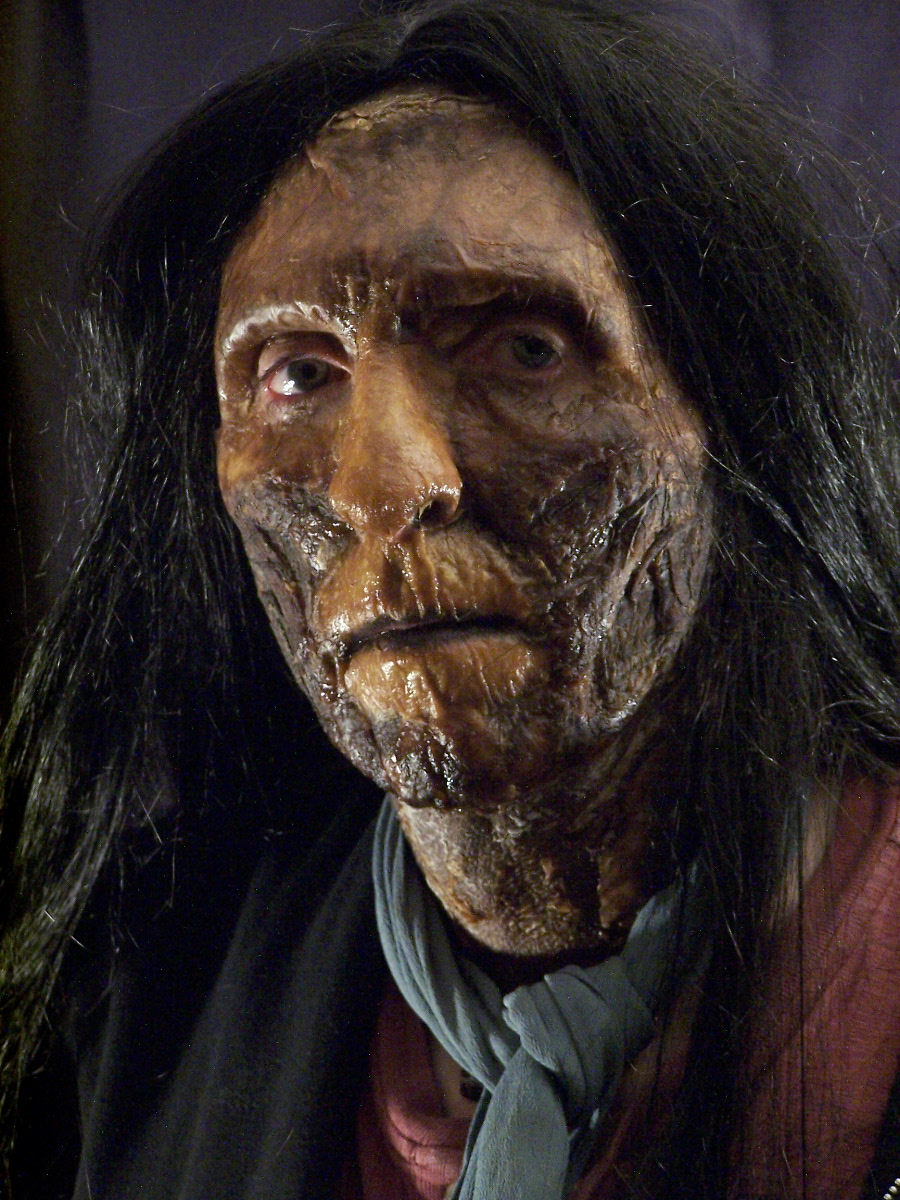
Prosthetic makeup also known as special makeup effects or FX prosthesis, is the process of using prosthetic sculpting, molding and casting techniques to create advanced cosmetic effects. Prosthetics are used on stage and screen to create fantasy creatures, simulated injuries, or likenesses of other people.
Prosthetic makeup draws a straight lineage from the stagecraft of theater and can be observed at the birth of science fiction cinema with Le Voyage dans La Lune, a 1902 French adventure short film directed by pioneer of special effects Georges Méliès.
The work of makeup artist Jack Pierce furthered pioneered early Hollywood prosthetic work and is best remembered for creating the iconic makeup worn by Boris Karloff in Frankenstein, his makeup for Lon Chaney Jr. in The Wolfman.
Modern prosthetic makeup was revolutionized by Christopher Tucker whose work on The Elephant Man was considered so ground breaking that when it failed to win any recognition at the 53rd Academy Awards letters of protests argued for it to receive an honorary award – this was ignored but did lead to the creation of the Academy Award for Best Makeup the following year.
Before sculpted prosthetic appliances became standard, special effects makeup artists would have to build up forms on the actor's face before shooting began, which often took several hours and would have to be done from scratch at the start of each day. The Frankenstein makeup by Jack Pierce consisted of spirit gum, cotton, collodion, and wax, taking around 3 hours to apply in the morning, and another 1-2 hours to remove at the end of the day.
Rubber began to be used to make appliances in the late 30s, with Pierce making rubber head forms and broken neck appliances for Boris Karloff and Bela Lugosi respectively. A rubber snout was made for Lon Chaney Jr. to wear in The Wolfman, though application of the hair for the titular character could take up to 16 hours.
Foam latex was first used by makeup artist Jack Dawn for The Wizard of Oz in 1939 to create the makeup for the Cowardly Lion and Scarecrow. It wasn't until John Chambers's work on Planet of the Apes in 1968 that prosthetics transitioned from full face appliances to smaller, overlapping pieces which afforded the actors more expression and movement.
In 1965, William Tuttle won an Academy Honorary Award for his makeup work on 7 Faces of Dr. Lao at the 37th Academy Awards, making him the first artist to win an award for makeup before the Best Makeup category was introduced in 1981.
Hub AI
Prosthetic makeup AI simulator
(@Prosthetic makeup_simulator)
Prosthetic makeup
Prosthetic makeup also known as special makeup effects or FX prosthesis, is the process of using prosthetic sculpting, molding and casting techniques to create advanced cosmetic effects. Prosthetics are used on stage and screen to create fantasy creatures, simulated injuries, or likenesses of other people.
Prosthetic makeup draws a straight lineage from the stagecraft of theater and can be observed at the birth of science fiction cinema with Le Voyage dans La Lune, a 1902 French adventure short film directed by pioneer of special effects Georges Méliès.
The work of makeup artist Jack Pierce furthered pioneered early Hollywood prosthetic work and is best remembered for creating the iconic makeup worn by Boris Karloff in Frankenstein, his makeup for Lon Chaney Jr. in The Wolfman.
Modern prosthetic makeup was revolutionized by Christopher Tucker whose work on The Elephant Man was considered so ground breaking that when it failed to win any recognition at the 53rd Academy Awards letters of protests argued for it to receive an honorary award – this was ignored but did lead to the creation of the Academy Award for Best Makeup the following year.
Before sculpted prosthetic appliances became standard, special effects makeup artists would have to build up forms on the actor's face before shooting began, which often took several hours and would have to be done from scratch at the start of each day. The Frankenstein makeup by Jack Pierce consisted of spirit gum, cotton, collodion, and wax, taking around 3 hours to apply in the morning, and another 1-2 hours to remove at the end of the day.
Rubber began to be used to make appliances in the late 30s, with Pierce making rubber head forms and broken neck appliances for Boris Karloff and Bela Lugosi respectively. A rubber snout was made for Lon Chaney Jr. to wear in The Wolfman, though application of the hair for the titular character could take up to 16 hours.
Foam latex was first used by makeup artist Jack Dawn for The Wizard of Oz in 1939 to create the makeup for the Cowardly Lion and Scarecrow. It wasn't until John Chambers's work on Planet of the Apes in 1968 that prosthetics transitioned from full face appliances to smaller, overlapping pieces which afforded the actors more expression and movement.
In 1965, William Tuttle won an Academy Honorary Award for his makeup work on 7 Faces of Dr. Lao at the 37th Academy Awards, making him the first artist to win an award for makeup before the Best Makeup category was introduced in 1981.