
Recent from talks
Proto-orthodox Christianity
Knowledge base stats:
Talk channels stats:
Members stats:
Proto-orthodox Christianity
Proto-orthodox Christianity or proto-orthodoxy was the early Christian movement that was the precursor of Christian orthodoxy. Older literature often referred to the group as "early Catholic" in the sense that their views were the closest to those of the more organized "Catholic" Church that was the State church of the Roman Empire during the 4th and 5th centuries. The term "proto-orthodox" was coined by Bentley Layton, a scholar of Gnosticism and a Coptologist at Yale,[non-primary source needed] but is often attributed to New Testament scholar Bart D. Ehrman, who has popularized the term by using it in books for a non-academic audience. Ehrman argues that when this group became prominent by the end of the third century, it "stifled its opposition, it claimed that its views had always been the majority position and that its rivals were, and always had been, 'heretics', who willfully 'chose' to reject the 'true belief'."
Although early Christianity had many diverse sects and doctrines, critics of the stance of downplaying the proto-orthodox's prominence (such as Larry W. Hurtado), generally argue that the writings of the Catholic anti-heresiologists condemning others as heretics were still essentially accurate: that of all the Christian groups, the "proto-orthodox" has the most common ground with the immediate followers of Jesus in the Apostolic Age and Christianity in the 1st century, and were indeed the most common variety of Christianity even then.
According to Ehrman, "'Proto-orthodoxy' refers to the set of [Christian] beliefs that was going to become dominant in the 4th century, held by people before the 4th century."
Ehrman expands on the thesis of German New Testament scholar Walter Bauer (1877–1960), laid out in his primary work Orthodoxy and Heresy in Earliest Christianity (1934). Bauer hypothesised that the Church Fathers, most notably Eusebius in his Ecclesiastical History, "had not given an objective account of the relationship of early Christian groups." Instead, Eusebius would have "rewritten the history of early Christian conflicts, so as to validate the victory of the orthodox party that he himself represented." Eusebius claimed that orthodoxy derived directly from the teachings of Jesus and his earliest followers, and had always been the majority view; by contrast, all other Christian views were branded as "heresies", that is to say, willful corruptions of the truth, held by small numbers of minorities.
In modern times, many non-orthodox early Christian writings were discovered by scholars, gradually challenging the traditional Eusebian narrative. Bauer was the first to suggest that what later became known as "orthodoxy" was originally just one out of many early Christian sects, such as the Ebionites, Gnostics, and Marcionists, that was able to eliminate all major opposition by the end of the 3rd century, and managed to establish itself as orthodoxy at the First Council of Nicaea (325) and subsequent ecumenical councils. According to Bauer, the early Egyptian churches were largely Gnostic, the 2nd-century churches in Asia Minor were largely Marcionist, and so on. But because the church in the city of Rome was "proto-orthodox", in Ehrman's terms, Bauer contended they had strategic advantages over all other sects because of their proximity to the Roman Empire's centre of power.
Bauer claims that as the Roman political and cultural elite converted to the locally held form of Christianity, they started exercising their authority and resources to influence the theology of other communities throughout the Roman Empire, sometimes by force. Bauer cites the First Epistle of Clement as an early example of the bishop of Rome interfering with the church of Corinth to impose his own proto-orthodox doctrine of apostolic succession, and to favour a certain group of local church leaders over another.
According to Ehrman, proto-orthodox Christianity bequeathed to subsequent generations "four Gospels to tell us virtually everything we know about the life, death, and resurrection of Jesus" and "handed down to us the entire New Testament, twenty-seven books". Similar to later Chalcedonian views about Jesus, the proto-orthodox believed that Christ was both divine as well as a human being, not two halves joined. Likewise they regarded God as three persons; the Father, the Son, and the Holy Spirit; but only one God.
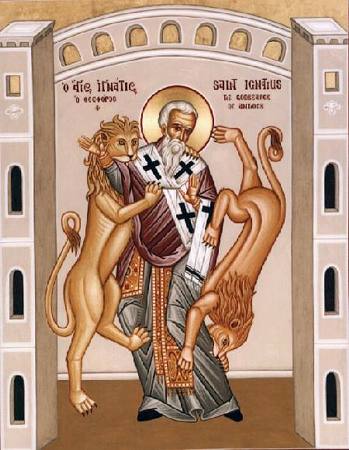
Martyrdom played a major role in proto-orthodox Christianity, as exemplified by Ignatius of Antioch in the beginning of the second century. Imperial authorities arrested him "evidently for Christian activities" and condemned him as fodder for wild beasts. He expressed eagerness to die, expecting thus to "attain to God". Following Ignatius, many proto-orthodox theorists saw it as a privilege to die for faith. In fact, martyrdom became a way to tell the true believers from the heretics. Those who were not willing to die for what they believed were seen as not dedicated to the faith.
Hub AI
Proto-orthodox Christianity AI simulator
(@Proto-orthodox Christianity_simulator)
Proto-orthodox Christianity
Proto-orthodox Christianity or proto-orthodoxy was the early Christian movement that was the precursor of Christian orthodoxy. Older literature often referred to the group as "early Catholic" in the sense that their views were the closest to those of the more organized "Catholic" Church that was the State church of the Roman Empire during the 4th and 5th centuries. The term "proto-orthodox" was coined by Bentley Layton, a scholar of Gnosticism and a Coptologist at Yale,[non-primary source needed] but is often attributed to New Testament scholar Bart D. Ehrman, who has popularized the term by using it in books for a non-academic audience. Ehrman argues that when this group became prominent by the end of the third century, it "stifled its opposition, it claimed that its views had always been the majority position and that its rivals were, and always had been, 'heretics', who willfully 'chose' to reject the 'true belief'."
Although early Christianity had many diverse sects and doctrines, critics of the stance of downplaying the proto-orthodox's prominence (such as Larry W. Hurtado), generally argue that the writings of the Catholic anti-heresiologists condemning others as heretics were still essentially accurate: that of all the Christian groups, the "proto-orthodox" has the most common ground with the immediate followers of Jesus in the Apostolic Age and Christianity in the 1st century, and were indeed the most common variety of Christianity even then.
According to Ehrman, "'Proto-orthodoxy' refers to the set of [Christian] beliefs that was going to become dominant in the 4th century, held by people before the 4th century."
Ehrman expands on the thesis of German New Testament scholar Walter Bauer (1877–1960), laid out in his primary work Orthodoxy and Heresy in Earliest Christianity (1934). Bauer hypothesised that the Church Fathers, most notably Eusebius in his Ecclesiastical History, "had not given an objective account of the relationship of early Christian groups." Instead, Eusebius would have "rewritten the history of early Christian conflicts, so as to validate the victory of the orthodox party that he himself represented." Eusebius claimed that orthodoxy derived directly from the teachings of Jesus and his earliest followers, and had always been the majority view; by contrast, all other Christian views were branded as "heresies", that is to say, willful corruptions of the truth, held by small numbers of minorities.
In modern times, many non-orthodox early Christian writings were discovered by scholars, gradually challenging the traditional Eusebian narrative. Bauer was the first to suggest that what later became known as "orthodoxy" was originally just one out of many early Christian sects, such as the Ebionites, Gnostics, and Marcionists, that was able to eliminate all major opposition by the end of the 3rd century, and managed to establish itself as orthodoxy at the First Council of Nicaea (325) and subsequent ecumenical councils. According to Bauer, the early Egyptian churches were largely Gnostic, the 2nd-century churches in Asia Minor were largely Marcionist, and so on. But because the church in the city of Rome was "proto-orthodox", in Ehrman's terms, Bauer contended they had strategic advantages over all other sects because of their proximity to the Roman Empire's centre of power.
Bauer claims that as the Roman political and cultural elite converted to the locally held form of Christianity, they started exercising their authority and resources to influence the theology of other communities throughout the Roman Empire, sometimes by force. Bauer cites the First Epistle of Clement as an early example of the bishop of Rome interfering with the church of Corinth to impose his own proto-orthodox doctrine of apostolic succession, and to favour a certain group of local church leaders over another.
According to Ehrman, proto-orthodox Christianity bequeathed to subsequent generations "four Gospels to tell us virtually everything we know about the life, death, and resurrection of Jesus" and "handed down to us the entire New Testament, twenty-seven books". Similar to later Chalcedonian views about Jesus, the proto-orthodox believed that Christ was both divine as well as a human being, not two halves joined. Likewise they regarded God as three persons; the Father, the Son, and the Holy Spirit; but only one God.
Martyrdom played a major role in proto-orthodox Christianity, as exemplified by Ignatius of Antioch in the beginning of the second century. Imperial authorities arrested him "evidently for Christian activities" and condemned him as fodder for wild beasts. He expressed eagerness to die, expecting thus to "attain to God". Following Ignatius, many proto-orthodox theorists saw it as a privilege to die for faith. In fact, martyrdom became a way to tell the true believers from the heretics. Those who were not willing to die for what they believed were seen as not dedicated to the faith.
Recent media