
Recent from talks
Protoplanet
Knowledge base stats:
Talk channels stats:
Members stats:
Protoplanet
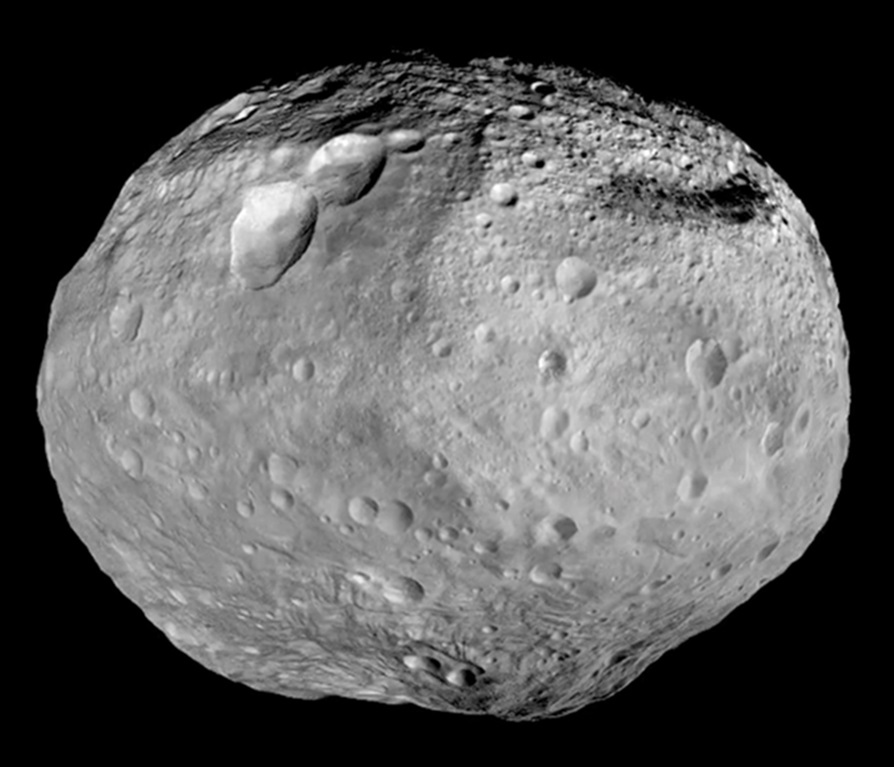
A protoplanet or planetary embryo is an astronomical body originated within a protoplanetary disk that has undergone internal melting to produce a differentiated interior.
Protoplanets are thought to form out of kilometre-sized planetesimals that gravitationally perturb each other's orbits and collide, gradually coalescing into larger bodies through a process known as "runaway growth". Once accumulated enough mass, protoplanets will begin to assume a spherical shape due to hydrostatic equilibrium and become dwarf planets, those of which that subsequently succeed in dominating their own orbit will become planets proper.
An alternative formation pathway of protoplanets is a process called disk fragmentation. Formation by this process, also called gravitational (disk) instability, is favoured for giant planets on wide orbits.
A planetesimal is an object formed from dust, rock, and other materials, measuring from meters to hundreds of kilometers in size. According to the Chamberlin–Moulton planetesimal hypothesis and the theories of Viktor Safronov, a protoplanetary disk of materials such as gas and dust would orbit a star early in the formation of a planetary system. The action of gravity on such materials form larger and larger chunks until some reach the size of planetesimals.
It is thought that the collisions of planetesimals created a few hundred larger planetary embryos. Over the course of hundreds of millions of years, they collided with one another. The exact sequence whereby planetary embryos collided to assemble the planets is not known, but it is thought that initial collisions would have replaced the first "generation" of embryos with a second generation consisting of fewer but larger embryos. These in their turn would have collided to create a third generation of fewer but even larger embryos. Eventually, only a handful of embryos were left, which collided to complete the assembly of the planets proper.
Early protoplanets had more radioactive elements, the quantity of which has been reduced over time due to radioactive decay. Heating due to radioactivity, impact, and gravitational pressure melted parts of protoplanets as they grew toward being planets. In melted zones their heavier elements sank to the center, whereas lighter elements rose to the surface. Such a process is known as planetary differentiation. The composition of some meteorites show that differentiation took place in some asteroids.
In the case of the Solar System, it is thought that the collisions of planetesimals created a few hundred planetary embryos. Such embryos were similar to Ceres and Pluto with masses of about 1022 to 1023 kg and were a few thousand km in diameter.[citation needed]
According to the giant impact hypothesis, the Moon formed from a colossal impact of a hypothetical protoplanet called Theia with Earth, early in the Solar System's history.
Hub AI
Protoplanet AI simulator
(@Protoplanet_simulator)
Protoplanet
A protoplanet or planetary embryo is an astronomical body originated within a protoplanetary disk that has undergone internal melting to produce a differentiated interior.
Protoplanets are thought to form out of kilometre-sized planetesimals that gravitationally perturb each other's orbits and collide, gradually coalescing into larger bodies through a process known as "runaway growth". Once accumulated enough mass, protoplanets will begin to assume a spherical shape due to hydrostatic equilibrium and become dwarf planets, those of which that subsequently succeed in dominating their own orbit will become planets proper.
An alternative formation pathway of protoplanets is a process called disk fragmentation. Formation by this process, also called gravitational (disk) instability, is favoured for giant planets on wide orbits.
A planetesimal is an object formed from dust, rock, and other materials, measuring from meters to hundreds of kilometers in size. According to the Chamberlin–Moulton planetesimal hypothesis and the theories of Viktor Safronov, a protoplanetary disk of materials such as gas and dust would orbit a star early in the formation of a planetary system. The action of gravity on such materials form larger and larger chunks until some reach the size of planetesimals.
It is thought that the collisions of planetesimals created a few hundred larger planetary embryos. Over the course of hundreds of millions of years, they collided with one another. The exact sequence whereby planetary embryos collided to assemble the planets is not known, but it is thought that initial collisions would have replaced the first "generation" of embryos with a second generation consisting of fewer but larger embryos. These in their turn would have collided to create a third generation of fewer but even larger embryos. Eventually, only a handful of embryos were left, which collided to complete the assembly of the planets proper.
Early protoplanets had more radioactive elements, the quantity of which has been reduced over time due to radioactive decay. Heating due to radioactivity, impact, and gravitational pressure melted parts of protoplanets as they grew toward being planets. In melted zones their heavier elements sank to the center, whereas lighter elements rose to the surface. Such a process is known as planetary differentiation. The composition of some meteorites show that differentiation took place in some asteroids.
In the case of the Solar System, it is thought that the collisions of planetesimals created a few hundred planetary embryos. Such embryos were similar to Ceres and Pluto with masses of about 1022 to 1023 kg and were a few thousand km in diameter.[citation needed]
According to the giant impact hypothesis, the Moon formed from a colossal impact of a hypothetical protoplanet called Theia with Earth, early in the Solar System's history.
Recent media