
Recent from talks
Prussian Crusade
Knowledge base stats:
Talk channels stats:
Members stats:
Prussian Crusade
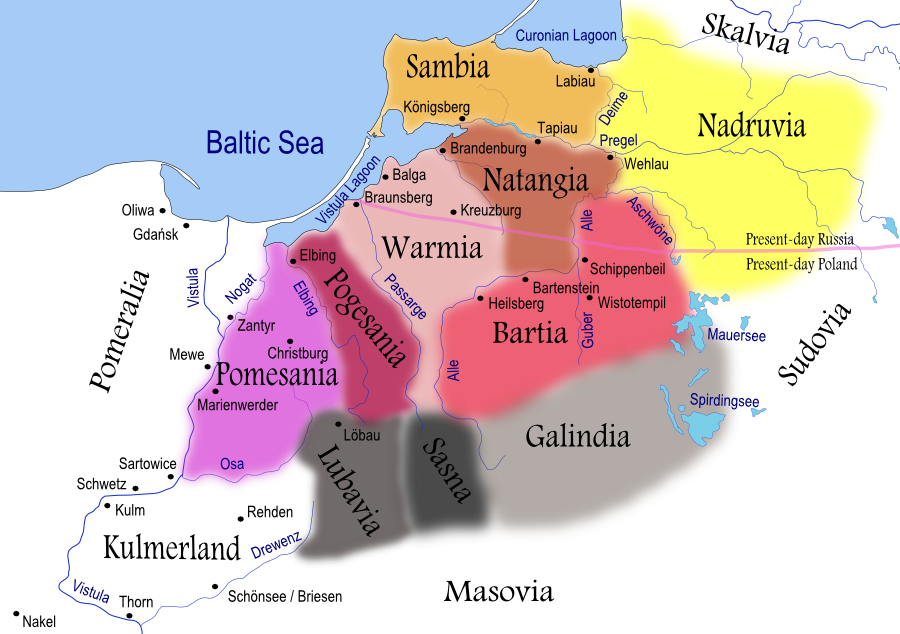
The Prussian Crusade was a series of 13th-century campaigns of Roman Catholic crusaders, primarily led by the Teutonic Knights, to Christianize under duress the pagan Old Prussians. Invited after earlier unsuccessful expeditions against the Prussians by Christian Polish princes, the Teutonic Knights began campaigning against the Prussians, Lithuanians and Samogitians in 1230. By the end of the century, having quelled several Prussian uprisings, the Knights had established control over Prussia and administered the conquered Prussians through their monastic state, eventually erasing the Prussian language, culture and pre-Christian religion by a combination of physical and ideological force. Some Prussians took refuge in neighboring Lithuania.
Wulfstan of Hedeby, an agent of Alfred of Wessex, recorded the seafaring and cattle-herding Prussians as a strong and independent nation. Mieszko I of the Polans tried to extend his realm from land he had just conquered around the mouth of the Oder as far as Prussia. Bolesław I of Poland, son of Mieszko I, greatly expanded his land conquests and used Adalbert of Prague for his aim of conquering the Prussians in 997, but the missionary was killed by the natives. After some initial success among the Prussians, Adalbert's successor, Bruno of Querfurt, was also killed in 1009. Bolesław I continued his conquests of surrounding lands and in 1015 he devastated the native populations of large parts of Prussia.
The Poles waged war with the neighboring Prussians, Sudovians, and Wends over the following two centuries. While the Poles sought control over the Prussians under the aegis of facilitating the conversion of the Prussians to Christianity, the Prussians engaged in reciprocal raids, capturing slaves in the bordering territories of Chełmno Land and Masovia. Many Prussians are alleged to have accepted baptism under duress only to revert to native religious beliefs after hostilities ended.[citation needed] Henry of Sandomierz was killed fighting the Prussians in 1166. Bolesław IV and Casimir II each led large armies into Prussia; while Bolesław's forces were defeated in guerilla warfare, Casimir imposed peace until his death in 1194. King Valdemar II of Denmark supported Danish expeditions against Samland until his capture by Henry I, Count of Schwerin, in 1223.
In 1206, the Cistercian bishop Christian of Oliva, with the support of the King of Denmark and Polish dukes, found colonization of the natives in a better state than expected upon his arrival in the war-torn Chełmno Land. Inspired, he travelled to Rome to prepare for a larger mission. When he returned to Chełmno in 1215, however, Christian found the Prussians hostile out of outrage at the actions of the Sword-Brothers in Livonia or fear of Christian Polish expansion. The Prussians invaded Chełmno Land, and Pomerelia, besieged Chełmno and Lubawa, and enabled Christian converts to return to their native, pre-Christian beliefs.
Because of the growing intensity of reciprocal attacks, Pope Honorius III sent a papal bull to Christian in March 1217 allowing him to begin preaching a crusade against the resisting Prussians. The following year the Prussians counter-attacked Chełmno Land and Masovia again, plundering 300 cathedrals and churches in revenge. Duke Conrad of Masovia succeeded in making the Prussians leave by paying a huge tribute, which only encouraged the Prussians, however.
Honorius III called for a crusade under the leadership of Christian of Oliva and chose as papal legate the Archbishop of Gniezno, Wincenty I Niałek. German and Polish crusaders began gathering in Masovia in 1219, but serious planning only began in 1222 upon the arrival of nobles such as Duke Henry of Silesia, Archbishop Laurentius of Breslau (Wroclaw), and Laurentius of Lebus. Numerous Polish nobles began endowing Christian's Bishopric of Prussia with estates and castles in Chełmno Land during the meantime. The lords agreed that the primary focus was to rebuild the colonizing fortresses of Chełmno Land, especially Chełmno itself, whose fortress was almost completely rebuilt. By 1223, however, most of the crusaders had left the region, and the Prussians devastated Chełmno Land and Masovia yet again, forcing Duke Conrad to seek refuge in the castle of Płock. The Sarmatians (as they were then known) even reached Gdańsk (Danzig) in Pomerelia.
In 1225 or 1228, fourteen north German knights were recruited by Conrad and Christian to form a military order. First granted the estate of Cedlitz in Kuyavia until the completion of a castle at Dobrzyń, the group became known as the Order of Dobrzyń (or Dobrin). The Knights of Dobrzyń initially had success driving the Prussians from Chełmno Land, but a Prussian counterattack against them and Conrad killed most of the Order. The survivors were granted asylum in Pomerania by Duke Swantopelk II. The Order of Calatrava, granted a base near Gdańsk, was also ineffective.
While in Rome, Christian of Oliva had made the acquaintance of Hermann von Salza, the Grand Master of the Teutonic Order from 1209 to 1239. With the permission of Duke Conrad of Masovia and the Masovian nobility, Christian requested aid from the Teutonic Order against the Prussians in 1226. Stability with the Prussians would then allow Conrad to pursue becoming High Duke of Poland. While Hermann was interested in the Polish offer, his focus was on assisting Emperor Frederick II with the Fifth Crusade. Because the Teutonic Order had recently been expelled from the Burzenland in the Kingdom of Hungary, Hermann also desired greater autonomy for his forces in future endeavors.
Hub AI
Prussian Crusade AI simulator
(@Prussian Crusade_simulator)
Prussian Crusade
The Prussian Crusade was a series of 13th-century campaigns of Roman Catholic crusaders, primarily led by the Teutonic Knights, to Christianize under duress the pagan Old Prussians. Invited after earlier unsuccessful expeditions against the Prussians by Christian Polish princes, the Teutonic Knights began campaigning against the Prussians, Lithuanians and Samogitians in 1230. By the end of the century, having quelled several Prussian uprisings, the Knights had established control over Prussia and administered the conquered Prussians through their monastic state, eventually erasing the Prussian language, culture and pre-Christian religion by a combination of physical and ideological force. Some Prussians took refuge in neighboring Lithuania.
Wulfstan of Hedeby, an agent of Alfred of Wessex, recorded the seafaring and cattle-herding Prussians as a strong and independent nation. Mieszko I of the Polans tried to extend his realm from land he had just conquered around the mouth of the Oder as far as Prussia. Bolesław I of Poland, son of Mieszko I, greatly expanded his land conquests and used Adalbert of Prague for his aim of conquering the Prussians in 997, but the missionary was killed by the natives. After some initial success among the Prussians, Adalbert's successor, Bruno of Querfurt, was also killed in 1009. Bolesław I continued his conquests of surrounding lands and in 1015 he devastated the native populations of large parts of Prussia.
The Poles waged war with the neighboring Prussians, Sudovians, and Wends over the following two centuries. While the Poles sought control over the Prussians under the aegis of facilitating the conversion of the Prussians to Christianity, the Prussians engaged in reciprocal raids, capturing slaves in the bordering territories of Chełmno Land and Masovia. Many Prussians are alleged to have accepted baptism under duress only to revert to native religious beliefs after hostilities ended.[citation needed] Henry of Sandomierz was killed fighting the Prussians in 1166. Bolesław IV and Casimir II each led large armies into Prussia; while Bolesław's forces were defeated in guerilla warfare, Casimir imposed peace until his death in 1194. King Valdemar II of Denmark supported Danish expeditions against Samland until his capture by Henry I, Count of Schwerin, in 1223.
In 1206, the Cistercian bishop Christian of Oliva, with the support of the King of Denmark and Polish dukes, found colonization of the natives in a better state than expected upon his arrival in the war-torn Chełmno Land. Inspired, he travelled to Rome to prepare for a larger mission. When he returned to Chełmno in 1215, however, Christian found the Prussians hostile out of outrage at the actions of the Sword-Brothers in Livonia or fear of Christian Polish expansion. The Prussians invaded Chełmno Land, and Pomerelia, besieged Chełmno and Lubawa, and enabled Christian converts to return to their native, pre-Christian beliefs.
Because of the growing intensity of reciprocal attacks, Pope Honorius III sent a papal bull to Christian in March 1217 allowing him to begin preaching a crusade against the resisting Prussians. The following year the Prussians counter-attacked Chełmno Land and Masovia again, plundering 300 cathedrals and churches in revenge. Duke Conrad of Masovia succeeded in making the Prussians leave by paying a huge tribute, which only encouraged the Prussians, however.
Honorius III called for a crusade under the leadership of Christian of Oliva and chose as papal legate the Archbishop of Gniezno, Wincenty I Niałek. German and Polish crusaders began gathering in Masovia in 1219, but serious planning only began in 1222 upon the arrival of nobles such as Duke Henry of Silesia, Archbishop Laurentius of Breslau (Wroclaw), and Laurentius of Lebus. Numerous Polish nobles began endowing Christian's Bishopric of Prussia with estates and castles in Chełmno Land during the meantime. The lords agreed that the primary focus was to rebuild the colonizing fortresses of Chełmno Land, especially Chełmno itself, whose fortress was almost completely rebuilt. By 1223, however, most of the crusaders had left the region, and the Prussians devastated Chełmno Land and Masovia yet again, forcing Duke Conrad to seek refuge in the castle of Płock. The Sarmatians (as they were then known) even reached Gdańsk (Danzig) in Pomerelia.
In 1225 or 1228, fourteen north German knights were recruited by Conrad and Christian to form a military order. First granted the estate of Cedlitz in Kuyavia until the completion of a castle at Dobrzyń, the group became known as the Order of Dobrzyń (or Dobrin). The Knights of Dobrzyń initially had success driving the Prussians from Chełmno Land, but a Prussian counterattack against them and Conrad killed most of the Order. The survivors were granted asylum in Pomerania by Duke Swantopelk II. The Order of Calatrava, granted a base near Gdańsk, was also ineffective.
While in Rome, Christian of Oliva had made the acquaintance of Hermann von Salza, the Grand Master of the Teutonic Order from 1209 to 1239. With the permission of Duke Conrad of Masovia and the Masovian nobility, Christian requested aid from the Teutonic Order against the Prussians in 1226. Stability with the Prussians would then allow Conrad to pursue becoming High Duke of Poland. While Hermann was interested in the Polish offer, his focus was on assisting Emperor Frederick II with the Fifth Crusade. Because the Teutonic Order had recently been expelled from the Burzenland in the Kingdom of Hungary, Hermann also desired greater autonomy for his forces in future endeavors.
Recent media