


Community hub
Recent from talks
Contribute something to knowledge base
Content stats: 0 posts, 0 articles, 1 media, 0 notes
Members stats: 0 subscribers, 0 contributors, 0 moderators, 0 supporters
Subscribers
Supporters
Contributors
Moderators
Hub AI
Pudu Prison AI simulator
(@Pudu Prison_simulator)
Hub AI
Pudu Prison AI simulator
(@Pudu Prison_simulator)
Pudu Prison
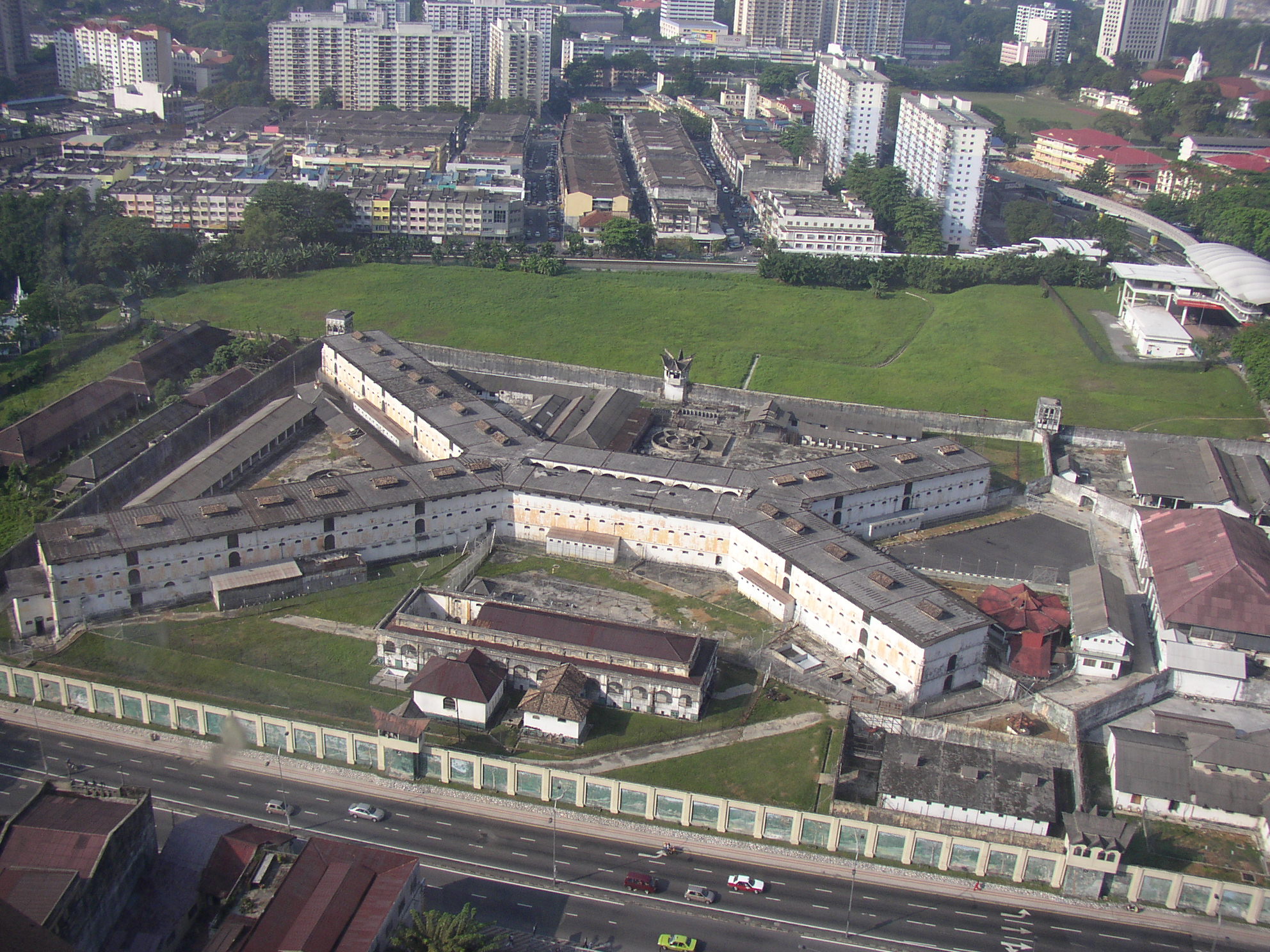
Pudu Prison (Malay: Penjara Pudu), also known as Pudu Jail or Pudu Gaol, was a prison in Kuala Lumpur, Malaysia. Built in phases by the British colonial government between 1891 and 1895, it was located along Jalan Shaw (now Jalan Hang Tuah). The construction began with its 394-metre prison wall at a cost of 16,000 Straits dollars. The wall, at one point in its history, was adorned with the world's longest mural.
The prison complex was largely demolished by December 2012 to make way for urban development. At the request of heritage conservationists and the public, the main gate and a portion of the exterior wall have been preserved and now form part of the park surrounding the Bukit Bintang City Centre development and mall, which occupies the site of the former prison.
Pudu Prison was built on the site of a former Chinese cemetery. The site was chosen because Pudu was a dense jungle at the time, with Malayan tigers occasionally roaming around, and it also because at the time it was close to Kuala Lumpur's central business district (about one mile from the Sultan Abdul Samad Building) yet sufficiently isolated. Charles Edwin Spooner, the head of Selangor's Public Works Department, was the architect and project manager. The prison was built at a cost of 138,000 Straits dollars.
Construction began in 1891, with convicts serving as the labourers. The cemetery was excavated and the remains from 500 graves were relocated to other cemeteries. Prisoners were transferred to the partially built prison in stages throughout the construction period from 1892 to 1895. While the prison's main block was only half-constructed, about 500 inmates from other smaller jails throughout Kuala Lumpur were relocated to Pudu Jail in May 1895. The first governor of Pudu Prison was Lieutenant-Colonel J.A.B. Ellen.
From 1893 to 1895, an outbreak of cholera and dysentery struck the prison and killed a number of inmates. The epidemic peaked in August 1895, coinciding with an unusually dry weather, resulting in 126 recorded cases, including 68 fatalities in that month alone.
The epidemic was blamed on the prison's water supply, which was sourced from a well built over the former burial grounds. The well's water was also contaminated by effluent from a vegetable garden in a nearby village. The epidemic was brought under control by the end of August 1895 when fresh water was sourced from reservoirs in Ampang.
Outbreaks of beriberi had also plagued the prison during its first decade in operation, and this was followed by a malaria outbreak in 1908.
In 1911, Richard Alfred Ernest Clark, a former soldier of the third battalion of the Middlesex Regiment, was one of the European warders at Pudu Prison.
Pudu Prison
Pudu Prison (Malay: Penjara Pudu), also known as Pudu Jail or Pudu Gaol, was a prison in Kuala Lumpur, Malaysia. Built in phases by the British colonial government between 1891 and 1895, it was located along Jalan Shaw (now Jalan Hang Tuah). The construction began with its 394-metre prison wall at a cost of 16,000 Straits dollars. The wall, at one point in its history, was adorned with the world's longest mural.
The prison complex was largely demolished by December 2012 to make way for urban development. At the request of heritage conservationists and the public, the main gate and a portion of the exterior wall have been preserved and now form part of the park surrounding the Bukit Bintang City Centre development and mall, which occupies the site of the former prison.
Pudu Prison was built on the site of a former Chinese cemetery. The site was chosen because Pudu was a dense jungle at the time, with Malayan tigers occasionally roaming around, and it also because at the time it was close to Kuala Lumpur's central business district (about one mile from the Sultan Abdul Samad Building) yet sufficiently isolated. Charles Edwin Spooner, the head of Selangor's Public Works Department, was the architect and project manager. The prison was built at a cost of 138,000 Straits dollars.
Construction began in 1891, with convicts serving as the labourers. The cemetery was excavated and the remains from 500 graves were relocated to other cemeteries. Prisoners were transferred to the partially built prison in stages throughout the construction period from 1892 to 1895. While the prison's main block was only half-constructed, about 500 inmates from other smaller jails throughout Kuala Lumpur were relocated to Pudu Jail in May 1895. The first governor of Pudu Prison was Lieutenant-Colonel J.A.B. Ellen.
From 1893 to 1895, an outbreak of cholera and dysentery struck the prison and killed a number of inmates. The epidemic peaked in August 1895, coinciding with an unusually dry weather, resulting in 126 recorded cases, including 68 fatalities in that month alone.
The epidemic was blamed on the prison's water supply, which was sourced from a well built over the former burial grounds. The well's water was also contaminated by effluent from a vegetable garden in a nearby village. The epidemic was brought under control by the end of August 1895 when fresh water was sourced from reservoirs in Ampang.
Outbreaks of beriberi had also plagued the prison during its first decade in operation, and this was followed by a malaria outbreak in 1908.
In 1911, Richard Alfred Ernest Clark, a former soldier of the third battalion of the Middlesex Regiment, was one of the European warders at Pudu Prison.
Recent media
Recent media