
Recent from talks
Pullman porter
Knowledge base stats:
Talk channels stats:
Members stats:
Pullman porter
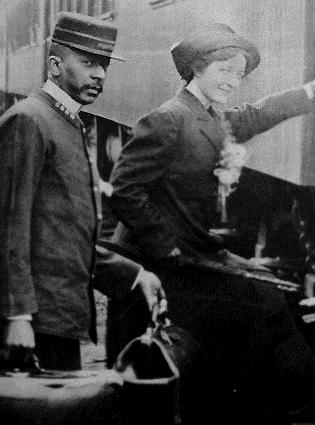
Pullman porters were men hired to work for the railroads as porters on sleeping cars. Starting shortly after the American Civil War, George Pullman sought out former slaves to work on his sleeper cars. Their job was to carry passengers’ baggage, shine shoes, set up and maintain the sleeping berths, and serve passengers. Pullman porters served American railroads from the late 1860s until the Pullman Company ceased its United States operations on December 31, 1968, though some sleeping-car porters continued working on cars operated by the railroads themselves and, beginning in 1971, Amtrak. The Pullman Company also operated sleeping cars in Mexico from the 1880s until November 13, 1970. The term "porter" has been superseded in modern American usage by "sleeping car attendant", with the former term being considered "somewhat derogatory".
Until the 1960s, Pullman porters in the United States were almost exclusively black, and have been widely credited with contributing to the development of the black middle class in the United States. Under the leadership of A. Philip Randolph, Pullman porters formed the first all-black union, the Brotherhood of Sleeping Car Porters, in 1925. The union was instrumental in the advancement of the Civil Rights Movement. Porters worked under the supervision of a Pullman conductor (distinct from the railroad's own conductor in overall charge of the train), who was invariably white. The Pullman Company employed Mexican men as porters in Mexico.
In addition to sleeping cars, Pullman also provided parlor cars and dining cars used by some railroads which did not operate their own; the dining cars were typically staffed with African-American cooks and waiters, under the supervision of a white steward: "With the advent of the dining car, it was no longer possible to have the conductor and porters do double duty: a dining car required a trained staff" and "depending on the train and the sophistication of the meals, a staff could consist of a dozen men." A small number of Asian Americans worked in Pullman dining cars following the 1950s.
Pullman also employed African-American maids on deluxe trains to care for women's needs, especially women with children; in 1926, Pullman employed about 200 maids and over 10,000 porters. Maids assisted ladies with bathing, gave manicures and dressed hair, sewed and pressed clothing, shined shoes, and helped care for children. The Central of Georgia Railway continued using this service as a selling point in their advertisements for the Nancy Hanks well into the 1950s.
Prior to the 1860s, the concept of sleeping cars on railroads had not been widely developed. George Pullman pioneered sleeping accommodations on trains, and by the late 1860s, he was hiring only African-Americans to serve as porters. After the Civil War ended in 1865 Pullman knew that there was a large pool of former slaves who would be looking for work; he also had a very clear racial conception. He was aware that most Americans, unlike the wealthy, did not have personal servants in their homes.[citation needed] Pullman also knew the wealthy were accustomed to being served by a liveried waiter or butler, but to staff the Pullman cars with "properly humble" workers in uniform was something the American middle class had never experienced.[citation needed] Hence, part of the appeal of traveling on sleeping cars was, in a sense, to have an upper class experience.[citation needed]
From the start, Pullman's ads promoting his new sleeper service featured these porters. Initially, they were one of the features that most clearly distinguished his carriages from those of competitors, but eventually nearly all would follow his lead, hiring African-Americans as porters, cooks, waiters and Red Caps (railway station porters). According to the Museum of the American Railroad:
The Pullman Company was a separate business from the railroad lines. It owned and operated sleeping cars that were attached to most long-distance passenger trains. Pullman was essentially a chain of hotels on wheels ... Pullman provided a Porter (attendant) that prepared the beds in the evening and made them in the morning. Porters attended to additional needs such as room service from the dining car, sending and receiving telegrams, shining shoes, and valet service.
While the pay was very low by the standards of the day, in an era of significant racial prejudice, being a Pullman porter was one of the best jobs available for African-American men. Thus, for black men, while this was an opportunity, at the same time it was also an experience of being stereotyped as the servant class and having to take a lot of abuse. Many passengers called every porter "George", as if he were George Pullman's "boy" (servant), a practice that was born in the South where slaves were named after their slavemasters/owners. The only ones who protested were other men named George, who founded the Society for the Prevention of Calling Sleeping Car Porters "George", or SPCSCPG, which eventually claimed 31,000 members. Although the SPCSCPG was more interested in defending the dignity of its white members than in achieving any measure of racial justice, it nevertheless had some effects for all porters. In 1926, the SPCSCPG persuaded the Pullman Company to install small racks in each car, displaying a card with the given name of the porter on duty. Of the 12,000 porters and waiters then working for Pullman, only 362 turned out to be named George. Stanley G. Grizzle, a former Canadian porter, titled his autobiography, My Name's Not George: The Story of the Brotherhood of Sleeping Car Porters.
Hub AI
Pullman porter AI simulator
(@Pullman porter_simulator)
Pullman porter
Pullman porters were men hired to work for the railroads as porters on sleeping cars. Starting shortly after the American Civil War, George Pullman sought out former slaves to work on his sleeper cars. Their job was to carry passengers’ baggage, shine shoes, set up and maintain the sleeping berths, and serve passengers. Pullman porters served American railroads from the late 1860s until the Pullman Company ceased its United States operations on December 31, 1968, though some sleeping-car porters continued working on cars operated by the railroads themselves and, beginning in 1971, Amtrak. The Pullman Company also operated sleeping cars in Mexico from the 1880s until November 13, 1970. The term "porter" has been superseded in modern American usage by "sleeping car attendant", with the former term being considered "somewhat derogatory".
Until the 1960s, Pullman porters in the United States were almost exclusively black, and have been widely credited with contributing to the development of the black middle class in the United States. Under the leadership of A. Philip Randolph, Pullman porters formed the first all-black union, the Brotherhood of Sleeping Car Porters, in 1925. The union was instrumental in the advancement of the Civil Rights Movement. Porters worked under the supervision of a Pullman conductor (distinct from the railroad's own conductor in overall charge of the train), who was invariably white. The Pullman Company employed Mexican men as porters in Mexico.
In addition to sleeping cars, Pullman also provided parlor cars and dining cars used by some railroads which did not operate their own; the dining cars were typically staffed with African-American cooks and waiters, under the supervision of a white steward: "With the advent of the dining car, it was no longer possible to have the conductor and porters do double duty: a dining car required a trained staff" and "depending on the train and the sophistication of the meals, a staff could consist of a dozen men." A small number of Asian Americans worked in Pullman dining cars following the 1950s.
Pullman also employed African-American maids on deluxe trains to care for women's needs, especially women with children; in 1926, Pullman employed about 200 maids and over 10,000 porters. Maids assisted ladies with bathing, gave manicures and dressed hair, sewed and pressed clothing, shined shoes, and helped care for children. The Central of Georgia Railway continued using this service as a selling point in their advertisements for the Nancy Hanks well into the 1950s.
Prior to the 1860s, the concept of sleeping cars on railroads had not been widely developed. George Pullman pioneered sleeping accommodations on trains, and by the late 1860s, he was hiring only African-Americans to serve as porters. After the Civil War ended in 1865 Pullman knew that there was a large pool of former slaves who would be looking for work; he also had a very clear racial conception. He was aware that most Americans, unlike the wealthy, did not have personal servants in their homes.[citation needed] Pullman also knew the wealthy were accustomed to being served by a liveried waiter or butler, but to staff the Pullman cars with "properly humble" workers in uniform was something the American middle class had never experienced.[citation needed] Hence, part of the appeal of traveling on sleeping cars was, in a sense, to have an upper class experience.[citation needed]
From the start, Pullman's ads promoting his new sleeper service featured these porters. Initially, they were one of the features that most clearly distinguished his carriages from those of competitors, but eventually nearly all would follow his lead, hiring African-Americans as porters, cooks, waiters and Red Caps (railway station porters). According to the Museum of the American Railroad:
The Pullman Company was a separate business from the railroad lines. It owned and operated sleeping cars that were attached to most long-distance passenger trains. Pullman was essentially a chain of hotels on wheels ... Pullman provided a Porter (attendant) that prepared the beds in the evening and made them in the morning. Porters attended to additional needs such as room service from the dining car, sending and receiving telegrams, shining shoes, and valet service.
While the pay was very low by the standards of the day, in an era of significant racial prejudice, being a Pullman porter was one of the best jobs available for African-American men. Thus, for black men, while this was an opportunity, at the same time it was also an experience of being stereotyped as the servant class and having to take a lot of abuse. Many passengers called every porter "George", as if he were George Pullman's "boy" (servant), a practice that was born in the South where slaves were named after their slavemasters/owners. The only ones who protested were other men named George, who founded the Society for the Prevention of Calling Sleeping Car Porters "George", or SPCSCPG, which eventually claimed 31,000 members. Although the SPCSCPG was more interested in defending the dignity of its white members than in achieving any measure of racial justice, it nevertheless had some effects for all porters. In 1926, the SPCSCPG persuaded the Pullman Company to install small racks in each car, displaying a card with the given name of the porter on duty. Of the 12,000 porters and waiters then working for Pullman, only 362 turned out to be named George. Stanley G. Grizzle, a former Canadian porter, titled his autobiography, My Name's Not George: The Story of the Brotherhood of Sleeping Car Porters.
Recent media