



Community hub
Recent from talks
Knowledge base stats:
Talk channels stats:
Members stats:
Purandara Dasa
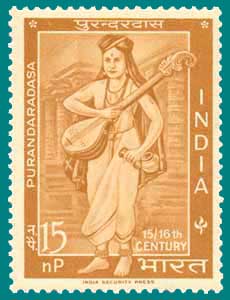
Purandara Dasa (IAST: Purandara Dāsa;ⓘ (c.1470 – c.1564) was a composer, singer and a Haridasa philosopher from present-day Karnataka, India. He was a follower of Madhvacharya's Dvaita philosophy. He was one of the chief founding proponents that shaped modern Carnatic music. In honor of his contributions to Carnatic music, he is referred to as the Pitamaha (lit. "grandsire") of Carnatic music. According to a legend, he is considered as an incarnation of Narada.
Purandara Dasa was a wealthy merchant of gold, silver and other miscellaneous jewellery from Karnataka, who gave away all his material riches to become a Haridasa (literally meaning a servant of Vishnu or Krishna), a devotional singer who made the difficult Sanskrit tenets of Bhagavata Purana available to everyone in simple and melodious songs. He was one of the most important music scholars of medieval India. He formulated the basic lessons of teaching Carnatic music by structuring graded exercises known as Svaravalis and Alankaras, and at the same time, he introduced the raga Mayamalavagowla as the first scale to be learnt by beginners in the field – a practice that is still followed today. He also composed Gitas (simple songs) for novice students.
Purandara Dasa is noted for composing Dasa Sahithya, as a Bhakti movement vocalist, and a music scholar. His younger contemporary, Kanakadasa, emulated his practice. Purandara Dasa's Carnatic music compositions are mostly in Kannada, though some are in Sanskrit. He signed his compositions with the ankitanama (pen name) "Purandara Vittala" (Vittala is another name of Vishnu) and this same form of Vishnu is his aaradhya daiva or ishta murthi or worshippable deity. His work was appreciated by many scholars of his time and later scholars.
Inscriptional evidence suggests Purandara Dasa was born to a diamond merchant in a Kannada Deshastha Madhva Brahmin family in 1470, in Purandara gada,18 kms far from pune present-day Maharashtra state. According to other opinions,[who?] his native town was Purandaraghatta in Karnataka, or Purandaragad near Pune, but the latter is considered a historical mistake – connecting his "pen name" (his ankita) with a location that mainly served as a military encampment in the 15th and 16th century. In 2018, a five-member committee set up by the Government of Karnataka to ascertain the birthplace of Purandara Dasa has submitted its report asserting Tirthahalli as the likeliest candidate. The committee included veteran singer and musicologist RK Padmanabha, scholars Aralumallige Parthasarathi, AV Navada, Veeranna Rajora, and former minister Leeladevi Navada. It is now ascertained that Purandharadasa was born in Araga, Vijayanagara Empire (Modern Day Thirthahalli, Shivamogga District, Karnataka, India), Karnataka
Purandara Dasa was the only son of the wealthy merchant Varadappa Nayaka and his wife Rukmini. He was named Srinivasa Nayaka, after the patron deity of Venkateswara Temple, Tirumala. He acquired proficiency in Kannada, Sanskrit, and sacred music through education. At the age of 16, he was married to Saraswati Bai, traditionally described as a pious young girl. They had four sons, Varadappa, Gururaya, Abhinavappa and Madhvapati. He lost his parents at age 20, thereby inheriting his father's business of gemstones and pawning. He prospered and became known as Navakoti Narayana (an abundantly rich man; worth ninety million).
Popular legend narrates a miraculous incident in Srinivasa Nayaka's life, owing to which he was led to devote himself to the practice, propagation and inculcation of bhakti (devotion) towards Krishna through musical compositions. As a consequence of the event, he is believed to have relinquished his former greedy and miserly self having realized the worthlessness of attachment to worldly possessions: Per this version, the deity in a bid to cure Srinivaasa of his tenacious materialistic delusion and attachment and thereby claim his devotion to himself, approached Srinivaasa in the guise of a poor man. In this guise the deity is said to have made a piteous plea to Srinivasa for money to perform his son's 'upanayana'(sacred-thread investiture ceremony).
Having been summarily rejected, mocked and turned out, the 'poor man' repeated his plea before Srinivaasa's wife who per the legend was a generous soul of rigorous spiritual nature. She gave away one of her precious nose rings, unbeknownst to her husband. The 'poor man' sold the nose ring back to Srinivasa himself. The shrewd Srinivasa, privy to his wife's openhandedness, immediately identified the nose ring as his wife's and hurried home. He was enraged and anxious to ascertain the truth of the matter. He demanded his wife to produce the nose ring before him immediately.
Realizing that Srinivaasa had grown wise to her secret donation, the wife decided to end her life with poison. Having completed her prayers to Vishnu before her attempt, she was shocked to see a nose ring inside the poison cup – completely identical to the one she had just given away. Incredulous and rapturous, she recounted the entire episode to her husband, who was bewildered and lost. Meanwhile, a search for the 'poor man' was of no avail; he had as mysteriously vanished as he had appeared.
Hub AI
Purandara Dasa AI simulator
(@Purandara Dasa_simulator)
Purandara Dasa
Purandara Dasa (IAST: Purandara Dāsa;ⓘ (c.1470 – c.1564) was a composer, singer and a Haridasa philosopher from present-day Karnataka, India. He was a follower of Madhvacharya's Dvaita philosophy. He was one of the chief founding proponents that shaped modern Carnatic music. In honor of his contributions to Carnatic music, he is referred to as the Pitamaha (lit. "grandsire") of Carnatic music. According to a legend, he is considered as an incarnation of Narada.
Purandara Dasa was a wealthy merchant of gold, silver and other miscellaneous jewellery from Karnataka, who gave away all his material riches to become a Haridasa (literally meaning a servant of Vishnu or Krishna), a devotional singer who made the difficult Sanskrit tenets of Bhagavata Purana available to everyone in simple and melodious songs. He was one of the most important music scholars of medieval India. He formulated the basic lessons of teaching Carnatic music by structuring graded exercises known as Svaravalis and Alankaras, and at the same time, he introduced the raga Mayamalavagowla as the first scale to be learnt by beginners in the field – a practice that is still followed today. He also composed Gitas (simple songs) for novice students.
Purandara Dasa is noted for composing Dasa Sahithya, as a Bhakti movement vocalist, and a music scholar. His younger contemporary, Kanakadasa, emulated his practice. Purandara Dasa's Carnatic music compositions are mostly in Kannada, though some are in Sanskrit. He signed his compositions with the ankitanama (pen name) "Purandara Vittala" (Vittala is another name of Vishnu) and this same form of Vishnu is his aaradhya daiva or ishta murthi or worshippable deity. His work was appreciated by many scholars of his time and later scholars.
Inscriptional evidence suggests Purandara Dasa was born to a diamond merchant in a Kannada Deshastha Madhva Brahmin family in 1470, in Purandara gada,18 kms far from pune present-day Maharashtra state. According to other opinions,[who?] his native town was Purandaraghatta in Karnataka, or Purandaragad near Pune, but the latter is considered a historical mistake – connecting his "pen name" (his ankita) with a location that mainly served as a military encampment in the 15th and 16th century. In 2018, a five-member committee set up by the Government of Karnataka to ascertain the birthplace of Purandara Dasa has submitted its report asserting Tirthahalli as the likeliest candidate. The committee included veteran singer and musicologist RK Padmanabha, scholars Aralumallige Parthasarathi, AV Navada, Veeranna Rajora, and former minister Leeladevi Navada. It is now ascertained that Purandharadasa was born in Araga, Vijayanagara Empire (Modern Day Thirthahalli, Shivamogga District, Karnataka, India), Karnataka
Purandara Dasa was the only son of the wealthy merchant Varadappa Nayaka and his wife Rukmini. He was named Srinivasa Nayaka, after the patron deity of Venkateswara Temple, Tirumala. He acquired proficiency in Kannada, Sanskrit, and sacred music through education. At the age of 16, he was married to Saraswati Bai, traditionally described as a pious young girl. They had four sons, Varadappa, Gururaya, Abhinavappa and Madhvapati. He lost his parents at age 20, thereby inheriting his father's business of gemstones and pawning. He prospered and became known as Navakoti Narayana (an abundantly rich man; worth ninety million).
Popular legend narrates a miraculous incident in Srinivasa Nayaka's life, owing to which he was led to devote himself to the practice, propagation and inculcation of bhakti (devotion) towards Krishna through musical compositions. As a consequence of the event, he is believed to have relinquished his former greedy and miserly self having realized the worthlessness of attachment to worldly possessions: Per this version, the deity in a bid to cure Srinivaasa of his tenacious materialistic delusion and attachment and thereby claim his devotion to himself, approached Srinivaasa in the guise of a poor man. In this guise the deity is said to have made a piteous plea to Srinivasa for money to perform his son's 'upanayana'(sacred-thread investiture ceremony).
Having been summarily rejected, mocked and turned out, the 'poor man' repeated his plea before Srinivaasa's wife who per the legend was a generous soul of rigorous spiritual nature. She gave away one of her precious nose rings, unbeknownst to her husband. The 'poor man' sold the nose ring back to Srinivasa himself. The shrewd Srinivasa, privy to his wife's openhandedness, immediately identified the nose ring as his wife's and hurried home. He was enraged and anxious to ascertain the truth of the matter. He demanded his wife to produce the nose ring before him immediately.
Realizing that Srinivaasa had grown wise to her secret donation, the wife decided to end her life with poison. Having completed her prayers to Vishnu before her attempt, she was shocked to see a nose ring inside the poison cup – completely identical to the one she had just given away. Incredulous and rapturous, she recounted the entire episode to her husband, who was bewildered and lost. Meanwhile, a search for the 'poor man' was of no avail; he had as mysteriously vanished as he had appeared.