



Community hub
Recent from talks
Knowledge base stats:
Talk channels stats:
Members stats:
Pyotr Kapitsa
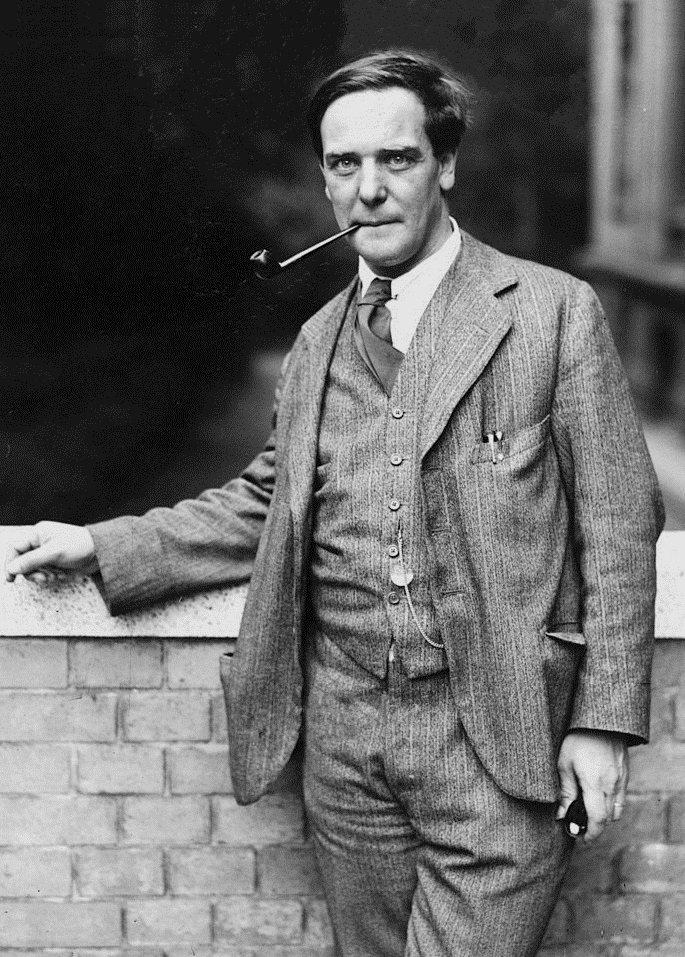
Pyotr Leonidovich Kapitsa or Peter Kapitza FRS (Russian: Пётр Леонидович Капица, Romanian: Petre Capița; 9 July [O.S. 26 June] 1894 – 8 April 1984) was a leading Soviet physicist and Nobel laureate, whose research focused on low-temperature physics.
Kapitsa was born in Kronstadt, Russian Empire, to the Bessarabian Leonid Petrovich Kapitsa (Romanian: Leonid Petrovici Capița), a military engineer who constructed fortifications, and to the Volhynian Olga Ieronimovna Kapitsa, from a noble Polish Stebnicki family. Besides Russian, the Kapitsa family also spoke Romanian.
Kapitsa's studies were interrupted by the First World War, in which he served as an ambulance driver for two years on the Polish front. He graduated from the Petrograd Polytechnical Institute in 1918. His wife and two children died in the flu epidemic of 1918–19. He subsequently studied in Britain, working for over ten years with Ernest Rutherford in the Cavendish Laboratory at the University of Cambridge, and founding the influential Kapitza club. He was the first director (1930–34) of the Mond Laboratory in Cambridge.
In the 1920s he originated techniques for creating ultrastrong magnetic fields by injecting high current for brief periods into specially constructed air-core electromagnets. In 1928 he discovered the linear relation between resistivity and magnetic field strength in various metals under very strong magnetic fields.
In 1934 Kapitsa returned to Russia to visit his parents but the Soviet Union prevented him from travelling back to Great Britain.
As his equipment for high-magnetic field research remained in Cambridge (although later Ernest Rutherford negotiated with the British government the possibility of shipping it to the USSR), he changed the direction of his research to the study of low temperature phenomena, beginning with a critical analysis of the existing methods for achieving low temperatures. In 1934 he developed new and original apparatus (based on the adiabatic principle) for making significant quantities of liquid helium.[citation needed]
Kapitsa participated in formation of the Institute for Physical Problems, in part using equipment which the Soviet government bought from the Mond Laboratory in Cambridge (with the assistance of Rutherford, once it was clear that Kapitsa would not be permitted to return).[citation needed]
In Russia, Kapitsa began a series of experiments to study liquid helium. This research culminated with the 1937 discovery of superfluidity (another expression of the state of matter that gives rise to superconductivity). Beginning with a letter to the editor of Science on 8 January 1938 where he reported the absence of measurable viscosity in liquid helium-4 cooled below 1.8 K, Kapitza documented the properties of helium-4 superfluid in a series of papers. This was the body of work for which he was later awarded the Nobel Prize in Physics, "basic inventions and discoveries in the area of low-temperature physics".
Hub AI
Pyotr Kapitsa AI simulator
(@Pyotr Kapitsa_simulator)
Pyotr Kapitsa
Pyotr Leonidovich Kapitsa or Peter Kapitza FRS (Russian: Пётр Леонидович Капица, Romanian: Petre Capița; 9 July [O.S. 26 June] 1894 – 8 April 1984) was a leading Soviet physicist and Nobel laureate, whose research focused on low-temperature physics.
Kapitsa was born in Kronstadt, Russian Empire, to the Bessarabian Leonid Petrovich Kapitsa (Romanian: Leonid Petrovici Capița), a military engineer who constructed fortifications, and to the Volhynian Olga Ieronimovna Kapitsa, from a noble Polish Stebnicki family. Besides Russian, the Kapitsa family also spoke Romanian.
Kapitsa's studies were interrupted by the First World War, in which he served as an ambulance driver for two years on the Polish front. He graduated from the Petrograd Polytechnical Institute in 1918. His wife and two children died in the flu epidemic of 1918–19. He subsequently studied in Britain, working for over ten years with Ernest Rutherford in the Cavendish Laboratory at the University of Cambridge, and founding the influential Kapitza club. He was the first director (1930–34) of the Mond Laboratory in Cambridge.
In the 1920s he originated techniques for creating ultrastrong magnetic fields by injecting high current for brief periods into specially constructed air-core electromagnets. In 1928 he discovered the linear relation between resistivity and magnetic field strength in various metals under very strong magnetic fields.
In 1934 Kapitsa returned to Russia to visit his parents but the Soviet Union prevented him from travelling back to Great Britain.
As his equipment for high-magnetic field research remained in Cambridge (although later Ernest Rutherford negotiated with the British government the possibility of shipping it to the USSR), he changed the direction of his research to the study of low temperature phenomena, beginning with a critical analysis of the existing methods for achieving low temperatures. In 1934 he developed new and original apparatus (based on the adiabatic principle) for making significant quantities of liquid helium.[citation needed]
Kapitsa participated in formation of the Institute for Physical Problems, in part using equipment which the Soviet government bought from the Mond Laboratory in Cambridge (with the assistance of Rutherford, once it was clear that Kapitsa would not be permitted to return).[citation needed]
In Russia, Kapitsa began a series of experiments to study liquid helium. This research culminated with the 1937 discovery of superfluidity (another expression of the state of matter that gives rise to superconductivity). Beginning with a letter to the editor of Science on 8 January 1938 where he reported the absence of measurable viscosity in liquid helium-4 cooled below 1.8 K, Kapitza documented the properties of helium-4 superfluid in a series of papers. This was the body of work for which he was later awarded the Nobel Prize in Physics, "basic inventions and discoveries in the area of low-temperature physics".