



Community hub
Recent from talks
Knowledge base stats:
Talk channels stats:
Members stats:
Quchan
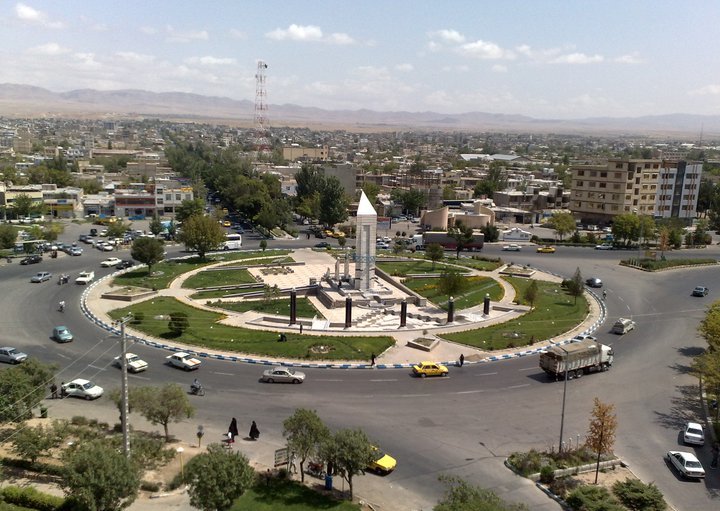
Quchan (Persian: قوچان; pronounced [quˈtʃɑːn, ɢoˈtʃɒːn]) is a city in the Central District of Quchan County, Razavi Khorasan province, Iran, serving as capital of both the county and the district. It is approximately 97 km south of the border city of Ashgabat, capital city of the neighboring country Turkmenistan.
The city of Quchan has been considered in the past due to its historical location, including having 140 historical monuments and having 32 monuments registered in the list of national monuments and 20 attractive tourist areas. Nader Shah was assassinated on 20 June 1747, at Quchan in Khorasan.
This city has trained famous scholars, mystics, thinkers, poets and heroes. Heroes such as Jafar Gholi Zangli and Noei khaboushani and Ahmad Vafadar who technically struck the heroes Abbas Zandi and Gholamreza Takhti and won the wrestling armband for three consecutive national championships.
Quchan city is located in 10 km of old Quchan and its distance to Mashhad is about 130 km and to Bajgiran (Iran-Turkmenistan border) 84 km and to the center of Turkmenistan (Ashgabat) is 118 km and has two important parts. The central part and the part of the tax collectors.
It is stated in the historical writings: Asak was the name of a city from the village or mountain of Khorasan, where Parth is called, and its founder was Ashk Aol. The oldest capital of the Parthians was in a place called Astaka or Areska in the present-day Qochan region, after the names of Asak and Areska, Stu and Stua were named. The residence of the Ashkani family was in Asak, and this name came from there and was changed to Ashak, Arshak, Ashk, and Ashkanian. In his inscription, Darius the Great connects Part Roza with Zarnka and Herat, and Sargarti, which was located in the Lut desert, with Gorgan.
The length of this province from west to east is 480 km, and its width is 200 km, and the main area of Part has an area of 96,000 square kilometers. This area is surrounded by three mountain ranges.Daman Kouh or the Akrad Mountains, whose range extends to the Khorezm desert, "in fact, the northern mountain chain", another Aladagh and Miraby in the middle, called Jagtai Mountains or Jovin Mountains, continue in the south.
Ashk declared his kingdom for the first time in the city of Asak and near the current Quchan. Nilsson writes twice that Andragoras, who was ruling Parthia before Antiochus II, was killed in this raisin, and apparently Arsasis was crowned king in a city called Asak, which was located near Quchan in the Etrak valley. Ho Feman has speculated that the eternal fire of the city of Asak in the Astaoin state, in the presence of which Arshak, the founder of the Parthian dynasty, ascended to the royal throne is the same as the fire of Azerbarzin Mehr, because the place of this fire was near the city of Asak during the Sasanian era.[8]
In the present Ostad (one of the districts of Qochan), which according to the narration of the local people, due to their handiwork and art by Khosrow Parviz, the name of Ostad was given to them, and Moghadisi in Hasan al-Taqasim also mentioned the mention of their handiwork. There is the name of Atashgah, which confirms the presence of many ashes, and a basic and comprehensive investigation should be done because it is possible that it is the same place as the famous Atashkada, which time has destroyed its traces.
Hub AI
Quchan AI simulator
(@Quchan_simulator)
Quchan
Quchan (Persian: قوچان; pronounced [quˈtʃɑːn, ɢoˈtʃɒːn]) is a city in the Central District of Quchan County, Razavi Khorasan province, Iran, serving as capital of both the county and the district. It is approximately 97 km south of the border city of Ashgabat, capital city of the neighboring country Turkmenistan.
The city of Quchan has been considered in the past due to its historical location, including having 140 historical monuments and having 32 monuments registered in the list of national monuments and 20 attractive tourist areas. Nader Shah was assassinated on 20 June 1747, at Quchan in Khorasan.
This city has trained famous scholars, mystics, thinkers, poets and heroes. Heroes such as Jafar Gholi Zangli and Noei khaboushani and Ahmad Vafadar who technically struck the heroes Abbas Zandi and Gholamreza Takhti and won the wrestling armband for three consecutive national championships.
Quchan city is located in 10 km of old Quchan and its distance to Mashhad is about 130 km and to Bajgiran (Iran-Turkmenistan border) 84 km and to the center of Turkmenistan (Ashgabat) is 118 km and has two important parts. The central part and the part of the tax collectors.
It is stated in the historical writings: Asak was the name of a city from the village or mountain of Khorasan, where Parth is called, and its founder was Ashk Aol. The oldest capital of the Parthians was in a place called Astaka or Areska in the present-day Qochan region, after the names of Asak and Areska, Stu and Stua were named. The residence of the Ashkani family was in Asak, and this name came from there and was changed to Ashak, Arshak, Ashk, and Ashkanian. In his inscription, Darius the Great connects Part Roza with Zarnka and Herat, and Sargarti, which was located in the Lut desert, with Gorgan.
The length of this province from west to east is 480 km, and its width is 200 km, and the main area of Part has an area of 96,000 square kilometers. This area is surrounded by three mountain ranges.Daman Kouh or the Akrad Mountains, whose range extends to the Khorezm desert, "in fact, the northern mountain chain", another Aladagh and Miraby in the middle, called Jagtai Mountains or Jovin Mountains, continue in the south.
Ashk declared his kingdom for the first time in the city of Asak and near the current Quchan. Nilsson writes twice that Andragoras, who was ruling Parthia before Antiochus II, was killed in this raisin, and apparently Arsasis was crowned king in a city called Asak, which was located near Quchan in the Etrak valley. Ho Feman has speculated that the eternal fire of the city of Asak in the Astaoin state, in the presence of which Arshak, the founder of the Parthian dynasty, ascended to the royal throne is the same as the fire of Azerbarzin Mehr, because the place of this fire was near the city of Asak during the Sasanian era.[8]
In the present Ostad (one of the districts of Qochan), which according to the narration of the local people, due to their handiwork and art by Khosrow Parviz, the name of Ostad was given to them, and Moghadisi in Hasan al-Taqasim also mentioned the mention of their handiwork. There is the name of Atashgah, which confirms the presence of many ashes, and a basic and comprehensive investigation should be done because it is possible that it is the same place as the famous Atashkada, which time has destroyed its traces.