
Recent from talks
General Atomics MQ-1 Predator
Knowledge base stats:
Talk channels stats:
Members stats:
General Atomics MQ-1 Predator
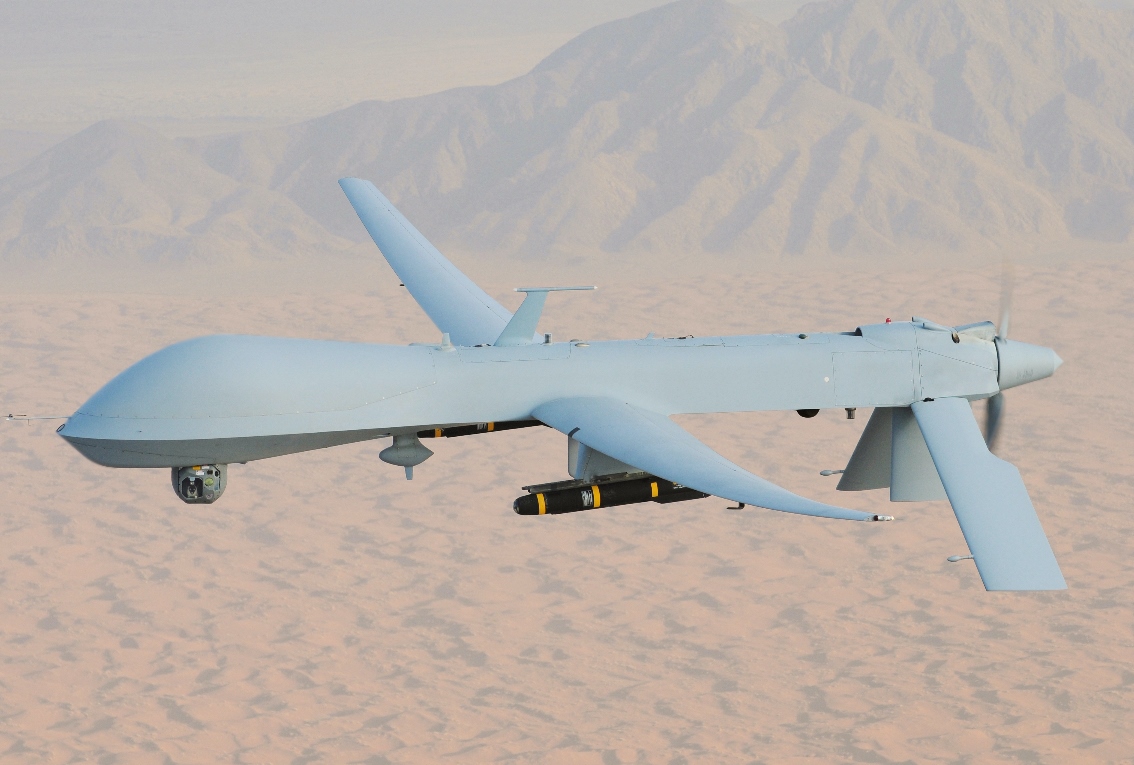
The General Atomics MQ-1 Predator (often referred to as the Predator drone) is an American remotely piloted aircraft (RPA) built by General Atomics that was used primarily by the United States Air Force (USAF) and Central Intelligence Agency (CIA). Conceived in the early 1990s for aerial reconnaissance and forward observation roles, the Predator carries cameras and other sensors. It was modified and upgraded to carry and fire two AGM-114 Hellfire missiles or other munitions. The aircraft entered service in 1995, and saw combat in the war in Afghanistan, Pakistan, the NATO intervention in Bosnia, the NATO bombing of Yugoslavia, the Iraq War, Yemen, the 2011 Libyan civil war, the 2014 intervention in Syria, and Somalia.
The USAF describes the Predator as a "Tier II" MALE UAS (medium-altitude, long-endurance unmanned aircraft system). The UAS consists of four aircraft or "air vehicles" with sensors, a ground control station (GCS), and a primary satellite link communication suite. Powered by a Rotax engine and driven by a propeller, the air vehicle can fly up to 400 nmi (460 mi; 740 km) to a target, loiter overhead for 14 hours, then return to its base.
The MQ-1 Predator was the primary remotely piloted aircraft used for offensive operations by the USAF and the CIA in Afghanistan and the Pakistani tribal areas from 2001 until the introduction of the MQ-9 Reaper; it has also been deployed elsewhere. Because offensive uses of the Predator are classified by the U.S., U.S. military officials have reported an appreciation for the intelligence and reconnaissance-gathering abilities of RPAs but declined to publicly discuss their offensive use. The United States Air Force retired the Predator in 2018, replacing it with the Reaper.
Civilian applications for drones have included border enforcement and scientific studies, and to monitor wind direction and other characteristics of large forest fires (such as the drone that was used by the California Air National Guard in the August 2013 Rim Fire).
The Central Intelligence Agency (CIA) and the Pentagon began experimenting with unmanned reconnaissance aircraft (drones) in the early 1980s. The CIA preferred small, lightweight, unobtrusive drones, in contrast to the United States Air Force (USAF). In the early 1990s, the CIA became interested in the "Amber", a drone developed by Leading Systems, Inc. The company's owner, Abraham Karem, was the former chief designer for the Israeli Air Force, and had immigrated to the U.S. in the late 1970s. Karem's company went bankrupt and was bought by a U.S. defense contractor, from whom the CIA secretly bought five drones (now called the "Gnat"). Karem agreed to produce a quiet engine for the vehicle, which had until then sounded like "a lawnmower in the sky". The new development became known as the "Predator".
General Atomics Aeronautical Systems (GA) was awarded a contract to develop the Predator in January 1994, and the initial Advanced Concept Technology Demonstration (ACTD) phase lasted from January 1994 to June 1996. First flight took place on 3 July 1994 at the El Mirage airfield in the Mojave Desert. The aircraft itself was a derivative of the GA Gnat 750. During the ACTD phase, three systems were purchased from GA, comprising twelve aircraft and three ground control stations.
From April through May 1995, the Predator ACTD aircraft were flown as a part of the Roving Sands 1995 exercises in the U.S. The exercise operations were successful which led to the decision to deploy the system to the Balkans later in the summer of 1995.
During the ACTD, Predators were operated by a combined Army/Navy/Air Force/Marine team managed by the Navy's Joint Program Office for Unmanned Aerial Vehicles (JPO-UAV) and first deployed to Gjader, Albania, for operations in the former Yugoslavia in spring 1995.
Hub AI
General Atomics MQ-1 Predator AI simulator
(@General Atomics MQ-1 Predator_simulator)
General Atomics MQ-1 Predator
The General Atomics MQ-1 Predator (often referred to as the Predator drone) is an American remotely piloted aircraft (RPA) built by General Atomics that was used primarily by the United States Air Force (USAF) and Central Intelligence Agency (CIA). Conceived in the early 1990s for aerial reconnaissance and forward observation roles, the Predator carries cameras and other sensors. It was modified and upgraded to carry and fire two AGM-114 Hellfire missiles or other munitions. The aircraft entered service in 1995, and saw combat in the war in Afghanistan, Pakistan, the NATO intervention in Bosnia, the NATO bombing of Yugoslavia, the Iraq War, Yemen, the 2011 Libyan civil war, the 2014 intervention in Syria, and Somalia.
The USAF describes the Predator as a "Tier II" MALE UAS (medium-altitude, long-endurance unmanned aircraft system). The UAS consists of four aircraft or "air vehicles" with sensors, a ground control station (GCS), and a primary satellite link communication suite. Powered by a Rotax engine and driven by a propeller, the air vehicle can fly up to 400 nmi (460 mi; 740 km) to a target, loiter overhead for 14 hours, then return to its base.
The MQ-1 Predator was the primary remotely piloted aircraft used for offensive operations by the USAF and the CIA in Afghanistan and the Pakistani tribal areas from 2001 until the introduction of the MQ-9 Reaper; it has also been deployed elsewhere. Because offensive uses of the Predator are classified by the U.S., U.S. military officials have reported an appreciation for the intelligence and reconnaissance-gathering abilities of RPAs but declined to publicly discuss their offensive use. The United States Air Force retired the Predator in 2018, replacing it with the Reaper.
Civilian applications for drones have included border enforcement and scientific studies, and to monitor wind direction and other characteristics of large forest fires (such as the drone that was used by the California Air National Guard in the August 2013 Rim Fire).
The Central Intelligence Agency (CIA) and the Pentagon began experimenting with unmanned reconnaissance aircraft (drones) in the early 1980s. The CIA preferred small, lightweight, unobtrusive drones, in contrast to the United States Air Force (USAF). In the early 1990s, the CIA became interested in the "Amber", a drone developed by Leading Systems, Inc. The company's owner, Abraham Karem, was the former chief designer for the Israeli Air Force, and had immigrated to the U.S. in the late 1970s. Karem's company went bankrupt and was bought by a U.S. defense contractor, from whom the CIA secretly bought five drones (now called the "Gnat"). Karem agreed to produce a quiet engine for the vehicle, which had until then sounded like "a lawnmower in the sky". The new development became known as the "Predator".
General Atomics Aeronautical Systems (GA) was awarded a contract to develop the Predator in January 1994, and the initial Advanced Concept Technology Demonstration (ACTD) phase lasted from January 1994 to June 1996. First flight took place on 3 July 1994 at the El Mirage airfield in the Mojave Desert. The aircraft itself was a derivative of the GA Gnat 750. During the ACTD phase, three systems were purchased from GA, comprising twelve aircraft and three ground control stations.
From April through May 1995, the Predator ACTD aircraft were flown as a part of the Roving Sands 1995 exercises in the U.S. The exercise operations were successful which led to the decision to deploy the system to the Balkans later in the summer of 1995.
During the ACTD, Predators were operated by a combined Army/Navy/Air Force/Marine team managed by the Navy's Joint Program Office for Unmanned Aerial Vehicles (JPO-UAV) and first deployed to Gjader, Albania, for operations in the former Yugoslavia in spring 1995.
Recent media