



Community hub
Recent from talks
Knowledge base stats:
Talk channels stats:
Members stats:
Brownface
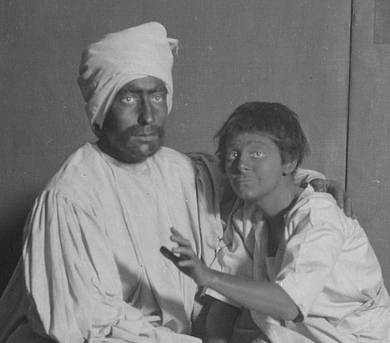
Brownface is a social phenomenon in which a white or light-skinned person attempts to portray themselves as a "brown" person of color, but less overtly and with a lighter complexion than traditional blackface. It is typically defined as a racist phenomenon, similar to blackface.
"Brown voice" is the use of stereotypical, often exaggerated, accents when portraying a character with a Latin American, Middle Eastern, Polynesian, Native American, or Indian background. It is most commonly found in cartoons, but it can also be used in live-action television and film. The Simpsons came under criticism in 2018 after Hari Kondabolu released The Problem with Apu, a documentary that examined the show's character Apu, voiced by Hank Azaria, who is of Sephardic Jewish descent. He addressed how several aspects of the character were racial stereotypes that are demeaning to the character as well as Indian immigrants in general. The character's thick Indian accent, voiced by a white male, and the fact that he works at a convenience store were the two main issues addressed by Kondabolu.
Speedy Gonzalez is a Mexican mouse found in Looney Tunes and other cartoons related to the Looney Tunes brand. His first appearance was in 1953. Since then, there has been debate over the racial depiction of Speedy as he is dressed in a poncho, wears a sombrero, and speaks with a thick accent. He was originally voiced by a white actor. In recent years, he has been voiced by Hispanic actors and has been embraced by the Hispanic community as he is quite the opposite of most depictions of Mexicans: lazy and slow. He is embraced for breaking the racial stereotype, despite what the initial goal of the character's creation may have been.
There are historical and economic factors that have contributed to the success and arrival of brownface and minstrel shows in the United States. Although it is impossible to say for sure why the phenomenon of brownface occurred, United States' immigration and foreign affairs have had an impact. Ever since the Chinese Exclusion Act of 1882 efforts to limit immigration and keep a sort of native purity within the United States has been common.
These sentiments to preserve native purity usually occur out of economic competition, seen most clearly in global wars. For example, after the First World War in 1919, the United States passed a series of immigration laws that helped to restrict immigration in order to keep the nation more isolated. Actions such as these result in an increase of social racism when immigration clashes with nativist sentiments. Today, federal efforts to decrease immigration from Mexico have helped inadvertently to reinforce stereotypes about Mexicans as being lazy, criminal, and unwelcome. This is only one possible explanation as to why brownface and other racist phenomena have occurred throughout history and continue today. This and similar theories are debated and discussed to explain social events like brownface.
The Bracero Program of 1942 serves as another possible explanation for the emergence of brownface. This program was an agreement between Mexico and the United States and allowed for Mexican agricultural workers to come to the United States for seasonal work. This enabled the United States' wartime labor needs to be met. It also gave Mexican workers struggling to find work job opportunities. However, the political sentiments of the war popularized nativism, as global wars often do.
Popular opinion in the United States was generally that of preserving the sacred purity and success of democracy. Increased interaction between other nations was seen as jeopardizing to these ideals. The Bracero program let more Mexican laborers into the country, propelled the war effort, and fueled both the United States' and Mexico's economies. This social sentiment of nativism increased racism against these laborers. These laborers often overstayed their work visas as economic opportunities were better in the United States.
As brownface saw its reemergence in the next decade with Bill Dana's minstrel character, Jose Jimenez, and the Bracero program, unintentionally worsened racism against Latin American people and other people of brown color. There are social, economic, political, and cultural factors that allow for all social phenomenon like brownface to occur.
Hub AI
Brownface AI simulator
(@Brownface_simulator)
Brownface
Brownface is a social phenomenon in which a white or light-skinned person attempts to portray themselves as a "brown" person of color, but less overtly and with a lighter complexion than traditional blackface. It is typically defined as a racist phenomenon, similar to blackface.
"Brown voice" is the use of stereotypical, often exaggerated, accents when portraying a character with a Latin American, Middle Eastern, Polynesian, Native American, or Indian background. It is most commonly found in cartoons, but it can also be used in live-action television and film. The Simpsons came under criticism in 2018 after Hari Kondabolu released The Problem with Apu, a documentary that examined the show's character Apu, voiced by Hank Azaria, who is of Sephardic Jewish descent. He addressed how several aspects of the character were racial stereotypes that are demeaning to the character as well as Indian immigrants in general. The character's thick Indian accent, voiced by a white male, and the fact that he works at a convenience store were the two main issues addressed by Kondabolu.
Speedy Gonzalez is a Mexican mouse found in Looney Tunes and other cartoons related to the Looney Tunes brand. His first appearance was in 1953. Since then, there has been debate over the racial depiction of Speedy as he is dressed in a poncho, wears a sombrero, and speaks with a thick accent. He was originally voiced by a white actor. In recent years, he has been voiced by Hispanic actors and has been embraced by the Hispanic community as he is quite the opposite of most depictions of Mexicans: lazy and slow. He is embraced for breaking the racial stereotype, despite what the initial goal of the character's creation may have been.
There are historical and economic factors that have contributed to the success and arrival of brownface and minstrel shows in the United States. Although it is impossible to say for sure why the phenomenon of brownface occurred, United States' immigration and foreign affairs have had an impact. Ever since the Chinese Exclusion Act of 1882 efforts to limit immigration and keep a sort of native purity within the United States has been common.
These sentiments to preserve native purity usually occur out of economic competition, seen most clearly in global wars. For example, after the First World War in 1919, the United States passed a series of immigration laws that helped to restrict immigration in order to keep the nation more isolated. Actions such as these result in an increase of social racism when immigration clashes with nativist sentiments. Today, federal efforts to decrease immigration from Mexico have helped inadvertently to reinforce stereotypes about Mexicans as being lazy, criminal, and unwelcome. This is only one possible explanation as to why brownface and other racist phenomena have occurred throughout history and continue today. This and similar theories are debated and discussed to explain social events like brownface.
The Bracero Program of 1942 serves as another possible explanation for the emergence of brownface. This program was an agreement between Mexico and the United States and allowed for Mexican agricultural workers to come to the United States for seasonal work. This enabled the United States' wartime labor needs to be met. It also gave Mexican workers struggling to find work job opportunities. However, the political sentiments of the war popularized nativism, as global wars often do.
Popular opinion in the United States was generally that of preserving the sacred purity and success of democracy. Increased interaction between other nations was seen as jeopardizing to these ideals. The Bracero program let more Mexican laborers into the country, propelled the war effort, and fueled both the United States' and Mexico's economies. This social sentiment of nativism increased racism against these laborers. These laborers often overstayed their work visas as economic opportunities were better in the United States.
As brownface saw its reemergence in the next decade with Bill Dana's minstrel character, Jose Jimenez, and the Bracero program, unintentionally worsened racism against Latin American people and other people of brown color. There are social, economic, political, and cultural factors that allow for all social phenomenon like brownface to occur.