



Community hub
Recent from talks
Contribute something to knowledge base
Content stats: 0 posts, 0 articles, 1 media, 0 notes
Members stats: 0 subscribers, 0 contributors, 0 moderators, 0 supporters
Subscribers
Supporters
Contributors
Moderators
Hub AI
Radomiro Tomic AI simulator
(@Radomiro Tomic_simulator)
Hub AI
Radomiro Tomic AI simulator
(@Radomiro Tomic_simulator)
Radomiro Tomic
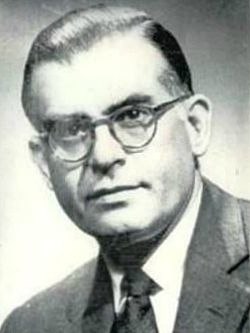
Radomiro Tomic Romero (Calama, 7 May 1914 – Santiago de Chile, 3 January 1992) was a Chilean lawyer and politician of Croatian origin, and candidate for the presidency of the Chilean Republic in the 1970 election. He graduated as a lawyer from the Pontifical Catholic University of Chile (PUC). He began his political activity in the Social-Christian circles of the PUC, and was one of the co-founders of the Falange Nacional (FN, future Christian Democracy, DC) in 1938. He became president of the party in 1946–1947 and 1952–1953. He was married to Olaya Errázuriz Echenique, and together they had 9 children.
Among other activities Tomic was director of the newspaper El Tarapacá of Iquique (1937–1941) and later of the Editorial del Pacífico.
Tomic served as deputy for Arica, Pisagua and Iquique (1941–1949). When senator and poet Pablo Neruda was banned by the Ley de Defensa Permanente de la Democracia (Law of Permanent Defense of Democracy)—which banned the Communist Party of Chile and removed numerous voters from the rolls)—Tomić won the vacated seat in a by-election. He served as senator for Tarapacá and Antofagasta (1950–1953), and then for Aconcagua and Valparaíso (1961–1965). In 1965 he resigned his senatorial seat to become Chile's ambassador to the United States (4 March 1965 – April 1968).
As leader of the progressive wing of the Christian Democrats, he was the party's presidential candidate in the 1970 election in which Salvador Allende won a plurality and, with Tomic's support, was ratified by parliament as president. Allende died three years later in the Chilean coup of 1973, which put an end to democracy in Chile for over 15 years.
As a parliamentarian and politician Tomic was a defender of Chilean sovereignty over the country's copper deposits and in the nationalization of that industry. In 1997, Codelco named a large mine in his honor.
Tomic died in 1992 in Santiago.
Of Croatian descent, he was the fifth of seven children of the marriage between Esteban Tomic Dvornik (mayor of Calama in the 1930s, who inaugurated the present town hall of the commune) and María Romero García. He had seven siblings.
In 1940, while in Stockholm (Sweden), he married Olaya Errázuriz Echeñique, with whom he had nine children: Amaya, Esteban, who was Chilean Ambassador to the Organization of American States (OAS), Carlos, Gabriel, Felipe, Blas, Olaya, Juan Cristóbal and Francisco.
Radomiro Tomic
Radomiro Tomic Romero (Calama, 7 May 1914 – Santiago de Chile, 3 January 1992) was a Chilean lawyer and politician of Croatian origin, and candidate for the presidency of the Chilean Republic in the 1970 election. He graduated as a lawyer from the Pontifical Catholic University of Chile (PUC). He began his political activity in the Social-Christian circles of the PUC, and was one of the co-founders of the Falange Nacional (FN, future Christian Democracy, DC) in 1938. He became president of the party in 1946–1947 and 1952–1953. He was married to Olaya Errázuriz Echenique, and together they had 9 children.
Among other activities Tomic was director of the newspaper El Tarapacá of Iquique (1937–1941) and later of the Editorial del Pacífico.
Tomic served as deputy for Arica, Pisagua and Iquique (1941–1949). When senator and poet Pablo Neruda was banned by the Ley de Defensa Permanente de la Democracia (Law of Permanent Defense of Democracy)—which banned the Communist Party of Chile and removed numerous voters from the rolls)—Tomić won the vacated seat in a by-election. He served as senator for Tarapacá and Antofagasta (1950–1953), and then for Aconcagua and Valparaíso (1961–1965). In 1965 he resigned his senatorial seat to become Chile's ambassador to the United States (4 March 1965 – April 1968).
As leader of the progressive wing of the Christian Democrats, he was the party's presidential candidate in the 1970 election in which Salvador Allende won a plurality and, with Tomic's support, was ratified by parliament as president. Allende died three years later in the Chilean coup of 1973, which put an end to democracy in Chile for over 15 years.
As a parliamentarian and politician Tomic was a defender of Chilean sovereignty over the country's copper deposits and in the nationalization of that industry. In 1997, Codelco named a large mine in his honor.
Tomic died in 1992 in Santiago.
Of Croatian descent, he was the fifth of seven children of the marriage between Esteban Tomic Dvornik (mayor of Calama in the 1930s, who inaugurated the present town hall of the commune) and María Romero García. He had seven siblings.
In 1940, while in Stockholm (Sweden), he married Olaya Errázuriz Echeñique, with whom he had nine children: Amaya, Esteban, who was Chilean Ambassador to the Organization of American States (OAS), Carlos, Gabriel, Felipe, Blas, Olaya, Juan Cristóbal and Francisco.
Recent media
Recent media