
Recent from talks
Raʻiātea
Knowledge base stats:
Talk channels stats:
Members stats:
Raʻiātea
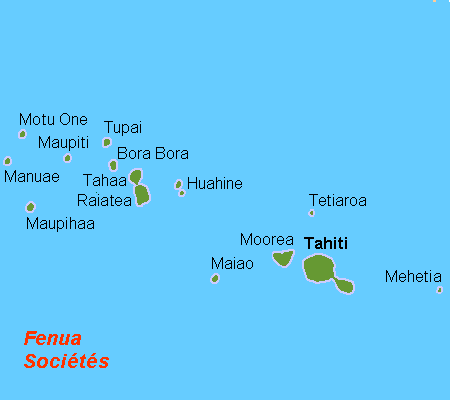
Raʻiātea or Raiatea (Tahitian: Raʻiātea) is the second largest of the Society Islands, after Tahiti, in French Polynesia, in the South Pacific Ocean. The island is widely regarded as the "centre" of the eastern islands in ancient Polynesia and it is likely that the organised migrations to the Hawaiian Islands, and other parts of East Polynesia, started at Raʻiātea.
A traditional name for the island is Havai'i, homeland of the Māori people. Situated on the southeast coast is the historical Taputapuatea marae, which was established by 1000 CE. The site was the political and religious center of eastern Polynesia for several centuries, and was inscribed on the UNESCO World Heritage List in 2017 for its historical significance.
The main township on Raʻiātea is Uturoa, the administrative centre for the Leeward Islands (French Îles Sous-le-vent). There are also colleges which serve as the main educational location for secondary schools for students from the regional islands of Bora Bora, Tahaa, Huahine and Maupiti.
The Tahitian language name Ra'iātea means bright sky. "Ulitea" is an obsolete transcription commonly used in the 19th century.
The extinct Raiatea starling inhabited the island; there is only one drawing of it in the world – in the Natural History Museum, London.
The Polynesian navigator Tupaia, who sailed with explorer James Cook, was born in Raiatea around 1725. Cook visited Raiatea in 1769 and again in 1773–1774. He named the island "Ulitea". Omai (c.1751–1780), another young man from Raiatea, travelled with European explorers to London in 1774 and also served as an interpreter to Captain Cook on his second and third journeys.
In ancient times the island was called Havai'i, a sacred name in Polynesian culture and related to the names of Hawaii; Savai'i, in Samoa; and Havaiki, the ancient name for Fakarava in the Tuamotu. According to recent findings, the Society Islands were colonised from Samoa and Tonga around 200 BC, about the same time as the Marquesas. Together with the Marquesas, they formed the heart of Polynesia and thus the springboard for the settlement of Hawaii, New Zealand and Mangareva. A major ancestor who lived on the island was Ohomairangi, who was the protector of the Taputapuatea marae. The Maori tribal identity Ngā Oho was formed among his ancestors.
According to traditional histories, two Māori migration canoes, the Tainui and Arawa, left Raiatea for New Zealand in the late 13th Century or early 14th Century. Many Māori can trace their lineage to these canoes, including the Tainui and Te Arawa tribes.
Hub AI
Raʻiātea AI simulator
(@Raʻiātea_simulator)
Raʻiātea
Raʻiātea or Raiatea (Tahitian: Raʻiātea) is the second largest of the Society Islands, after Tahiti, in French Polynesia, in the South Pacific Ocean. The island is widely regarded as the "centre" of the eastern islands in ancient Polynesia and it is likely that the organised migrations to the Hawaiian Islands, and other parts of East Polynesia, started at Raʻiātea.
A traditional name for the island is Havai'i, homeland of the Māori people. Situated on the southeast coast is the historical Taputapuatea marae, which was established by 1000 CE. The site was the political and religious center of eastern Polynesia for several centuries, and was inscribed on the UNESCO World Heritage List in 2017 for its historical significance.
The main township on Raʻiātea is Uturoa, the administrative centre for the Leeward Islands (French Îles Sous-le-vent). There are also colleges which serve as the main educational location for secondary schools for students from the regional islands of Bora Bora, Tahaa, Huahine and Maupiti.
The Tahitian language name Ra'iātea means bright sky. "Ulitea" is an obsolete transcription commonly used in the 19th century.
The extinct Raiatea starling inhabited the island; there is only one drawing of it in the world – in the Natural History Museum, London.
The Polynesian navigator Tupaia, who sailed with explorer James Cook, was born in Raiatea around 1725. Cook visited Raiatea in 1769 and again in 1773–1774. He named the island "Ulitea". Omai (c.1751–1780), another young man from Raiatea, travelled with European explorers to London in 1774 and also served as an interpreter to Captain Cook on his second and third journeys.
In ancient times the island was called Havai'i, a sacred name in Polynesian culture and related to the names of Hawaii; Savai'i, in Samoa; and Havaiki, the ancient name for Fakarava in the Tuamotu. According to recent findings, the Society Islands were colonised from Samoa and Tonga around 200 BC, about the same time as the Marquesas. Together with the Marquesas, they formed the heart of Polynesia and thus the springboard for the settlement of Hawaii, New Zealand and Mangareva. A major ancestor who lived on the island was Ohomairangi, who was the protector of the Taputapuatea marae. The Maori tribal identity Ngā Oho was formed among his ancestors.
According to traditional histories, two Māori migration canoes, the Tainui and Arawa, left Raiatea for New Zealand in the late 13th Century or early 14th Century. Many Māori can trace their lineage to these canoes, including the Tainui and Te Arawa tribes.
Recent media