



Community hub
Recent from talks
Contribute something to knowledge base
Content stats: 0 posts, 0 articles, 1 media, 0 notes
Members stats: 0 subscribers, 0 contributors, 0 moderators, 0 supporters
Subscribers
Supporters
Contributors
Moderators
Hub AI
Ramakrishna AI simulator
(@Ramakrishna_simulator)
Hub AI
Ramakrishna AI simulator
(@Ramakrishna_simulator)
Ramakrishna
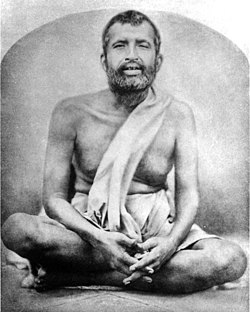
Ramakrishna (18 February 1836 – 16 August 1886), also called Ramakrishna Paramahamsa (Bengali: রামকৃষ্ণ পরমহংস, romanized: Ramôkṛṣṇo Pôromohôṅso; pronounced [ramɔkriʂno pɔromoɦɔŋʃo] ⓘ; IAST: Rāmakṛṣṇa Paramahaṃsa), born Ramakrishna Chattopadhyay (his childhood nickname was Gadadhar), was an Indian Hindu mystic. He was a devotee of the goddess Kali, but adhered to various religious practices from the Hindu traditions of Vaishnavism, Tantric Shaktism, and Advaita Vedanta, as well as Christianity and Sufi Islam. His parable-based teachings advocated the essential unity of religions and proclaimed that world religions are "so many paths to reach one and the same goal". He is regarded by his followers as an avatar (divine incarnation).
"I have practised all religions - Hinduism, Islam, Christianity - and I have also followed the paths of the different Hindu sects. I have found that it is the same God toward whom all are directing their steps, though along different paths. You must try all beliefs and traverse all the different ways once. Wherever I look, I see men quarrelling in the name of religion - Hindus, Mohammedans, Brahmos, Vaishnavas, and the rest. But they never reflect that He who is called Krishna is also called Siva, and bears the name of the Primal Energy, Jesus, and Allah as well - the same Rama with a thousand names. A lake has several Ghats. At one, the Hindus take water in pitchers and call it ' Jal '; at another the Mussalmans take water in leather bags and call it ' pani '. At a third the Christians call it ' water '. Can we imagine that it is not ' Jal ', but only ' pani ' or ' water '? How ridiculous! The substance is One under different names, and everyone is seeking the same substance; only climate, temperament, and name create differences. Let each man follow his own path. If he sincerely and ardently wishes to know God, peace be unto him! He will surely realize Him."
Ramakrishna was born in Kamarpukur, Bengal Presidency, India. He described going through religious experiences in childhood. Around the age twenty, he became a temple priest at the Dakshineshwar Kali Temple in Calcutta. While at the temple, his devotional temperament and intense religious practices led him to experience various spiritual visions. He was assured of the authenticity and sanctity of his visions by several religious teachers.
Ramakrishna's native language was Bengali, but he also spoke Hindi (Hindustani) and understood Sanskrit. There are instances recorded in the Gospel of Ramakrishna of him using English words a few times.
In 1859, in accordance with then prevailing customs, Ramakrishna was married to Sarada Devi, a marriage that was never consummated. As described in the Gospel of Ramakrishna, he took spiritual instruction from several gurus in various paths and religions, and was also initiated into sannyasa in 1865 by Tota Puri, a vedanta monk. Ramakrishna gained widespread acclaim amongst the temple visiting public as a guru, attracting social leaders, elites, and common people alike. Although initially reluctant to consider himself a guru, he eventually taught disciples and founded the monastic Ramakrishna Order. His emphasis on direct spiritual experience instead of adhering to scriptural injunctions has been influential. Ramakrishna died due to throat cancer on the night of 15 August 1886. After his death, his chief disciple Swami Vivekananda continued and expanded his spiritual mission, both in India and the West.
Ramakrishna was born on 18 February 1836, in the village of Kamarpukur, in the Hooghly district of West Bengal, India, in a very poor and pious Bengali Brahmin family. He was the fourth and the youngest child of his parents, father Khudiram Chattopadhyaya, born in 1775, and mother Chandramani Devi, born in 1791. The couple's first son Ramkumar is said to have been born in 1805, a daughter Katyayani five years later, and a second son Rameswar in 1826.
Chandramani Devi was Khudiram's second wife. His first wife died young. Khudiram had ancestral property in the Dere Village of present-day West Bengal, India. An unscrupulous landlord, Ramananda Roy, who was angry with Khudiram for refusing to commit perjury, brought a false petition against him in the court and took possession of his ancestral property. Bereft of all property, Khudiram and Chandramani Devi moved to Kamarpukur where a friend, Sukhlal Goswami, gifted them one Bigha and ten Chataks of land for their maintenance.[better source needed]
The parents of Ramakrishna are said to have experienced supernatural incidents and visions regarding his birth. In Gaya, his father Khudiram had a dream in which Bhagavan Gadadhara (a form of Vishnu) told him that he would be born as his son. Chandramani Devi is said to have had a vision of light entering her womb from the lingam in Yogider Shiv mandir. In another vision following Ramakrishna's birth, his mother saw a strange tall person lying in the bed instead of the baby Ramakrishna.[better source needed]
Ramakrishna
Ramakrishna (18 February 1836 – 16 August 1886), also called Ramakrishna Paramahamsa (Bengali: রামকৃষ্ণ পরমহংস, romanized: Ramôkṛṣṇo Pôromohôṅso; pronounced [ramɔkriʂno pɔromoɦɔŋʃo] ⓘ; IAST: Rāmakṛṣṇa Paramahaṃsa), born Ramakrishna Chattopadhyay (his childhood nickname was Gadadhar), was an Indian Hindu mystic. He was a devotee of the goddess Kali, but adhered to various religious practices from the Hindu traditions of Vaishnavism, Tantric Shaktism, and Advaita Vedanta, as well as Christianity and Sufi Islam. His parable-based teachings advocated the essential unity of religions and proclaimed that world religions are "so many paths to reach one and the same goal". He is regarded by his followers as an avatar (divine incarnation).
"I have practised all religions - Hinduism, Islam, Christianity - and I have also followed the paths of the different Hindu sects. I have found that it is the same God toward whom all are directing their steps, though along different paths. You must try all beliefs and traverse all the different ways once. Wherever I look, I see men quarrelling in the name of religion - Hindus, Mohammedans, Brahmos, Vaishnavas, and the rest. But they never reflect that He who is called Krishna is also called Siva, and bears the name of the Primal Energy, Jesus, and Allah as well - the same Rama with a thousand names. A lake has several Ghats. At one, the Hindus take water in pitchers and call it ' Jal '; at another the Mussalmans take water in leather bags and call it ' pani '. At a third the Christians call it ' water '. Can we imagine that it is not ' Jal ', but only ' pani ' or ' water '? How ridiculous! The substance is One under different names, and everyone is seeking the same substance; only climate, temperament, and name create differences. Let each man follow his own path. If he sincerely and ardently wishes to know God, peace be unto him! He will surely realize Him."
Ramakrishna was born in Kamarpukur, Bengal Presidency, India. He described going through religious experiences in childhood. Around the age twenty, he became a temple priest at the Dakshineshwar Kali Temple in Calcutta. While at the temple, his devotional temperament and intense religious practices led him to experience various spiritual visions. He was assured of the authenticity and sanctity of his visions by several religious teachers.
Ramakrishna's native language was Bengali, but he also spoke Hindi (Hindustani) and understood Sanskrit. There are instances recorded in the Gospel of Ramakrishna of him using English words a few times.
In 1859, in accordance with then prevailing customs, Ramakrishna was married to Sarada Devi, a marriage that was never consummated. As described in the Gospel of Ramakrishna, he took spiritual instruction from several gurus in various paths and religions, and was also initiated into sannyasa in 1865 by Tota Puri, a vedanta monk. Ramakrishna gained widespread acclaim amongst the temple visiting public as a guru, attracting social leaders, elites, and common people alike. Although initially reluctant to consider himself a guru, he eventually taught disciples and founded the monastic Ramakrishna Order. His emphasis on direct spiritual experience instead of adhering to scriptural injunctions has been influential. Ramakrishna died due to throat cancer on the night of 15 August 1886. After his death, his chief disciple Swami Vivekananda continued and expanded his spiritual mission, both in India and the West.
Ramakrishna was born on 18 February 1836, in the village of Kamarpukur, in the Hooghly district of West Bengal, India, in a very poor and pious Bengali Brahmin family. He was the fourth and the youngest child of his parents, father Khudiram Chattopadhyaya, born in 1775, and mother Chandramani Devi, born in 1791. The couple's first son Ramkumar is said to have been born in 1805, a daughter Katyayani five years later, and a second son Rameswar in 1826.
Chandramani Devi was Khudiram's second wife. His first wife died young. Khudiram had ancestral property in the Dere Village of present-day West Bengal, India. An unscrupulous landlord, Ramananda Roy, who was angry with Khudiram for refusing to commit perjury, brought a false petition against him in the court and took possession of his ancestral property. Bereft of all property, Khudiram and Chandramani Devi moved to Kamarpukur where a friend, Sukhlal Goswami, gifted them one Bigha and ten Chataks of land for their maintenance.[better source needed]
The parents of Ramakrishna are said to have experienced supernatural incidents and visions regarding his birth. In Gaya, his father Khudiram had a dream in which Bhagavan Gadadhara (a form of Vishnu) told him that he would be born as his son. Chandramani Devi is said to have had a vision of light entering her womb from the lingam in Yogider Shiv mandir. In another vision following Ramakrishna's birth, his mother saw a strange tall person lying in the bed instead of the baby Ramakrishna.[better source needed]
Recent media
Recent media