Hubbry Logo
Ramesh BhatRamesh BhatMain
Open search
Ramesh Bhat
Community hub
Ramesh Bhat
logo
8 pages, 0 posts
0 subscribers
Be the first to start a discussion here.
Ramesh Bhat
Ramesh Bhat
from Wikipedia

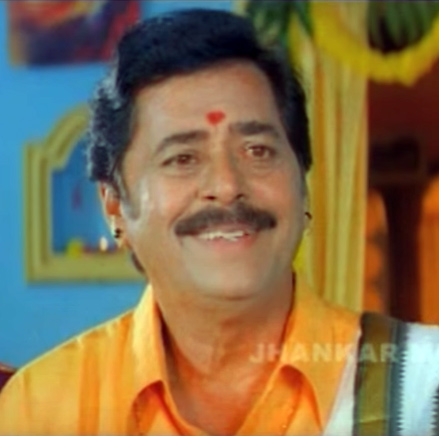
Ramesh Bhat is a multiple-award–winning Indian actor.[2] He has worked predominantly in Kannada films and television serials.

Key Information

Early life

[edit]

Ramesh Bhat was born in Kundapur, Karnataka. He completed his primary education at Manki and portrayed national leaders like Jawaharlal Nehru in school day functions. He moved to Bangalore when his father, Rathnakar Rao, migrated there. He later studied at Model High School in Chamarajapet, Bangalore and went on to complete his diploma in mechanical engineering from SJ Polytechnic in Bangalore. He briefly worked at Kirloskar as a fitter before joining his father's business. He also ran his own business in Basavanagudi.[1]

Career

[edit]

In the 1960s and 1970s, young Ramesh worked with theatre groups like Spandana, Nataranga, and Benaka. Working in theatre brought him closer to Shankar Nag, resulting in several plays, films and TV series.[1] He was the assistant director for the television series Malgudi Days.[1] He has also directed a movie named Parameshi Prema Prasanga, which was nominated for the National Awards in 1983.

Awards

[edit]

Notable filmography

[edit]
  • All films are in Kannada, unless otherwise noted.
Year Title Role Notes
1973 Abachurina Post Office
1980 Minchina Ota Inspector Nayak
1981 Geetha Satish
1983 Coolie
1983 Nodi Swamy Navirodu Hige Kallesh Nuggehalli
Hosa Theerpu Mohan
1984 Makkaliralavva Mane Thumba
1985 Parameshi Prema Prasanga Parameshi
1985 Accident Inspector Rao
1986 Malgudi Days Hindi / English; various roles played by Bhat in Shankar Nag's TV series
Na Ninna Preetisuve Mallesh Mavinakere
1987 Digvijaya Soorappa Nayak
Ondu Muttina Kathe Kutta
Anthima Ghatta Bhaskar
Lorry Driver Vasu
Poornachandra Raghu
1988 Crazy Colonel Colonel Television series
1989 Narasimha Visveswaraya
Hosa Kavya[6] Chandru
Bala Hombale Hari
Idu Saadhya Constable Ranga Cameo
1990 Matsara Jayanna
Nigooda Rahasya
Neene Nanna Jeeva
Ramarajyadalli Rakshasaru
Ganeshana Maduve Shastri
Ashwamedha Gunda
Avesha Prajwal Kumar
1991 Gauri Ganesha Madhusudan
1992 Ganesha Subramanya Subramanya
Bombat Hendthi Ramesh
Mannina Doni Mallikarjuna
Saptapadi Sharma
1993 Dharma Peeta Vishwa
Bhagavan Sri Saibaba Bhagoji
1995 Nishkarsha Lift Gundanna
Mutthinantha Hendathi
Mr. Vasu[7] Ramesh
Beladingala Baale James
2000 Surya Vamsha Padma's father
Yajamana Ramesh
2002 Balagalittu Olage Baa
2003 Preetisle Beku Ganesha's father
2005 Yashwanth
Jogi Madesha's father
Masala
Magic Ajji Queen's grandson-in-law
Giri Amjad Khan
2006 Hettavara Kanasu
Shree
2007 No 73, Shanthi Nivasa Kashinath
Jambada Hudugi
Ganesha
2008 Mussanjemaatu Tanu's father
2009 Nannedeya Haadu Shankara Shastry
2010 Prithvi Priya's father Guest Appearance
Aptharakshaka
Jayahe
Gandedhe
2011 Uyyale
Sanju Weds Geetha Doctor
2012 Chingari Geeta's father
Dashamukha Judge
Romeo Ramesh
Sri Kshetra Adi Chunchanagiri
Godfather Servant
2013 Shathru
2014 Adyaksha Chandru's father
2015 Bullet Basya
Ganesha Matte Banda Ganesha's father
Mana Manthana Karnataka State Film Award for Best Supporting Actor[4]
2016 Kalpana 2
Naani
...Re
2017 Veera Ranachandi
Nemoda Boolya Tulu film
2018 Brahmi
Krishna Tulasi
Sarkari Hi. Pra. Shaale, Kasaragodu, Koduge: Ramanna Rai Anantha Padmanabha M.
2019 Kavacha Jayarama's uncle
2023 Gadhayuddha Scientist
2023 Sreemanta

Short Movies

[edit]
Year Title Role Language Notes
2016 Meghadootha Chandrashekar Kannada
2020 Teerada Mouna Ramesh Kannada

References

[edit]
[edit]
Revisions and contributorsEdit on WikipediaRead on Wikipedia
from Grokipedia
Ramesh Bhat (born 7 January 1946) is an Indian actor, director, and theatre artist primarily known for his extensive work in and stage plays, having appeared in over 500 films and contributed to numerous theatrical productions over five decades. Born in Kundapura, coastal , Bhat moved to Bengaluru in 1973 with his father. He began his career in theatre, training with renowned troupes such as Spandana, Nataranga, and Benaka, and collaborating with prominent figures like , , and C. R. Simha on plays including Anju Mallige and . His transition to film came through his close association with actor , whom he assisted for 12 years until Nag's death in 1990; Bhat debuted in cinema with the 1973 film , and went on to take on versatile roles in comedy, drama, and supporting characters. Bhat's notable film credits include lead roles in Nodi Swamy Navirodu Hige (1983) and Parameshi Prema Prasanga (1985), as well as supporting parts in Suryavamsha (1999), Minchina Ota (1980), and Bettada Daari (2018), where he addressed social issues like . He has also directed and produced films, earning recognition as a multifaceted contributor to the film industry. Throughout his career, Bhat balanced with running Jyothiprakash Store, a bookstore that served as a gathering spot for enthusiasts, and he initially pursued as a alongside a . His contributions have been honored with several accolades, including for Best Supporting Actor in Uyyale (2010–11) and Mana Manthana (2015), the Abhinaya Bhargava Dr. Vishnuvardhan Award in 2018 for his lifetime achievement in , and the State-level Rotary Annual Vandana Award in 2023 for his societal service through art. In theatre, he received the and Best Director awards from Nani for one of his plays. Bhat continues to remain active in television and film as of 2025, embodying the enduring spirit of character acting in regional Indian cinema.

Early life and education

Birth and family background

Ramesh Bhat was born on 7 January 1946 in Manki village near , in the of , . Raised in a rural environment, Bhat grew up amidst the simplicity of village life in coastal , where agricultural and community traditions dominated daily existence. His upbringing was marked by close family ties and modest means, fostering a grounded perspective that emphasized perseverance and community support. Bhat was the eldest of nine children. Bhat's father, Rathnakar Rao, came from a humble background and initially worked as a cook for the renowned Kannada L. V. Sharada in , instilling in his son early lessons in diligence and adaptability. The family business revolved around traditional culinary ventures; after migrating to Bangalore, Rathnakar Rao opened a small shop in selling savouries such as chakkali and kodu balle, which Bhat assisted with by selling goods at local institutes like City Institute. This hands-on involvement in the enterprise shaped Bhat's formative values, teaching him the importance of self-reliance and entrepreneurial spirit amid financial constraints. The family's relocation to Bangalore marked a pivotal shift from rural isolation to urban opportunities, enabling access to better resources while preserving their emphasis on familial unity and practical skills. is married and has a , with the family maintaining a low-profile life centered on mutual support following the move.

Education and early professional experiences

Ramesh completed his in Manki, a small village near in , , where he grew up in a rural setting. During his school years there, he participated in functions portraying national leaders such as , showcasing an early interest in performance. Bhat moved to Bengaluru with his family following his father's decision to migrate for better opportunities. He continued his schooling at a local institution in Gavipuram Guttahalli and later at Model High School in Chamarajpet. After high school, he pursued a diploma in from S.J. Polytechnic in Bengaluru, reflecting a practical career path aligned with his family's expectations. Following his diploma, Bhat briefly worked as a fitter at the Kirloskar factory, but he discontinued the job due to the low salary, which made it challenging to support himself adequately. He then assisted his father in a small shop selling savouries and snacks like chakkali and kodu balle at the City Institute in Bengaluru. Subsequently, Bhat ventured into his own business by opening Jyothiprakash Store near National College in (also referenced in the Gandhi Bazaar area), where he sold bakery items, badam milk, sweets, and savouries; the enterprise involved modest operations, including bartering goods like coconuts for essentials such as or , highlighting the financial constraints and resourcefulness required in his early adulthood.

Career

Theatre and stage work

Ramesh Bhat began his artistic journey in the vibrant theatre scene of Bengaluru during the 1960s and 1970s, immersing himself as a in groups such as Spandana, Nataranga, Benaka, and Samudaya. These affiliations allowed him to hone his craft through diverse productions, starting with the formation of Kusuma Kalavidaru during his high school years, where he balanced theatre rehearsals with daily responsibilities. His early involvement exposed him to the progressive theatre movement in , emphasizing social themes and experimental staging that shaped his foundational acting skills. Bhat's notable stage performances included key roles in plays directed by prominent figures like B.V. Karanth and Girish Karnad. Under Karanth's guidance in the Benaka troupe, he appeared in significant productions such as Jokumaraswamy, Tughlaq, and Hayavadana, which explored complex historical and mythological narratives. He also acted in works directed by Karnad, contributing to the troupe's reputation for intellectually rigorous drama. These experiences not only refined his dramatic range but also connected him with influential artists, including C.R. Simha, fostering a collaborative environment that emphasized nuanced character portrayal. A pivotal aspect of Bhat's theatre career was his close association with , beginning in the amateur groups and culminating in their co-founding of the Sanket theatre group around 1977. Together, they staged acclaimed plays like Anju Mallige (directed by ) and Nagamandala (by ), where Bhat's performances highlighted emotional depth and ensemble synergy. This partnership, which lasted until Nag's death in 1990—with Bhat assisting for 12 years—influenced his style by promoting bold, audience-engaging techniques and a commitment to theatre as a medium for . Their rapport was marked by mutual encouragement, with Nag urging Bhat to prioritize acting over other pursuits. Despite holding a in from S.J. Polytechnic, Bhat transitioned from a job as a fitter and managing his father's Jyothiprakash Store to full-time , handing over the to his brother around 1977. This shift was driven by his profound passion for , though it involved early struggles, including parental opposition—his father strongly disapproved of as a career—and financial instability while supporting the community. Bhat's perseverance earned him recognition, such as best actor and director awards from Nani, reinforcing his dedication to as his enduring foundation.

Film acting and collaborations

Ramesh Bhat made his film debut in the Kannada drama Abachurina Post Office in 1973, directed by N. Lakshminarayan, where he played a supporting role opposite Nani and Girija Lokesh. This National Award-winning film marked his entry into cinema following his theatre background, though it was a modest start in the industry. Bhat achieved a breakthrough with his role as Inspector Nayak, a senior , in Shankar Nag's directorial debut Minchina Ota (1980), a heist comedy that showcased his ability to blend authority with subtle humor alongside stars and Loknath. Over the following decades, he portrayed memorable supporting characters in films such as Satish, the brother of the protagonist, in the romantic Geetha (1981), directed by ; a key ensemble role in the family comedy Ganeshana Maduve (1990), which became a box-office hit; the father of the lead character Madesha in the action- Jogi (2005); and a director in the rural-themed Sreemanta (2023), highlighting his versatility across genres. These roles often positioned him as a reliable foil to leads, contributing to the narrative depth in Kannada cinema's parallel and commercial streams. Bhat's most significant collaborations were with the late Shankar Nag, with whom he shared a close professional rapport spanning multiple films, including Minchina Ota (1980), Geetha (1981), Nodi Swamy Navirodu Hige (1983), and Accident (1985), where Bhat often played authoritative or comedic supporting figures that complemented Nag's dynamic leads. He also served as assistant director on Nag's iconic television series Malgudi Days (1986), assisting in its production and occasionally appearing in various roles, which further solidified their partnership in bringing realistic storytelling to Kannada audiences. Throughout his career, Bhat specialized in supporting comedic and dramatic roles—such as egotistical professionals, family patriarchs, and quirky mentors—that added emotional layers and cultural nuance to Kannada films, earning him recognition for elevating ensemble dynamics and influencing the portrayal of relatable middle-class characters in the industry.

Directing and production roles

Ramesh Bhat made his directorial debut with Parameshi Prema Prasanga (1985), a Kannada-language film that he also produced and starred in. The story revolves around Parameshi, a simple middle-class man happily married to Ramamani with a young son named Paapu, whose life unravels after accepting a bet from his office peon to live without his wife for a month, leading him to appreciate the value of family upon his return. The screenplay was penned by , with music composed by , and the film was shot in simple locations around Bengaluru, including Bhat's own home, to authentically capture middle-class life. The cast featured as the lead Parameshi, alongside as Ramamani, in a supporting role, , and child actor as Paapu. Filmed in 1984-85 using actors from Bhat's theatre group, the production emphasized realism with everyday settings like kitchens, bus stops, and modest offices, while Bhat balanced directing duties with his acting role. In addition to his directorial work, Bhat served as assistant director and associate director for the acclaimed television series Malgudi Days (1986-1987), adapting R. K. Narayan's stories under the direction of . He contributed to early episodes, supporting Nag's vision in bringing the fictional town of to life through on-location shooting in , where Bhat acted as Nag's right-hand man in production logistics. During the 1980s, Bhat took on production roles in films transitioning from theatre influences, notably as producer for (1983), Shankar Nag's directorial debut that blended comedic elements with social commentary and starred Bhat himself alongside Nag and . This collaboration highlighted Bhat's involvement in adapting stage-inspired narratives to cinema, fostering innovative storytelling during the decade.

Television appearances

Ramesh Bhat's early involvement in television came through the iconic series Malgudi Days (1986), where he served as assistant director under and also portrayed various supporting characters across its episodes, contributing to the show's depiction of small-town life and family dynamics. After a primary focus on cinema during the and early 2000s, Bhat returned to television in the mid-2010s with roles in family-oriented serials. In Chandira (2015), aired on Kasthuri TV, he took on a key supporting role that highlighted interpersonal relationships within a household setting. Bhat continued his television presence with a pivotal character in the daily soap Sathya (2021), broadcast on , where his portrayal emphasized themes of familial loyalty and conflict resolution in a dramatic . In 2025, Bhat appeared in the Colors Kannada serial Yajamana, playing a central elder family figure in a story exploring arranged marriages and generational tensions, underscoring his enduring appeal in contemporary family dramas.

Awards and recognition

Karnataka State Film Awards

Ramesh Bhat received the for Best Supporting Actor for his portrayal of the protagonist's father in the 2017 film Mana Manthana, a drama directed by that explores real-life instances of and family dynamics. In this role, Bhat delivered a nuanced performance that captured the emotional depth of a supportive yet challenged parent, earning praise for its authenticity and contributing to the film's recognition at the 2015 awards ceremony held in 2016. Earlier, in 2010–11, Bhat was awarded the same honor for his central supporting role as a ragpicker in Uyyale, a 2011 family drama directed by Dinesh S. that addresses themes of love across social divides and personal hardship. His committed portrayal was highlighted for bringing emotional intensity to the narrative, with industry observers noting that it warranted consideration for , underscoring the strength of his character work. These state awards solidified Bhat's reputation as a versatile character actor in the Kannada film industry, affirming his ability to elevate supporting roles and encouraging continued opportunities in meaningful cinema despite his preference for low-risk character parts over lead roles.

Other honors and nominations

Bhat was honored with the Abhinaya Bhargava Dr. Vishnuvardhan Award in 2018 for his lifetime achievement in Kannada cinema. Bhat was honored with the Rotary Annual Vandana Award in 2023, a prestigious state-level accolade presented by the Rotary Club of Mangalore City in recognition of his lifetime contributions to and cinema. During his early theatre career in the 1970s, Bhat earned best actor and best director awards from Nani for his performance in a play, highlighting his foundational work with troupes like Benaka and Sanket.

Filmography

Feature films

Ramesh Bhat has appeared in over 300 feature films in , evolving from supporting roles in the to versatile character parts that often blend comedy, drama, and occasional antagonism across genres. His , spanning more than five decades, began with minor but pivotal appearances that showcased his theatre-honed skills, gradually establishing him as a reliable ensemble player in commercially successful and critically acclaimed projects. Bhat featured in the 1973 drama , directed by N. Lakshminarayan, in a supporting role opposite and , marking an early transition from to screen in a story about a postman's role in a rural village. The film, praised for its raw portrayal of rural life, received positive notices for its ensemble cast, including and , and holds a 7.3/10 rating on for its heartfelt narrative. In 1980, Bhat featured in the heist thriller Minchina Ota, directed by and starring , alongside , Loknath, and , as Inspector Nayak, a policeman pursuing the ensemble of small-time thieves and mechanics plotting a daring escape. The film, 's directorial debut, was lauded for its engaging character dynamics and suspenseful storytelling, earning an 8.2/10 on and multiple for its innovative take on crime and camaraderie. Bhat portrayed Satish in the 1981 romantic musical Geetha, directed by and starring the director himself alongside , , and , in a tale of love amid family opposition. Critically acclaimed for its score and Shankar Nag's dual role as actor-director, the film earned an 8.5/10 on , with reviewers highlighting its emotional depth and musical sequences as timeless. A standout comedic role came in 1990's Ganeshana Maduve, directed by , where Bhat played Shastri, the witty roommate to Anant Nag's Ganesha, opposite and in a about mistaken identities and marriage mishaps. The box-office hit, considered a , received widespread praise for its hilarious script and relatable humor, scoring 8.3/10 on and remaining a benchmark for family entertainers. In the 2005 action-drama Jogi, directed by Prem, Bhat essayed the poignant role of Madesha's father, a wandering minstrel, supporting , Arundhati Nag, and in a story of and redemption. The film broke box-office records with its gripping climax and emotional resonance, earning an 8/10 on and acclaim for its high-energy action and family themes, grossing significantly in . Bhat continued his character work in recent years, appearing as a in the 2023 supernatural thriller Gadhayuddha, directed by B. Manju, alongside , Shivaram, and , in a narrative blending and . The film was noted for its ambitious mix of mysticism and investigation, receiving mixed reviews but appreciation for the ensemble's chemistry in a 6.4/10 IMDb-rated project. His 2023 role in Sreemanta, a village drama directed by Hassan Ramesh, featured Bhat in a supporting capacity amid , Vaishnavi Patwardhan, and , exploring farmers' struggles with and technology. Though criticized for its lengthy runtime and predictability, the film was commended for highlighting rural festivities and Hamsalekha's songs, earning a 2/5 from Times of India for its thematic intent. In 2024, Bhat appeared in the drama Dhruvathaare, directed by Pratheek, supporting Pratheek and Moulya in a story of heartbreak and transformation, continuing his tradition of nuanced supporting roles.

Short films

Ramesh Bhat's contributions to short films, though limited in number, highlight his ability to portray nuanced characters in concise narratives, often drawing from literary or social inspirations. In 2016, Bhat starred as the lead in the short film Meghadootha, released in three episodes by Anand Audio on . Directed by Madhu Chandra under Srihari Productions, the film features Bhat alongside Pradeep and Shruthi, exploring introspective themes through its episodic structure. Bhat's more recent short film venture is Teerada Mouna (2020), a Kannada production where he played a central role opposite Chitkala Biradar. Written and directed by Keerthi Shekhar and Vyshak Pushpalatha, with music by Ashwin Hemanth, the film addresses themes of silence and interpersonal dynamics, produced by Purple Rock Entertainers and released on YouTube. It garnered attention for its emotional depth and Bhat's restrained performance.

References

Add your contribution
Related Hubs
User Avatar
No comments yet.