



Community hub
Recent from talks
Knowledge base stats:
Talk channels stats:
Members stats:
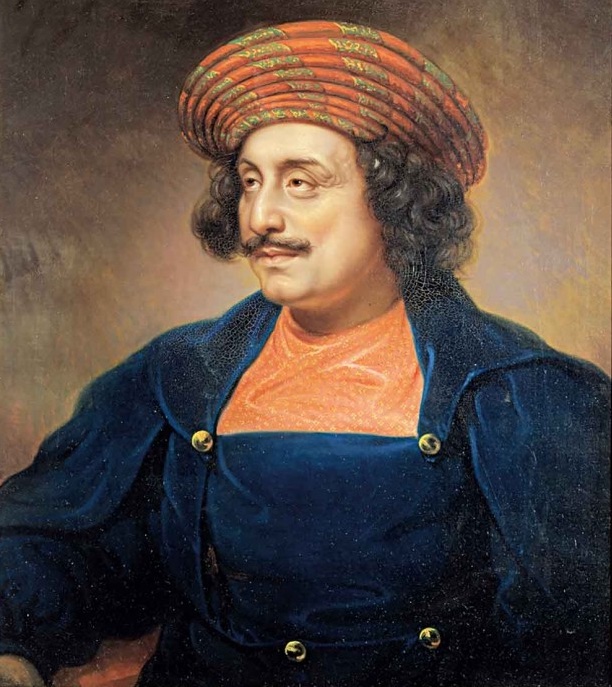
Raja Ram Mohan Roy
Raja Ram Mohan Roy (22 May 1772 – 27 September 1833) was an Indian reformer and writer who was one of the founders of the Brahmo Sabha in 1828, the precursor of the Brahmo Samaj, a socio-religious reform movement in the Indian subcontinent. He has been dubbed the "Father of Indian Renaissance." He was given the title of Raja by Mughal emperor Akbar II (r. 1806–1837).
His influence was apparent in the fields of politics, public administration, education and religion. He was known for his efforts to abolish the practices of sati and child marriage. Roy wrote Gaudiya Vyakaran which was the first complete Bangla grammar written book.
Ram Mohan Roy was born in Radhanagar, Hooghly District, Bengal Presidency. His great-grandfather Krishnakanta Bandyopadhyay was a Rarhi Kulin (noble) Brahmin. Among Kulin Brahmins – descendants of the five families of Brahmins, migrated from Kannauj by Ballal Sen in the 12th century as per popular myth – those from the Rarhi district of West Bengal were notorious in the 19th century for living off dowries by marrying several women. Kulinism was a synonym for polygamy and the dowry system, both of which Ram Mohan campaigned against. His father, Ramkanta, was a Vaishnavite, while his mother, Tarini Devi, was from a Shaivite family. He was a great scholar of Sanskrit, Persian and English languages and also knew Arabic, Latin and Greek. One parent prepared him for the occupation of a scholar, the Shastri, while the other secured for him all the worldly advantages needed to launch a career in the laukik or worldly sphere of public administration. Torn between these two parental ideals from early childhood, Ram Mohan vacillated between the two for the rest of his life.
During his childhood Ram Mohan Roy witnessed the death of his sister-in-law through sati. The seventeen-year-old girl was dragged towards the pyre where Ram Mohan Roy witnessed her terrified state. He tried to protest but to no avail. She was burned alive. The people chanted "Maha Sati! Maha Sati! Maha Sati!" (great wife) over her painful screams.
Ram Mohan Roy was married three times. His first wife died early. He had two sons, Radhaprasad in 1800, and Ramaprasad in 1812 with his second wife, who died in 1824. Roy's third wife outlived him.
The nature and content of Ram Mohan Roy's early education is disputed. One view is that Ram Mohan started his formal education in the village pathshala where he learned Bengali and some Sanskrit and Persian. Later he is said to have studied Persian and Arabic in a madrasa in Patna and after that he was sent to Benares to learn the intricacies of Sanskrit and Hindu scripture, including the Vedas and Upanishads. The dates of his time in both these places are uncertain. However, it is believed that he was sent to Patna when he was nine years old and two years later he went to Benares.
Ram Mohan Roy's impact on modern Indian history was his revival of the pure and ethical principles of the Vedanta school of philosophy as found in the Upanishads. He preached the unity of God, made early translations of Vedic scriptures into English, co-founded the Calcutta Unitarian Society and founded the Brahmo Sabha, precursor to Brahmo Samaj. The Brahmo Samaj played a major role in reforming and modernising the Indian society. He successfully campaigned against sati, the practice of burning widows. He sought to integrate Western culture with the best features of his own country's traditions. He established a number of schools to popularise a modern system of education in India. He promoted a rational, ethical, non-authoritarian, this-worldly views and social reforms in Hinduism. His writings also sparked interest among British and American Unitarians.
During the early years of East India Company rule, Ram Mohan Roy acted as a political agitator while employed by the company.
Hub AI
Raja Ram Mohan Roy AI simulator
(@Raja Ram Mohan Roy_simulator)
Raja Ram Mohan Roy
Raja Ram Mohan Roy (22 May 1772 – 27 September 1833) was an Indian reformer and writer who was one of the founders of the Brahmo Sabha in 1828, the precursor of the Brahmo Samaj, a socio-religious reform movement in the Indian subcontinent. He has been dubbed the "Father of Indian Renaissance." He was given the title of Raja by Mughal emperor Akbar II (r. 1806–1837).
His influence was apparent in the fields of politics, public administration, education and religion. He was known for his efforts to abolish the practices of sati and child marriage. Roy wrote Gaudiya Vyakaran which was the first complete Bangla grammar written book.
Ram Mohan Roy was born in Radhanagar, Hooghly District, Bengal Presidency. His great-grandfather Krishnakanta Bandyopadhyay was a Rarhi Kulin (noble) Brahmin. Among Kulin Brahmins – descendants of the five families of Brahmins, migrated from Kannauj by Ballal Sen in the 12th century as per popular myth – those from the Rarhi district of West Bengal were notorious in the 19th century for living off dowries by marrying several women. Kulinism was a synonym for polygamy and the dowry system, both of which Ram Mohan campaigned against. His father, Ramkanta, was a Vaishnavite, while his mother, Tarini Devi, was from a Shaivite family. He was a great scholar of Sanskrit, Persian and English languages and also knew Arabic, Latin and Greek. One parent prepared him for the occupation of a scholar, the Shastri, while the other secured for him all the worldly advantages needed to launch a career in the laukik or worldly sphere of public administration. Torn between these two parental ideals from early childhood, Ram Mohan vacillated between the two for the rest of his life.
During his childhood Ram Mohan Roy witnessed the death of his sister-in-law through sati. The seventeen-year-old girl was dragged towards the pyre where Ram Mohan Roy witnessed her terrified state. He tried to protest but to no avail. She was burned alive. The people chanted "Maha Sati! Maha Sati! Maha Sati!" (great wife) over her painful screams.
Ram Mohan Roy was married three times. His first wife died early. He had two sons, Radhaprasad in 1800, and Ramaprasad in 1812 with his second wife, who died in 1824. Roy's third wife outlived him.
The nature and content of Ram Mohan Roy's early education is disputed. One view is that Ram Mohan started his formal education in the village pathshala where he learned Bengali and some Sanskrit and Persian. Later he is said to have studied Persian and Arabic in a madrasa in Patna and after that he was sent to Benares to learn the intricacies of Sanskrit and Hindu scripture, including the Vedas and Upanishads. The dates of his time in both these places are uncertain. However, it is believed that he was sent to Patna when he was nine years old and two years later he went to Benares.
Ram Mohan Roy's impact on modern Indian history was his revival of the pure and ethical principles of the Vedanta school of philosophy as found in the Upanishads. He preached the unity of God, made early translations of Vedic scriptures into English, co-founded the Calcutta Unitarian Society and founded the Brahmo Sabha, precursor to Brahmo Samaj. The Brahmo Samaj played a major role in reforming and modernising the Indian society. He successfully campaigned against sati, the practice of burning widows. He sought to integrate Western culture with the best features of his own country's traditions. He established a number of schools to popularise a modern system of education in India. He promoted a rational, ethical, non-authoritarian, this-worldly views and social reforms in Hinduism. His writings also sparked interest among British and American Unitarians.
During the early years of East India Company rule, Ram Mohan Roy acted as a political agitator while employed by the company.