



Community hub
Recent from talks
Contribute something
Nothing was collected or created yet.
Redcliffe Dolphins
View on Wikipedia
Redcliffe Dolphins are a semi-professional rugby league club based in Redcliffe, Queensland, Australia. Founded in 1947, they were accepted into the Brisbane Rugby League (BRL) premiership competition in 1960, and since 1996 have played in the Queensland Cup. The Redcliffe Dolphins thrived in the BRL. However, the 1988 admission of the Brisbane Broncos team in the New South Wales Rugby League competition caused the decline of the BRL.[1]
Key Information


Although a separately licensed Dolphins (NRL) team currently competes in the fully professional national competition,[2] the Redcliffe squad continues to play in the Queensland competition. Through this NRL licence, the Dolphins organisation has become the only former BRL club to regain top-flight status after that competition became a second-tier league with the advent of the Brisbane Broncos in 1988.
History
[edit]Founded on 27 February 1947, Redcliffe District Rugby League Football Club Inc. (known as Shellgrit) entered Under 17, Reserve Grade and First Grade teams in that year's Sandgate Suburban Rugby League competition. Through the 1950s, Redcliffe also played in the Kilcoy, Murrumba and Geraghty Cup competitions. On 19 November 1959, Redcliffe received full district club status and was accepted into the Brisbane first grade competition.[3]
Throughout the 1960s, a number of famous players came through the ranks of the Dolphins to represent Queensland and Australia, including Trevor Harken and Arthur Beetson. In 1965, Redcliffe won its first Brisbane Rugby League Premiership. In 1972, Redcliffe were coached by former Kangaroo Ken Day. Redcliffe's halfback Greg Oliphant was selected to go on the 1978 Kangaroo tour but did not play in any Test matches. Australian national coach Frank Stanton coached Redcliffe in 1980. The Redcliffe club won further premierships in 1994, 1996 and 1997 and has also appeared in 12 Queensland Cup grand finals, making it the most successful team in that competition.

In the 2000s, a new National Rugby League team based on the Gold Coast proposed calling itself the Gold Coast Dolphins. Redcliffe threatened legal action, so the team was alternatively named the Gold Coast Titans.
Redcliffe defeated Toowoomba in the 2006 Queensland Cup grand final at Suncorp Stadium under the coaching of Anthony Griffin.[4][5] In 2018, Redcliffe won their sixth Queensland Cup title, defeating Easts Tigers 36-22.[6]

NRL Team
[edit]From 2023 onwards, the Redcliffe Dolphins' fully professional spin-off team, known simply as the Dolphins, compete separately in the National Rugby League.[7][8] Notwithstanding, the semi-professional Redcliffe Dolphins continue to compete as they are in the Queensland Cup and other Queensland rugby league competitions.
Home ground
[edit]Redcliffe's current home ground, Kayo Stadium, formerly known as Moreton Daily Stadium and Dolphin Oval, was first opened in 1979. After multiple upgrades between 2016 and 2020, the stadium has an approximate capacity of 11,500 including 10,000 seats.[9]
-
 Leagues Club wall
 -
 Kayo Stadium
 -
 Stadium goal posts
 -
 Moreton Daily signage (now Kayo Stadium)
 -
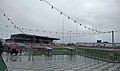 Stadium view from club
 -
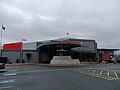 Redcliffe Leagues Club


Queensland Cup results
[edit]- 1996: Runners-up
- 1997: Premiers
- 1998: Preliminary finalists
- 1999: Runners-up
- 2000: Premiers
- 2001: Runners-up
- 2002: Premiers
- 2003: Premiers
- 2004: 6th
- 2005: Preliminary finalists
- 2006: Premiers
- 2007: Runners-up
- 2008: Semi Finalists
- 2009: 11th
- 2010: 8th
- 2011: Preliminary Finals
- 2012: Runners-up
- 2013: 8th
- 2014: 11th
- 2015: 7th
- 2016: Runners-up
- 2017: 2nd
- 2018: Premiers
- 2019: 7th
- 2020: Cancelled due to COVID-19 Pandemic
- 2021: 5th
- 2022: Runners-up
- 2023: 5th
- 2024: Semi Finalists
- 2025: 6th
Notable players
[edit]See also
[edit]

References
[edit]- ^ Gorman, Joe (26 February 2017). "Redcliffe Dolphins: 70 years growing and with ambitious plans for future in NRL". The Guardian. Retrieved 4 September 2018.
- ^ "Dolphins granted licence to become NRL's 17th team in 2023". National Rugby League. 12 October 2021. Retrieved 13 October 2021.
- ^ "About". Redcliffe Dolphins. Retrieved 25 December 2018.
- ^ Berrett, Nick (21 February 2011). "Griffin takes over as Broncos coach". Redcliffe & Bayside Herald. Australia: News Limited. Archived from the original on 23 February 2011. Retrieved 21 February 2011.
- ^ "About - Redcliffe Dolphins". Redcliffe Dolphins. Retrieved 2 April 2018.
- ^ "Injured Tigers dazzled by Dolphins dangerman". www.qrl.com.au. 23 September 2018.
- ^ "The $100m bid to blow Broncos away". Courier Mail. Retrieved 21 September 2020.
- ^ "Dolphins granted licence to become NRL's 17th team in 2023". National Rugby League. 12 October 2021. Retrieved 13 October 2021.
- ^ "Dolphin Stadium | Austadiums". www.austadiums.com. Retrieved 28 July 2018.
Sources
[edit]- Redcliffe Dolphins Statistics (archived). Originally retrieved 7 December 2005
External links
[edit] Media related to Redcliffe Dolphins at Wikimedia Commons
| Federation | |||||||||
|---|---|---|---|---|---|---|---|---|---|
| Representative teams | |||||||||
| NRL clubs |
| ||||||||
| NRLW clubs | |||||||||
| Major competitions |
| ||||||||
| Northern Division | |||||||||
| Central Division | |||||||||
| South-East Division |
| ||||||||
| Defunct leagues | |||||||||
| Queensland Cup clubs | |||||||||
| Queensland Cup seasons |
| ||||||||
| Representative competitions |
| ||||||||
| Clubs | |||||||||
Redcliffe Dolphins
View on GrokipediaHistory
Founding and early years
The Redcliffe Dolphins, originally known as the Redcliffe Peninsula Rugby League Football Club or "Shellgrit," were established on 27 February 1947 during a meeting at the Tattersalls Club in Redcliffe, Queensland.[4] The club was formed by local enthusiasts, including bookmaker Bill McLeod, who owned tennis courts in the area, Hugie Harvey with ties to rugby union, and Tom Maule, a player from the Brisbane-based Brothers club, along with figures such as Cliff Benson and Bill Highman from the Peninsula Boxing Club.[4] In its inaugural year, the club entered teams in the Under-17, Reserve Grade, and First Grade competitions of the Sandgate Suburban Rugby League, drawing players from local areas, rugby union backgrounds, and Brisbane leagues to promote the sport on the peninsula.[1] In the post-World War II era, the club operated with limited resources amid the peninsula's rapid population growth and community rebuilding efforts, emphasizing grassroots participation on Sundays to complement local horse-racing activities on Saturdays.[5] The focus was on junior development from the outset, with the Under-17 team's entry reflecting a commitment to nurturing young talent in a region short on established sporting infrastructure.[2] Throughout the 1950s, the club expanded its involvement in regional competitions, including the Kilcoy, Murrumba, and Geraghty Cup events, which helped build local support and player depth despite financial constraints typical of suburban outfits.[6] By the late 1950s, these efforts culminated in the club's recognition as a full district entity. On 19 November 1959, Redcliffe received full district club status from the Queensland Rugby League, paving the way for entry into the Brisbane First Grade competition the following year.[6]Brisbane Rugby League success
The Redcliffe Dolphins entered the Brisbane Rugby League (BRL) competition in 1960, following their acceptance as a full district club on 19 November 1959.[1] This marked the club's transition from local suburban play to competing against established Brisbane sides, initially sponsored by Northern Suburbs to bolster their credentials.[7] The Dolphins quickly established themselves, winning the reserve grade premiership in 1962 before securing their first first-grade title in 1965 by defeating Fortitude Valley 15–2 in the grand final at Lang Park.[2] This victory, featuring standout performances from emerging talents like a young Arthur Beetson, represented a major breakthrough and solidified the club's competitive presence in the BRL.[2][1] During the 1970s and 1980s, the Dolphins built on their foundations through strong coaching and player development, fostering rivalries with clubs such as Fortitude Valley, Souths, and Brothers in intense grand final clashes. In 1972, former Kangaroo international Ken Day took over as coach, guiding the team amid a period of consistent contention.[1] Halfback Greg Oliphant, a product of the club's junior pathways, earned selection for the 1978 Kangaroo tour, highlighting Redcliffe's role in nurturing representative talent.[1] Arthur Beetson, who had debuted with the Dolphins in 1964 before moving to Sydney, returned in 1981 as captain-coach, leading the side to the grand final against Souths—though they fell short in a 16–15 loss.[2][8] The era saw the club reach six grand finals between 1973 and 1987, all ending in defeat, including losses to Valleys in 1973 (15–7) and Brothers in 1987 (26–8), which underscored their growing stature despite the heartbreak.[8][9] Parallel to these on-field battles, the Dolphins expanded their junior programs, drawing recruits like Beetson from regional areas such as Roma and integrating them into senior ranks, which became a hallmark of the club's development system.[1] The 1990s brought renewed success, with the Dolphins capturing BRL premierships in 1994 and 1996, ending a 29-year first-grade drought. In 1994, under coach Ross O'Reilly, they triumphed 24–18 over Western Suburbs in the grand final, also claiming colts, A-grade, and third-grade titles for a clean sweep across divisions.[7][2] The 1996 victory came against Souths (16–12), further intensifying the longstanding rivalry and contributing to the club's legacy of three BRL-era first-grade wins.[2][7] These achievements reflected the Dolphins' sustained investment in junior pathways, which continued to produce players capable of competing at the highest levels of Brisbane rugby league.[1]Queensland Cup era and NRL affiliation
The Redcliffe Dolphins entered the Queensland Cup in 1996 as part of a statewide restructuring of rugby league competitions in Queensland, transitioning from the Brisbane Rugby League to the newly established Queensland Cup.[2] This move positioned the club among 14 inaugural teams, including established sides like the Norths Devils and new entrants from regional areas. Over the subsequent decades, the Dolphins have become one of the competition's most consistent performers, reaching seven grand finals and securing multiple premierships, including a decisive 27-6 victory over the Toowoomba Clydesdales in 2006 under coach Anthony Griffin.[10] These achievements contributed to the club's overall tally of six premierships across its history.[1] In the 2010s, the Dolphins adapted to evolving professional standards through significant infrastructure investments, particularly at Dolphin Oval. Plans announced in 2014 outlined a $12 million stadium upgrade to accommodate up to 10,000 spectators, featuring covered seating and enhanced facilities to support higher-level competition.[11] This culminated in the completion of a $6.5 million northern grandstand in 2020, increasing seating capacity to over 3,000 and providing modern change rooms, which aligned the venue with NRL feeder club requirements.[12] These developments not only improved match-day experiences but also facilitated the club's shift toward greater professionalism, including advanced training protocols and youth development programs. The Dolphins' trajectory shifted dramatically with their successful NRL expansion bid in October 2021, which granted a license for a new franchise to debut in 2023 as the NRL Dolphins, based in Redcliffe and utilizing Dolphin Oval (now Kayo Stadium) as a primary home ground.[13] From 2023 onward, the Redcliffe club was formally designated as the official feeder team, channeling talent through its Queensland Cup squad to the top-tier side and establishing integrated pathways for emerging players. This affiliation elevated the club's role in talent identification and development, with the Queensland Cup team serving as a crucial stepping stone for NRL prospects. By 2025, the partnership had deepened the Dolphins' community ties, with the 2025 Queensland Cup season highlighting their continued competitiveness, including a 32-12 elimination final win over the PNG Hunters in Week 1 at Kayo Stadium, followed by a 22–16 semi-final victory over the Townsville Blackhawks and a 16–18 preliminary final loss to the Burleigh Bears.[14][15] The NRL link has amplified local engagement, fostering expanded junior programs that integrate over 1,000 young athletes annually into structured rugby league initiatives across the Moreton Bay region.[16] This growth underscores the affiliation's impact on sustaining the club's legacy while enhancing its feeder function for elite development.Club Operations
Queensland Cup team
The Redcliffe Dolphins' Queensland Cup team, known as the Hostplus Cup side, served as the primary development outfit for the club in 2025, emphasizing competitive performance and player growth at the state level. Led by head coach Eric Smith, appointed in August 2024, the team focused on rigorous training regimens that built physical conditioning and tactical discipline tailored to the fast-paced, physical nature of QCup rugby league. Smith's approach prioritized high-intensity sessions to improve decision-making under pressure and defensive structures, drawing from his prior success with the Northern Pride where he was named QCup Coach of the Year in 2024.[17][18][19] The 2025 roster highlighted a blend of experienced leaders and emerging talents, with co-captains Max Bailey (appearing in 13 games as captain), Kyle Schneider (7 games), and Joshua James (5 games) providing stability in the forward pack and halves. Key positional players included halfback Joshua James, who orchestrated play from the No. 7 jersey, and centre Ethan Quai-Ward, noted for his strong defensive reads and line-running ability. The squad's composition supported versatile game plans, with forwards like Bailey anchoring the middle and backs contributing to a balanced attack.[15][20] Participating in the Hostplus Cup's 23-round regular season from March to August, followed by a four-week finals series for the top eight teams, the Dolphins demonstrated solid execution in 2025. The team finished 6th on the ladder with 13 wins and 10 losses, qualifying for the finals but being eliminated in the first week.[21][22][23] Youth integration formed a core aspect of the team's structure, with clear pathways from junior representative sides like the Cyril Connell Cup (under-16 boys) and Harvey Norman U17 and U19 competitions—including dedicated women's U19 programs—to the senior QCup roster. This system allowed promising juniors to transition through trial sessions and development camps, fostering a pipeline of local talent ready for higher-level demands. As the NRL Dolphins' primary feeder club, the QCup team facilitated seamless progression for these players into professional contracts.[24][25] Following the 2025 season, Eric Smith departed the club, with assistant coach Dave Elliott appointed as head coach for 2026.[26]NRL feeder club role
The Redcliffe Dolphins established an official affiliation with the NRL Dolphins upon the latter's entry into the National Rugby League in 2023, positioning Redcliffe as a key development and reserve team within the Queensland Cup. This partnership designates Redcliffe as one of the primary feeder clubs, alongside the Central Queensland Capras and Norths Devils, to foster talent pathways and provide a competitive environment for emerging players. The agreement emphasizes shared scouting networks, joint training sessions, and resource allocation to streamline player progression from the Intrust Super Cup to the NRL level.[27][28] Player movement between the clubs has been integral to the affiliation, with numerous loans and promotions facilitating development. In 2025, for instance, forward Elijah Rasmussen transitioned from Redcliffe's Queensland Cup squad to the NRL Dolphins' development list, gaining exposure through train-and-trial opportunities and eventual inclusion in the top 30 roster for 2026. Other prospects, such as winger Tevita Naufahu, similarly benefited from loans that allowed them to train with the NRL team while maintaining match fitness in the Cup, exemplifying the pathway's role in bridging the gap between reserve-grade and professional play. These movements not only accelerate individual careers but also ensure a steady supply of ready-to-perform athletes for the NRL side.[29][30] The feeder role brings significant benefits, including enhanced funding from the NRL Dolphins to support Redcliffe's operations and greater visibility for local talent through integrated programs. This has elevated player exposure, with affiliate arrangements enabling joint community initiatives that strengthen grassroots engagement on the Redcliffe Peninsula. However, it also presents challenges in balancing the dual demands of competitive Cup performance and NRL readiness, particularly in salary cap management where reserve players help mitigate top-tier roster constraints under league rules. In 2025, under NRL head coach Kristian Woolf, Redcliffe's contributions were evident in the seamless integration of Cup standouts during the season, bolstering the Dolphins' depth amid injuries and rotations while fostering collaborative events like youth clinics.[31][32][33]Facilities
Home ground
Dolphin Stadium, commercially known as Kayo Stadium since 2022, is the primary home ground for the Redcliffe Dolphins rugby league club. Situated on Klingner Road in the Redcliffe Peninsula suburb of Kippa-Ring, within the City of Moreton Bay, Queensland, the venue officially named Dolphin Oval has a capacity of approximately 10,000 spectators, including 9,420 seats, 445 corporate seats, and limited standing room.[34] The stadium opened in 1979 on reclaimed land made available by the local council in the late 1970s, marking the modern era for the club's facilities after earlier grounds like the Redcliffe Showgrounds.[35][6] Significant upgrades have modernized the site, including the 2016 completion of the Des Webb Stand—a 3,100-seat western grandstand that improved spectator amenities and integrated corporate facilities—boosting overall seating from around 4,000.[36] This was followed by the 2018 eastern grandstand addition, raising capacity to 7,000, and the 2020 northern grandstand project, which added 3,170 seats, new change rooms, and a second video screen to support elite-level play.[34] Further enhancements in 2023 included broadcast-quality lighting to facilitate televised events.[34] The venue primarily hosts the Redcliffe Dolphins' Queensland Cup (Hostplus Cup) home games, along with training sessions for the affiliated NRL club, the Dolphins, and a range of community sporting and cultural events. In 2025, it drew notable crowds for rugby league fixtures, such as an NRL match between the Dolphins and Wests Tigers on March 22 that attracted 10,023 spectators, underscoring its role in regional sport.[37] As the club's central venue since the late 1970s, Dolphin Stadium embodies the Redcliffe Dolphins' enduring connection to the peninsula community and serves as a symbol of local rugby league heritage.[38]Training and community infrastructure
The Redcliffe Dolphins maintain a purpose-built training facility equipped with comprehensive player amenities, including locker rooms, showers, restrooms, and specialized services for athlete support. Following the club's formal affiliation with the NRL Dolphins in 2023, training operations have integrated with the professional team's high-performance infrastructure at Kayo Stadium, encompassing gym facilities, recovery rooms, and video analysis suites to enhance player development and preparation. This shared setup has facilitated advanced conditioning programs and injury management protocols, bolstering the club's role as a key feeder pathway.[39] The club's junior development pathways span from Under-6 to Under-19 age groups, fostering skill-building in a structured environment through weekly training and competitive fixtures. Participation in statewide competitions, such as the Mal Meninga Cup for Under-19 males and equivalent female divisions, provides elite exposure, with the Dolphins fielding teams in the 2025 season draws that commenced in February. The junior hub currently supports over 1,000 young players, emphasizing fun, safety, and progression toward senior levels.[40] Community engagement extends through partnerships with local schools to promote rugby league participation, integrating sport into educational curricula via clinics and school-based programs. Women's rugby initiatives include the co-educational RISE Program, which provides holistic development opportunities for junior players (boys and girls) through specialized coaching and education, alongside collaborations like the 2025 partnership with Capers Early Learning as the official women's pathway sponsor.[41][42] The club marked its 75th anniversary in 2022 with a gala dinner attended by over 260 guests, honoring its historical contributions to the Redcliffe Peninsula.[43] NRL affiliation has unlocked additional funding streams for infrastructure enhancements, including a $15 million federal commitment in 2022 toward a dedicated centre of excellence at Redcliffe, aimed at sustainable facility upgrades and long-term club viability, though full realization remains pending as of 2025.[44]Achievements
Premierships and honors
The Redcliffe Dolphins have achieved significant success in Queensland rugby league competitions, securing multiple premierships in both the Brisbane Rugby League (BRL) and Queensland Cup (QCup). In the BRL era, the club won four first-grade premierships in 1965, 1994, 1996, and 1997, marking periods of dominance in the local competition.[2][1] The 1965 victory was the club's first major title, defeating Northern Suburbs in the grand final and establishing Redcliffe as a competitive force shortly after joining the BRL in 1960.[2] The 1994 and 1996 wins highlighted a resurgence, with the latter coinciding with the club's entry into the newly formed statewide QCup.[2] In 2016 and 2025, the Dolphins added further BRL A-grade premierships, with the 2025 victory defeating the Carina Tigers 32-12 in the grand final and marking their first in the local competition since 2016.[45][46] Transitioning to the QCup since 1996, the Dolphins have emerged as the competition's most successful club, winning six premierships in 1997, 2000, 2002, 2003, 2006, and 2018.[22][2] These titles underscore the club's sustained excellence, with four victories in a five-year span from 2000 to 2006 solidifying their status as a powerhouse. The 2006 grand final exemplified this, as the Dolphins defeated the Toowoomba Clydesdales 27-6 at Suncorp Stadium under coach Anthony Griffin, securing their fifth QCup title with a commanding performance that included tries from Mark Shipway and others in the closing stages.[10][47] The 2018 win against the Easts Tigers 36-22 further extended their record as the most prolific QCup premiers.[48] In addition to these first-grade successes, the club has claimed premierships in lower grades, contributing to an overall tally of notable honors across various levels.[2] Beyond premierships, the Dolphins have earned six minor premierships for topping the regular-season ladder in their respective competitions, demonstrating consistent performance.[22] They have also finished as runners-up 14 times across BRL and QCup, including notable grand final losses in the BRL (1973, 1975, 1977, 1981, 1983, 1987) and QCup years (1996, 1999, 2001, 2007, 2012, 2016, 2022, 2024), which built resilience leading to later triumphs.[22][49] As of the end of the 2025 season, the club's overall record stands at 150 wins and 97 losses, yielding a win percentage of 57% across BRL and QCup matches.[22] Individual honors have often accompanied these team achievements, with players earning awards such as player of the match in grand finals. For instance, in the 2025 BRL grand final, Troy Hanita-Paki was recognized for his captaincy and performance in the premiership-clinching victory.[45] These accolades highlight the collective impact of the Dolphins' successes in fostering talent and community pride.[45]| Competition | Premiership Years | Minor Premierships | Runner-Up Years (Selected) |
|---|---|---|---|
| BRL | 1965, 1994, 1996, 1997, 2016, 2025 | Not specified | 1973, 1975, 1977, 1981, 1983, 1987 |
| QCup | 1997, 2000, 2002, 2003, 2006, 2018 | 6 (years incl. 2002, 2018) | 1996, 1999, 2001, 2007, 2012, 2016, 2022, 2024 |
Season-by-season performance
The Redcliffe Dolphins have competed in the Queensland Cup since its inception in 1996, establishing themselves as one of the competition's most consistent performers with multiple minor premierships and grand final appearances. Their season-by-season record reflects periods of dominance, particularly in the early 2000s, interspersed with challenges in later years, though detailed statistics prior to 1996 are not covered here as they pertain to the preceding Brisbane Rugby League era.[49]| Year | Ladder Position | Played | Wins | Losses | Draws | Points For | Points Against | Finals Outcome |
|---|---|---|---|---|---|---|---|---|
| 1996 | 2nd | 15 | 10 | 3 | 2 | 363 | 193 | Runners-up |
| 1997 | 2nd | 18 | 14 | 4 | 0 | 573 | 271 | Premiers |
| 1998 | 4th | 22 | 16 | 6 | 0 | 647 | 314 | Preliminary final loss |
| 1999 | 1st | 22 | 17 | 4 | 1 | 660 | 359 | Runners-up |
| 2000 | 1st | 22 | 19 | 3 | 0 | 546 | 320 | Premiers |
| 2001 | 3rd | 20 | 14 | 6 | 0 | 617 | 393 | Runners-up |
| 2002 | 1st | 22 | 18 | 4 | 0 | 833 | 376 | Premiers |
| 2003 | 2nd | 22 | 16 | 5 | 1 | 789 | 486 | Premiers |
| 2004 | 6th | 22 | 13 | 9 | 0 | 774 | 538 | Did not qualify |
| 2005 | 4th | 20 | 12 | 8 | 0 | 582 | 510 | Preliminary final loss |
| 2006 | 3rd | 20 | 14 | 6 | 0 | 619 | 434 | Premiers |
| 2007 | 2nd | 20 | 14 | 6 | 0 | 496 | 338 | Runners-up |
| 2008 | 5th | 20 | 11 | 8 | 1 | 498 | 418 | Semi-final loss |
| 2009 | 11th | 22 | 7 | 13 | 2 | 472 | 518 | Did not qualify |
| 2010 | 8th | 22 | 9 | 12 | 1 | 460 | 543 | Did not qualify |
| 2011 | 4th | 22 | 14 | 7 | 1 | 518 | 368 | Preliminary final loss |
| 2012 | 1st | 22 | 17 | 5 | 0 | 724 | 390 | Runners-up |
| 2013 | 7th | 22 | 10 | 9 | 3 | 537 | 413 | Did not qualify |
| 2014 | 11th | 24 | 8 | 15 | 1 | 566 | 617 | Did not qualify |
| 2015 | 7th | 23 | 10 | 12 | 1 | 663 | 564 | Did not qualify |
| 2016 | 1st | 23 | 18 | 5 | 0 | 728 | 345 | Runners-up |
| 2017 | 2nd | 23 | 17 | 6 | 0 | 604 | 332 | Preliminary final loss |
| 2018 | 1st | 23 | 16 | 6 | 1 | 594 | 374 | Premiers |
| 2019 | 7th | 23 | 13 | 10 | 0 | 558 | 384 | Semi-final loss |
| 2020 | 3rd | 1 | 1 | 0 | 0 | 22 | 16 | Season curtailed (COVID-19) |
| 2021 | 5th | 17 | 11 | 6 | 0 | 450 | 397 | Semi-final loss |
| 2022 | 3rd | 19 | 11 | 6 | 2 | 518 | 359 | Runners-up |
| 2023 | 5th | 20 | 11 | 6 | 3 | 564 | 443 | Quarter-final loss |
| 2024 | 3rd | 20 | 13 | 7 | 0 | 616 | 414 | Runners-up |
| 2025 | 6th | 20 | 11 | 9 | 0 | 500 | 414 | Week 1 win vs. PNG Hunters (32-12); preliminary final loss |