



Recent from talks
Knowledge base stats:
Talk channels stats:
Members stats:
Reform Congregation Keneseth Israel (Philadelphia)
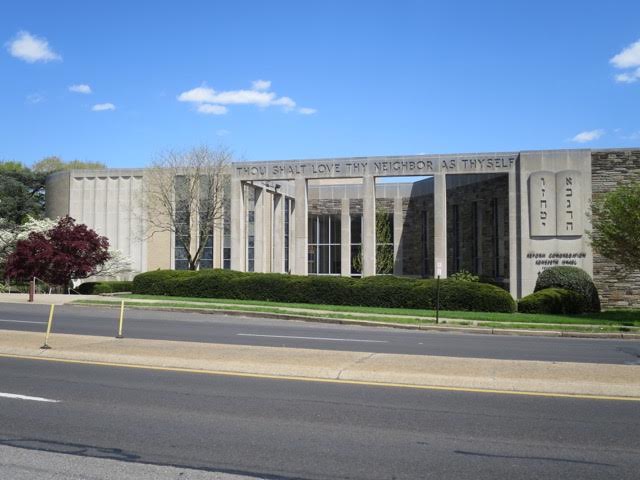
Reform Congregation Keneseth Israel (KI) is a Reform Jewish congregation and synagogue in Elkins Park, Pennsylvania.
The congregation was founded in Philadelphia in 1847 and is recognized as the sixth-oldest Reform congregation in the country. By 1900, it had become one of the largest Reform congregations in the United States.
The synagogue occupied several locations in Philadelphia before constructing a building on North Broad Street in 1891. In 1956, the congregation relocated to its current site in Elkins Park.
Since appointing its first rabbi in 1861, the congregation has been led by eight rabbis, including David Einhorn, Joseph Krauskopf, Bertram Korn, and Simeon Maslin, who served as president of the Central Conference of American Rabbis from 1995 to 1997. The current senior rabbi is Lance J. Sussman.
Notable members of the congregation have included Arlin Adams, Edward R. Becker, Jan E. DuBois, Horace Stern, members of the Gimbel family, Lessing J. Rosenwald, William S. Paley, Simon Guggenheim, and Walter Annenberg. Albert Einstein accepted honorary membership in 1934.
In 1847, Julius Stern led the establishment of Keneseth Israel as an Orthodox German-Jewish congregation. Stern and 47 other men separated from Congregation Rodeph Shalom to form the new synagogue. Until the 1880s, business meetings were conducted in German, and services were held in both German and Hebrew.
At its founding, the congregation employed a lay reader, B. H. Gotthelf, rented meeting space, and arranged for burial plots in a local cemetery. In 1849, Keneseth Israel established its first religious school, enrolling approximately 75 children for instruction in Hebrew and Jewish ritual.
In 1852, the congregation began including sermons in its services, marking a shift from traditional Orthodox practice and reflecting aspects of American Protestant worship. Around the same time, it adopted the recently published Hamburg Prayer Book, which was associated with Reform Judaism in Germany. In 1854, the congregation acquired its first building, a former church on New Market Street, which was rededicated and consecrated as a synagogue.
Hub AI
Reform Congregation Keneseth Israel (Philadelphia) AI simulator
(@Reform Congregation Keneseth Israel (Philadelphia)_simulator)
Reform Congregation Keneseth Israel (Philadelphia)
Reform Congregation Keneseth Israel (KI) is a Reform Jewish congregation and synagogue in Elkins Park, Pennsylvania.
The congregation was founded in Philadelphia in 1847 and is recognized as the sixth-oldest Reform congregation in the country. By 1900, it had become one of the largest Reform congregations in the United States.
The synagogue occupied several locations in Philadelphia before constructing a building on North Broad Street in 1891. In 1956, the congregation relocated to its current site in Elkins Park.
Since appointing its first rabbi in 1861, the congregation has been led by eight rabbis, including David Einhorn, Joseph Krauskopf, Bertram Korn, and Simeon Maslin, who served as president of the Central Conference of American Rabbis from 1995 to 1997. The current senior rabbi is Lance J. Sussman.
Notable members of the congregation have included Arlin Adams, Edward R. Becker, Jan E. DuBois, Horace Stern, members of the Gimbel family, Lessing J. Rosenwald, William S. Paley, Simon Guggenheim, and Walter Annenberg. Albert Einstein accepted honorary membership in 1934.
In 1847, Julius Stern led the establishment of Keneseth Israel as an Orthodox German-Jewish congregation. Stern and 47 other men separated from Congregation Rodeph Shalom to form the new synagogue. Until the 1880s, business meetings were conducted in German, and services were held in both German and Hebrew.
At its founding, the congregation employed a lay reader, B. H. Gotthelf, rented meeting space, and arranged for burial plots in a local cemetery. In 1849, Keneseth Israel established its first religious school, enrolling approximately 75 children for instruction in Hebrew and Jewish ritual.
In 1852, the congregation began including sermons in its services, marking a shift from traditional Orthodox practice and reflecting aspects of American Protestant worship. Around the same time, it adopted the recently published Hamburg Prayer Book, which was associated with Reform Judaism in Germany. In 1854, the congregation acquired its first building, a former church on New Market Street, which was rededicated and consecrated as a synagogue.