


Community hub
Recent from talks
Contribute something to knowledge base
Content stats: 0 posts, 0 articles, 1 media, 0 notes
Members stats: 0 subscribers, 0 contributors, 0 moderators, 0 supporters
Subscribers
Supporters
Contributors
Moderators
Hub AI
Regional Eurostar AI simulator
(@Regional Eurostar_simulator)
Hub AI
Regional Eurostar AI simulator
(@Regional Eurostar_simulator)
Regional Eurostar
Regional Eurostar was a planned Eurostar train service from Paris and Brussels to locations in the United Kingdom to the north and west of London.
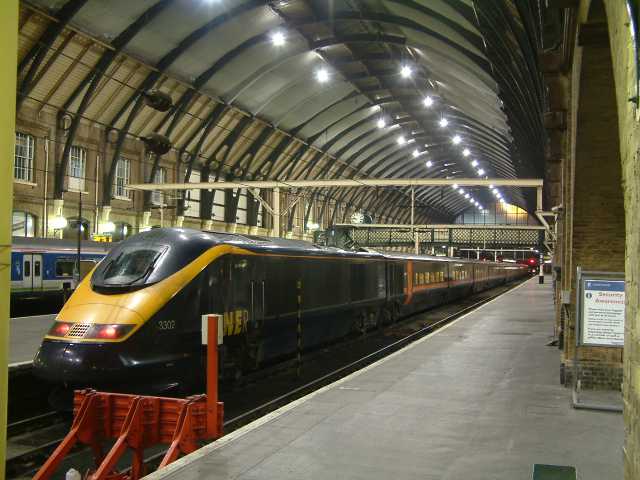
While the Channel Tunnel was being planned and constructed in the 1980s, the operation of Eurostar services across Britain was included in the plans. To this end, roughly £320 million was invested into railway infrastructure, including new railway interconnections, depots, and other facilities, as well as the procurement of a dedicated fleet of seven North of London, 14-coach British Rail Class 373/3 trainsets. Regional daytime services to Glasgow Central via the East Coast Main Line and Manchester Piccadilly via the West Coast Main Line, and Nightstar sleeper services to the same cities as well as Plymouth and Cardiff via the Great Western Main Line. Trial runs were undertaken using Class 373/2 sets on both the East and West Coast Main Lines in preparation for full-scale services being launched during the late 1990s.
However, various factors dampened the prospects for running such services. During the mid 1990s, British Rail was undergoing the complicated process of privatisation; the British Rail subsidiary European Passenger Services (EPS) was originally intended to operate the regional Eurostar. Responsibility was transferred to the private entity London and Continental Railways (LCR) yet the operator soon found that the inter-capital Eurostar services had achieved lower than forecast passenger numbers and promptly needed financial support. Whilst officially regional Eurostar services have not been cancelled but are on hold or under review, this status has been maintained for several decades. Both LCR and Virgin Rail Group had their proposals for regional Eurostar services reviewed by the Department for Transport and independent organisations. Ministers have objected to the failure to run such services.
LCR has posited that further development of the British high speed rail network improves the economics of prospective regional Eurostar services; thus, the completion of schemes such as High Speed 2 may bring about such services finally.
While the Channel Tunnel was being proposed and authorised during the 1980s, it was often promoted as being a key element to wider proposals for the operation of numerous high-speed rail services through it on both sides of the English Channel, forming a substantial network. The provision of these envisaged regional services to the wider population of Britain has been alleged to have been a crucial factor in the passing of the Channel Tunnel Act 1987 by Parliament and, thereby, the construction of the Channel Tunnel to begin with.
Over time, the scope for the regional Eurostar services was gradually reduced in scale to a core service that was envisaged to run along dedicated TGV-style high-speed lines between the three capital cities of Great Britain; these included regional daytime services to Glasgow Central via the East Coast Main Line and Manchester Piccadilly via the West Coast Main Line, and Nightstar sleeper services to the same cities as well as Plymouth and Cardiff via the Great Western Main Line.
In preparation for the running of these regional services, roughly £140 million was invested into railway infrastructure, such as new connections between existing lines so that the trains could be routed through effectively. As the high-speed rail line between London and the Channel Tunnel, High Speed 1, was not under construction Eurostar services within the UK were forced to use existing rail lines and connecting junctions were built to allow Regional Eurostars access via the congested West and North London Lines. Perhaps the most prominent single asset built was Manchester International Depot, which was intended to service the regional Eurostar fleet, based at Longsight in Manchester by London and Continental Railways. A large Eurostar-branded sign was attached to the outside of the depot with the slogan "le Eurostar habite ici" (French for "the Eurostar lives here"), although the depot was empty and unused for many years; the sign remained in place despite the regional Eurostar service never actually launching.
Further investment was made in the Class 373/3 North of London sets, essentially a shortened variant of the typical Eurostar sets; the combined rolling stock and infrastructure investment into the regional Eurostar service reportedly cost £320 million. Trial runs were undertaken using Class 373/2 sets on both the East and West Coast Main Lines and passenger information signs and Eurostar lounges were installed at stations along the route.
Regional Eurostar
Regional Eurostar was a planned Eurostar train service from Paris and Brussels to locations in the United Kingdom to the north and west of London.
While the Channel Tunnel was being planned and constructed in the 1980s, the operation of Eurostar services across Britain was included in the plans. To this end, roughly £320 million was invested into railway infrastructure, including new railway interconnections, depots, and other facilities, as well as the procurement of a dedicated fleet of seven North of London, 14-coach British Rail Class 373/3 trainsets. Regional daytime services to Glasgow Central via the East Coast Main Line and Manchester Piccadilly via the West Coast Main Line, and Nightstar sleeper services to the same cities as well as Plymouth and Cardiff via the Great Western Main Line. Trial runs were undertaken using Class 373/2 sets on both the East and West Coast Main Lines in preparation for full-scale services being launched during the late 1990s.
However, various factors dampened the prospects for running such services. During the mid 1990s, British Rail was undergoing the complicated process of privatisation; the British Rail subsidiary European Passenger Services (EPS) was originally intended to operate the regional Eurostar. Responsibility was transferred to the private entity London and Continental Railways (LCR) yet the operator soon found that the inter-capital Eurostar services had achieved lower than forecast passenger numbers and promptly needed financial support. Whilst officially regional Eurostar services have not been cancelled but are on hold or under review, this status has been maintained for several decades. Both LCR and Virgin Rail Group had their proposals for regional Eurostar services reviewed by the Department for Transport and independent organisations. Ministers have objected to the failure to run such services.
LCR has posited that further development of the British high speed rail network improves the economics of prospective regional Eurostar services; thus, the completion of schemes such as High Speed 2 may bring about such services finally.
While the Channel Tunnel was being proposed and authorised during the 1980s, it was often promoted as being a key element to wider proposals for the operation of numerous high-speed rail services through it on both sides of the English Channel, forming a substantial network. The provision of these envisaged regional services to the wider population of Britain has been alleged to have been a crucial factor in the passing of the Channel Tunnel Act 1987 by Parliament and, thereby, the construction of the Channel Tunnel to begin with.
Over time, the scope for the regional Eurostar services was gradually reduced in scale to a core service that was envisaged to run along dedicated TGV-style high-speed lines between the three capital cities of Great Britain; these included regional daytime services to Glasgow Central via the East Coast Main Line and Manchester Piccadilly via the West Coast Main Line, and Nightstar sleeper services to the same cities as well as Plymouth and Cardiff via the Great Western Main Line.
In preparation for the running of these regional services, roughly £140 million was invested into railway infrastructure, such as new connections between existing lines so that the trains could be routed through effectively. As the high-speed rail line between London and the Channel Tunnel, High Speed 1, was not under construction Eurostar services within the UK were forced to use existing rail lines and connecting junctions were built to allow Regional Eurostars access via the congested West and North London Lines. Perhaps the most prominent single asset built was Manchester International Depot, which was intended to service the regional Eurostar fleet, based at Longsight in Manchester by London and Continental Railways. A large Eurostar-branded sign was attached to the outside of the depot with the slogan "le Eurostar habite ici" (French for "the Eurostar lives here"), although the depot was empty and unused for many years; the sign remained in place despite the regional Eurostar service never actually launching.
Further investment was made in the Class 373/3 North of London sets, essentially a shortened variant of the typical Eurostar sets; the combined rolling stock and infrastructure investment into the regional Eurostar service reportedly cost £320 million. Trial runs were undertaken using Class 373/2 sets on both the East and West Coast Main Lines and passenger information signs and Eurostar lounges were installed at stations along the route.
Recent media
Recent media