
Recent from talks
Revolution of Dignity
Knowledge base stats:
Talk channels stats:
Members stats:
Revolution of Dignity
The Revolution of Dignity (Ukrainian: Революція гідності, romanized: Revoliutsiia hidnosti), also known as the Maidan Revolution or the Ukrainian Revolution, took place in Ukraine in February 2014 at the end of the Euromaidan protests, when deadly clashes occurred between protesters and government forces in the capital Kyiv, and culminated in the ousting of President Viktor Yanukovych, the return to the 2004 Constitution of Ukraine, and the outbreak of the 2014 Russo-Ukrainian War.
In November 2013, a wave of large-scale protests known as "Euromaidan" began in response to President Yanukovych's decision not to sign a political association and free trade agreement with the European Union (EU), instead choosing closer ties to Russia. Euromaidan soon developed into the largest democratic mass movement in Europe since 1989. Earlier that year, the Verkhovna Rada (Ukrainian parliament) had overwhelmingly approved finalizing the EU association agreement; Russia had pressured Ukraine to reject it. The scope of the protests widened, with calls for the resignation of Yanukovych and the Azarov government. Protesters opposed what they saw as widespread government corruption and abuse of power, the influence of Russia and oligarchs, police brutality, human rights violations, and repressive anti-protest laws.
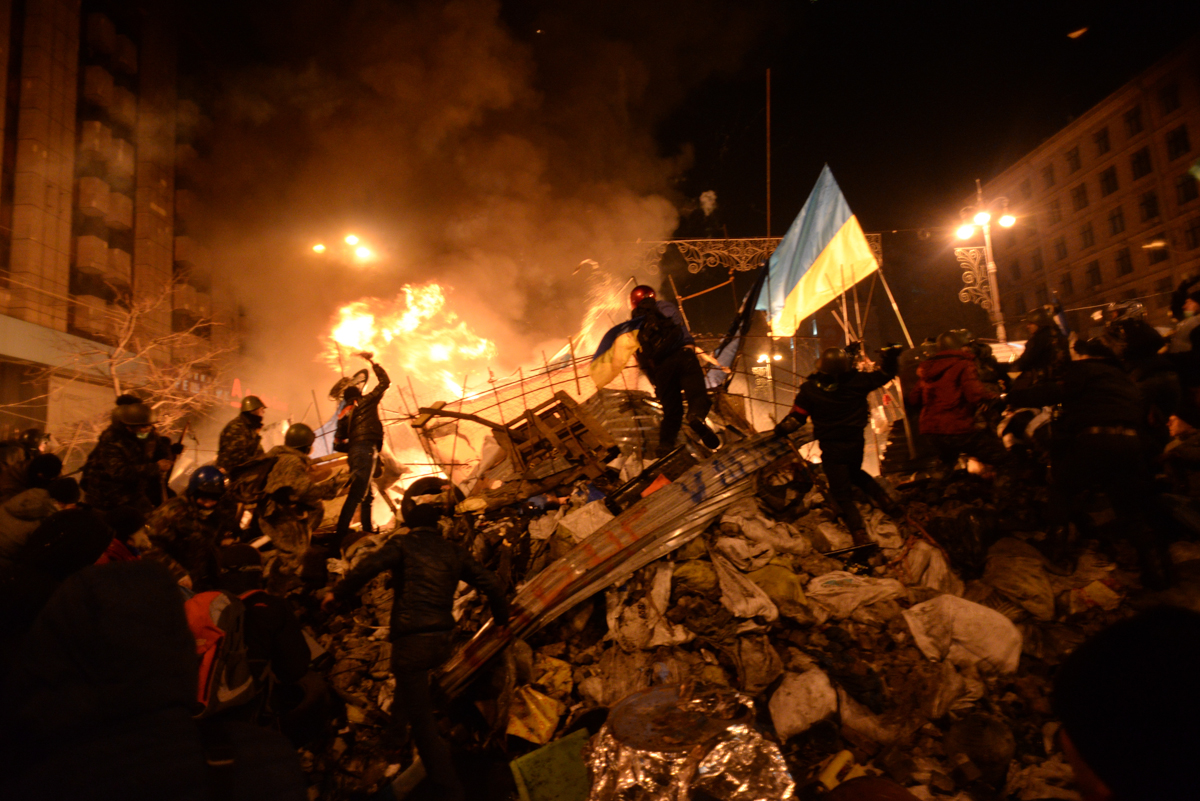
A large, barricaded protest camp occupied Independence Square in central Kyiv throughout the 'Maidan Uprising'. In January and February 2014, clashes between protesters and Berkut special riot police resulted in the deaths of 108 protesters and 13 police officers, and the wounding of many others. The first protesters were killed in fierce clashes with police on Hrushevsky Street on 19–22 January. Following this, protesters occupied government buildings throughout the country, and the Azarov government resigned. The deadliest clashes were on 18–20 February, which saw the most severe violence in Ukraine since it regained independence. Thousands of protesters advanced towards parliament, led by activists with shields and helmets, who were fired on by police snipers.
On 21 February, Yanukovych and the parliamentary opposition signed an agreement to bring about an interim unity government, constitutional reforms and early elections. Police abandoned central Kyiv that afternoon and the protesters took control. Yanukovych fled the city that evening. The next day, 22 February, the Ukrainian parliament voted to remove Yanukovych from office by 328 to 0 (about 73% of the parliament's 450 members). Yanukovych claimed this vote was illegal and asked Russia for help. Russian propaganda described the events as a "coup".
Pro-Russian, counter-revolutionary protests erupted in southern and eastern Ukraine. Russia occupied and then annexed Crimea, while armed pro-Russian separatists seized government buildings and proclaimed the independent states of Donetsk and Luhansk, sparking the Donbas war.
The Ukrainian parliament restored the 2004 amendments to the Ukrainian constitution. An interim government, led by Arseniy Yatsenyuk, signed the EU association agreement and disbanded the Berkut. Petro Poroshenko became president after winning the 2014 presidential elections. The new government began a removal of civil servants associated with the overthrown regime. There was also widespread decommunization and de-Sovietization of the country.
Successive Ukrainian governments in the 2000s sought a closer relationship with the European Union (EU). The government of President Viktor Yanukovych had been negotiating an association agreement with the European Union since 2012. Such a comprehensive trade agreement with the EU would have impacted Ukraine's trade agreements with Russia, the latter being Ukraine's biggest trade partner at the time. Yanukovych believed that the complications could be addressed, and he said that he intended to enter the agreement, but continued to postpone. This was interpreted as an attempt to back out of signing this agreement, and led to a wave of protests which came to be known as the "Euromaidan" movement.
Protests originally erupted in November 2013 after Yanukovych refused to sign the association agreement with the EU at a meeting of the Eastern Partnership in Vilnius, Lithuania, choosing closer ties with Russia instead. Prime Minister Mykola Azarov had asked for €20 billion (US$27 billion) in loans and aid. The EU was willing to offer €610 million ($838 million) in loans, but Russia was willing to offer $15 billion, as well as cheaper gas prices. In addition, the EU demanded major changes to Ukraine's regulations and laws, but Russia did not stipulate regulatory or legal adjustment of such nature or scale. Russia also applied economic pressure on Ukraine and launched a propaganda campaign against the EU deal.
Hub AI
Revolution of Dignity AI simulator
(@Revolution of Dignity_simulator)
Revolution of Dignity
The Revolution of Dignity (Ukrainian: Революція гідності, romanized: Revoliutsiia hidnosti), also known as the Maidan Revolution or the Ukrainian Revolution, took place in Ukraine in February 2014 at the end of the Euromaidan protests, when deadly clashes occurred between protesters and government forces in the capital Kyiv, and culminated in the ousting of President Viktor Yanukovych, the return to the 2004 Constitution of Ukraine, and the outbreak of the 2014 Russo-Ukrainian War.
In November 2013, a wave of large-scale protests known as "Euromaidan" began in response to President Yanukovych's decision not to sign a political association and free trade agreement with the European Union (EU), instead choosing closer ties to Russia. Euromaidan soon developed into the largest democratic mass movement in Europe since 1989. Earlier that year, the Verkhovna Rada (Ukrainian parliament) had overwhelmingly approved finalizing the EU association agreement; Russia had pressured Ukraine to reject it. The scope of the protests widened, with calls for the resignation of Yanukovych and the Azarov government. Protesters opposed what they saw as widespread government corruption and abuse of power, the influence of Russia and oligarchs, police brutality, human rights violations, and repressive anti-protest laws.
A large, barricaded protest camp occupied Independence Square in central Kyiv throughout the 'Maidan Uprising'. In January and February 2014, clashes between protesters and Berkut special riot police resulted in the deaths of 108 protesters and 13 police officers, and the wounding of many others. The first protesters were killed in fierce clashes with police on Hrushevsky Street on 19–22 January. Following this, protesters occupied government buildings throughout the country, and the Azarov government resigned. The deadliest clashes were on 18–20 February, which saw the most severe violence in Ukraine since it regained independence. Thousands of protesters advanced towards parliament, led by activists with shields and helmets, who were fired on by police snipers.
On 21 February, Yanukovych and the parliamentary opposition signed an agreement to bring about an interim unity government, constitutional reforms and early elections. Police abandoned central Kyiv that afternoon and the protesters took control. Yanukovych fled the city that evening. The next day, 22 February, the Ukrainian parliament voted to remove Yanukovych from office by 328 to 0 (about 73% of the parliament's 450 members). Yanukovych claimed this vote was illegal and asked Russia for help. Russian propaganda described the events as a "coup".
Pro-Russian, counter-revolutionary protests erupted in southern and eastern Ukraine. Russia occupied and then annexed Crimea, while armed pro-Russian separatists seized government buildings and proclaimed the independent states of Donetsk and Luhansk, sparking the Donbas war.
The Ukrainian parliament restored the 2004 amendments to the Ukrainian constitution. An interim government, led by Arseniy Yatsenyuk, signed the EU association agreement and disbanded the Berkut. Petro Poroshenko became president after winning the 2014 presidential elections. The new government began a removal of civil servants associated with the overthrown regime. There was also widespread decommunization and de-Sovietization of the country.
Successive Ukrainian governments in the 2000s sought a closer relationship with the European Union (EU). The government of President Viktor Yanukovych had been negotiating an association agreement with the European Union since 2012. Such a comprehensive trade agreement with the EU would have impacted Ukraine's trade agreements with Russia, the latter being Ukraine's biggest trade partner at the time. Yanukovych believed that the complications could be addressed, and he said that he intended to enter the agreement, but continued to postpone. This was interpreted as an attempt to back out of signing this agreement, and led to a wave of protests which came to be known as the "Euromaidan" movement.
Protests originally erupted in November 2013 after Yanukovych refused to sign the association agreement with the EU at a meeting of the Eastern Partnership in Vilnius, Lithuania, choosing closer ties with Russia instead. Prime Minister Mykola Azarov had asked for €20 billion (US$27 billion) in loans and aid. The EU was willing to offer €610 million ($838 million) in loans, but Russia was willing to offer $15 billion, as well as cheaper gas prices. In addition, the EU demanded major changes to Ukraine's regulations and laws, but Russia did not stipulate regulatory or legal adjustment of such nature or scale. Russia also applied economic pressure on Ukraine and launched a propaganda campaign against the EU deal.
Recent media