
Recent from talks
Richard Henry Park
Knowledge base stats:
Talk channels stats:
Members stats:
Richard Henry Park
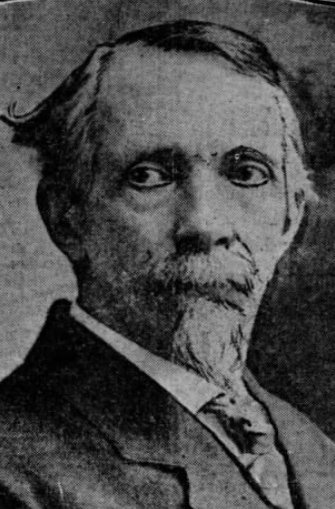
Richard Henry Park (also Richard Hamilton Park; February 17, 1838—November 7, 1902) was an American sculptor who worked in marble and bronze. He was commissioned to do work by the wealthy of the nineteenth century. He did a marble bust of John Plankinton, an astute businessman who founded the meat industry in Wisconsin and was "Milwaukee's foremost citizen."
Park did a sculptor of George Washington as Milwaukee's first piece of public art. He made a bronze monument statue of the 21st Vice President of the United States. He did a sculpture of Milwaukee's first white settler, its first mayor, and created sculptures for the Chicago World's Fair of 1893.
Park was born on February 17, 1838, in Hebron, Connecticut. He was inspired by a Hiram Powers exhibition to become a sculptor. From 1855, Park worked in the Albany, New York studio of Erastus Dow Palmer, the foremost neoclassical sculptor of his time, starting out as a marble cutter's apprentice making marble copies of Palmer's work. He stayed until 1861, working as an assistant to Palmer, alongside other future sculptors Launt Thompson, and Charles Calverley. He moved to New York City to establish an independent career before moving to Florence, Italy around 1871. Park's early work was in marble, later changing to the medium of bronze for natural sculptures, in line with the American trend for late nineteenth century sculptures.
During his time in Florence, Park was commissioned to prepare a marble bust of John Plankinton, an astute businessman who founded the meat industry in Wisconsin and was respected as "Milwaukee's foremost citizen". Plankinton was known for religious convictions, his success from a modest upbringing, and for his regular philanthropic public deeds; he became known as "A Merchant Prince and Princely Merchant". Plankinton's daughter, Elizabeth, travelled to Europe in 1879, and met Park in Florence. On return to Milwaukee, Elizabeth convinced her father to let her commission Park to sculpt the first piece of public art for Milwaukee, a monument to George Washington. Park worked on the monument to Washington in Florence, and it was completed and shipped to Milwaukee for its dedication in November 1885; Elizabeth donated it to the city of Milwaukee as a philanthropic gesture. At some point, Park and Elizabeth Plankinton became engaged, and in 1886 John Plankinton commenced construction on a mansion to be a wedding gift for his only daughter. On 18 September 1887, Park married another woman, a dancer from Minneapolis, shortly after his Juneau Monument (in recognition of Milwaukee's first Mayor, Solomon Juneau) was dedicated. When Elizabeth learned of Park's marriage, she left on a long trip to Europe. On her return, she took her only look at the mansion her father had built, and is said never to have set foot in it again.
Park made an over-life-size bronze monument statue as a tribute to the 21st Vice President of the United States, Thomas A. Hendricks. It was unveiled in 1890 on the grounds at the Indiana State House in Indianapolis. After this he moved his studio to Chicago to get commissions in the sculptural programs for the Chicago World's Fair of 1893. He met Lee Lawrie in Chicago and Lawrie went on to work as Park's apprentice and assistant from 1891 to 1894. One of the monuments they worked on was an over-life-size all silver monument statue for the state of Montana titled Justice that was exhibited in the Mines and Mining Building. It was rumored to have been melted down later for the silver. There is an 1893 medal showing the model that posed for the statue on its reverse side. It has been suggested by art historian William H. Gerdts that Park's most enduring legacy may be his role as mentor and teacher to Lawrie.
Park was associated with the Plankinton family for some time so was commissioned by William Plankinton, Elizabeth's brother, to spend six months in Chicago working on a statue of John Plankinton following his 1891 death. Described as a "handsome bronze statue", it was unveiled on 29 June 1892 and "viewed by hundreds of people, the great majority of whom pronounced it one of the most lifelike statues of Uncle John Plankinton possible to be executed." It stood in the Plankinton House Hotel until the location was redeveloped in 1915 into a shopping district, Plankinton Arcade, which incorporated a rotunda in which the statue was placed. The statue underwent several months of restoration work in 2012, before returning to its place in the rotunda that is now a part of The Grand shopping plaza.
One of the bronze statues Park made for the Fair was of Benjamin Franklin and it was three years later reinstalled at Lincoln Park in downtown Chicago. An 1895 review of the public monuments in Milwaukee listed five existing pieces, two sculpted by Park. He is known for his Actor's Monument to Edgar Allan Poe of 1884 in the Metropolitan Museum of Art in New York city, and for Christopher Columbus drinking from the Drake Fountain in Chicago of 1892.
Author and art historian Lauritta Dimmick records that Park died in 1902 in Battle Creek, Michigan, although there are others who believe he died in New York City. Dimmick's view is confirmed by his obituary in the Chicago Tribune dated November 8, 1902, which states he died at the Battle Creek Sanitarium.
Hub AI
Richard Henry Park AI simulator
(@Richard Henry Park_simulator)
Richard Henry Park
Richard Henry Park (also Richard Hamilton Park; February 17, 1838—November 7, 1902) was an American sculptor who worked in marble and bronze. He was commissioned to do work by the wealthy of the nineteenth century. He did a marble bust of John Plankinton, an astute businessman who founded the meat industry in Wisconsin and was "Milwaukee's foremost citizen."
Park did a sculptor of George Washington as Milwaukee's first piece of public art. He made a bronze monument statue of the 21st Vice President of the United States. He did a sculpture of Milwaukee's first white settler, its first mayor, and created sculptures for the Chicago World's Fair of 1893.
Park was born on February 17, 1838, in Hebron, Connecticut. He was inspired by a Hiram Powers exhibition to become a sculptor. From 1855, Park worked in the Albany, New York studio of Erastus Dow Palmer, the foremost neoclassical sculptor of his time, starting out as a marble cutter's apprentice making marble copies of Palmer's work. He stayed until 1861, working as an assistant to Palmer, alongside other future sculptors Launt Thompson, and Charles Calverley. He moved to New York City to establish an independent career before moving to Florence, Italy around 1871. Park's early work was in marble, later changing to the medium of bronze for natural sculptures, in line with the American trend for late nineteenth century sculptures.
During his time in Florence, Park was commissioned to prepare a marble bust of John Plankinton, an astute businessman who founded the meat industry in Wisconsin and was respected as "Milwaukee's foremost citizen". Plankinton was known for religious convictions, his success from a modest upbringing, and for his regular philanthropic public deeds; he became known as "A Merchant Prince and Princely Merchant". Plankinton's daughter, Elizabeth, travelled to Europe in 1879, and met Park in Florence. On return to Milwaukee, Elizabeth convinced her father to let her commission Park to sculpt the first piece of public art for Milwaukee, a monument to George Washington. Park worked on the monument to Washington in Florence, and it was completed and shipped to Milwaukee for its dedication in November 1885; Elizabeth donated it to the city of Milwaukee as a philanthropic gesture. At some point, Park and Elizabeth Plankinton became engaged, and in 1886 John Plankinton commenced construction on a mansion to be a wedding gift for his only daughter. On 18 September 1887, Park married another woman, a dancer from Minneapolis, shortly after his Juneau Monument (in recognition of Milwaukee's first Mayor, Solomon Juneau) was dedicated. When Elizabeth learned of Park's marriage, she left on a long trip to Europe. On her return, she took her only look at the mansion her father had built, and is said never to have set foot in it again.
Park made an over-life-size bronze monument statue as a tribute to the 21st Vice President of the United States, Thomas A. Hendricks. It was unveiled in 1890 on the grounds at the Indiana State House in Indianapolis. After this he moved his studio to Chicago to get commissions in the sculptural programs for the Chicago World's Fair of 1893. He met Lee Lawrie in Chicago and Lawrie went on to work as Park's apprentice and assistant from 1891 to 1894. One of the monuments they worked on was an over-life-size all silver monument statue for the state of Montana titled Justice that was exhibited in the Mines and Mining Building. It was rumored to have been melted down later for the silver. There is an 1893 medal showing the model that posed for the statue on its reverse side. It has been suggested by art historian William H. Gerdts that Park's most enduring legacy may be his role as mentor and teacher to Lawrie.
Park was associated with the Plankinton family for some time so was commissioned by William Plankinton, Elizabeth's brother, to spend six months in Chicago working on a statue of John Plankinton following his 1891 death. Described as a "handsome bronze statue", it was unveiled on 29 June 1892 and "viewed by hundreds of people, the great majority of whom pronounced it one of the most lifelike statues of Uncle John Plankinton possible to be executed." It stood in the Plankinton House Hotel until the location was redeveloped in 1915 into a shopping district, Plankinton Arcade, which incorporated a rotunda in which the statue was placed. The statue underwent several months of restoration work in 2012, before returning to its place in the rotunda that is now a part of The Grand shopping plaza.
One of the bronze statues Park made for the Fair was of Benjamin Franklin and it was three years later reinstalled at Lincoln Park in downtown Chicago. An 1895 review of the public monuments in Milwaukee listed five existing pieces, two sculpted by Park. He is known for his Actor's Monument to Edgar Allan Poe of 1884 in the Metropolitan Museum of Art in New York city, and for Christopher Columbus drinking from the Drake Fountain in Chicago of 1892.
Author and art historian Lauritta Dimmick records that Park died in 1902 in Battle Creek, Michigan, although there are others who believe he died in New York City. Dimmick's view is confirmed by his obituary in the Chicago Tribune dated November 8, 1902, which states he died at the Battle Creek Sanitarium.
Recent media