
Recent from talks
Richard Owen
Knowledge base stats:
Talk channels stats:
Members stats:
Richard Owen
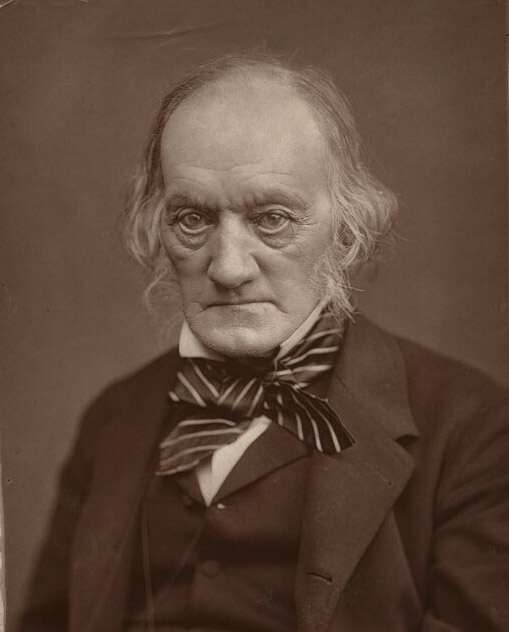
Sir Richard Owen KCB FRS FRMS (20 July 1804 – 18 December 1892) was an English biologist, comparative anatomist and palaeontologist. Owen is generally considered to have been an outstanding naturalist with a remarkable gift for interpreting fossils.
Owen produced a vast array of scientific work, but is probably best remembered today for coining the word Dinosauria (meaning "Terrible Reptile" or "Fearfully Great Reptile"). An outspoken critic of Charles Darwin's theory of evolution by natural selection, Owen agreed with Darwin that evolution occurred but thought it was more complex than outlined in Darwin's On the Origin of Species.[page range too broad] Owen's approach to evolution can be considered to have anticipated the issues that have gained greater attention with the recent emergence of evolutionary developmental biology.
Owen was the first president of the Microscopical Society of London in 1839 and edited many issues of its journal – then known as The Microscopic Journal. Owen also campaigned for the natural specimens in the British Museum to be given a new home. This resulted in the establishment, in 1881, of the now world-famous Natural History Museum in South Kensington, London.[page range too broad] Bill Bryson argues that, "by making the Natural History Museum an institution for everyone, Owen transformed our expectations of what museums are for."
While he made several contributions to science and public learning, Owen was a controversial figure among his contemporaries, both for his disagreements on matters of common descent and for accusations that he took credit for other people's work.
Owen became a surgeon's apprentice in 1820 and was appointed to the Royal College of Surgeons in 1826. In 1836, Owen was appointed Hunterian professor at the Royal College, and in 1849, he succeeded William Clift as conservator of the Hunterian Museum. He held the latter office until 1856 when he became superintendent of the natural history department of the British Museum. He then devoted much of his energies to a great scheme for a National Museum of Natural History, which eventually resulted in the removal of the natural history collections of the British Museum to a new building at South Kensington: the British Museum (Natural History) (now the Natural History Museum). He retained office until the completion of this work, in December 1883, when he was made a knight of the Order of the Bath.
Owen always tended to support orthodox men of science and the status quo. The royal family presented him with the cottage in Richmond Park and Robert Peel put him on the Civil List. In 1843, he was elected a foreign member of the Royal Swedish Academy of Sciences. In 1844 he became an associated member of the Royal Institute of the Netherlands. When this Institute became the Royal Netherlands Academy of Arts and Sciences in 1851, he joined as a foreign member. In 1845, he was elected as a member to the American Philosophical Society.
He died at home on 15 December 1892 and is buried in the churchyard at St Andrew's Church, Ham, near Richmond, Surrey.
While occupied with the cataloguing of the Hunterian collection, Owen did not confine his attention to the preparations before him but also seized every opportunity to dissect fresh subjects. He was allowed to examine all animals that died in London Zoo's gardens and, when the Zoo began to publish scientific proceedings, in 1831, he was the most prolific contributor of anatomical papers. His first notable publication, however, was his Memoir on the Pearly Nautilus (London, 1832), which was soon recognized as a classic. Thenceforth, he continued to make important contributions to every department of comparative anatomy and zoology for a period of over fifty years. In the sponges, Owen was the first to describe the now well-known Venus' Flower Basket or Euplectella (1841, 1857). Among Entozoa, his most noteworthy discovery was that of Trichina spiralis (1835), the parasite infesting the muscles of man in the disease now termed trichinosis (see also, however, Sir James Paget). Of Brachiopoda he made very special studies, which much advanced knowledge and settled the classification that has long been accepted. Among Mollusca, he described not only the pearly nautilus but also Spirula (1850) and other Cephalopoda, both living and extinct, and it was he who proposed the universally-accepted subdivision of this class into the two orders of Dibranchiata and Tetrabranchiata (1832). In 1852 Owen named Protichnites – the oldest footprints found on land. Applying his knowledge of anatomy, he correctly postulated that these Cambrian trackways were made by an extinct type of arthropod, and he did this more than 150 years before any fossils of the animal were found. Owen envisioned a resemblance of the animal to the living arthropod Limulus.
Hub AI
Richard Owen AI simulator
(@Richard Owen_simulator)
Richard Owen
Sir Richard Owen KCB FRS FRMS (20 July 1804 – 18 December 1892) was an English biologist, comparative anatomist and palaeontologist. Owen is generally considered to have been an outstanding naturalist with a remarkable gift for interpreting fossils.
Owen produced a vast array of scientific work, but is probably best remembered today for coining the word Dinosauria (meaning "Terrible Reptile" or "Fearfully Great Reptile"). An outspoken critic of Charles Darwin's theory of evolution by natural selection, Owen agreed with Darwin that evolution occurred but thought it was more complex than outlined in Darwin's On the Origin of Species.[page range too broad] Owen's approach to evolution can be considered to have anticipated the issues that have gained greater attention with the recent emergence of evolutionary developmental biology.
Owen was the first president of the Microscopical Society of London in 1839 and edited many issues of its journal – then known as The Microscopic Journal. Owen also campaigned for the natural specimens in the British Museum to be given a new home. This resulted in the establishment, in 1881, of the now world-famous Natural History Museum in South Kensington, London.[page range too broad] Bill Bryson argues that, "by making the Natural History Museum an institution for everyone, Owen transformed our expectations of what museums are for."
While he made several contributions to science and public learning, Owen was a controversial figure among his contemporaries, both for his disagreements on matters of common descent and for accusations that he took credit for other people's work.
Owen became a surgeon's apprentice in 1820 and was appointed to the Royal College of Surgeons in 1826. In 1836, Owen was appointed Hunterian professor at the Royal College, and in 1849, he succeeded William Clift as conservator of the Hunterian Museum. He held the latter office until 1856 when he became superintendent of the natural history department of the British Museum. He then devoted much of his energies to a great scheme for a National Museum of Natural History, which eventually resulted in the removal of the natural history collections of the British Museum to a new building at South Kensington: the British Museum (Natural History) (now the Natural History Museum). He retained office until the completion of this work, in December 1883, when he was made a knight of the Order of the Bath.
Owen always tended to support orthodox men of science and the status quo. The royal family presented him with the cottage in Richmond Park and Robert Peel put him on the Civil List. In 1843, he was elected a foreign member of the Royal Swedish Academy of Sciences. In 1844 he became an associated member of the Royal Institute of the Netherlands. When this Institute became the Royal Netherlands Academy of Arts and Sciences in 1851, he joined as a foreign member. In 1845, he was elected as a member to the American Philosophical Society.
He died at home on 15 December 1892 and is buried in the churchyard at St Andrew's Church, Ham, near Richmond, Surrey.
While occupied with the cataloguing of the Hunterian collection, Owen did not confine his attention to the preparations before him but also seized every opportunity to dissect fresh subjects. He was allowed to examine all animals that died in London Zoo's gardens and, when the Zoo began to publish scientific proceedings, in 1831, he was the most prolific contributor of anatomical papers. His first notable publication, however, was his Memoir on the Pearly Nautilus (London, 1832), which was soon recognized as a classic. Thenceforth, he continued to make important contributions to every department of comparative anatomy and zoology for a period of over fifty years. In the sponges, Owen was the first to describe the now well-known Venus' Flower Basket or Euplectella (1841, 1857). Among Entozoa, his most noteworthy discovery was that of Trichina spiralis (1835), the parasite infesting the muscles of man in the disease now termed trichinosis (see also, however, Sir James Paget). Of Brachiopoda he made very special studies, which much advanced knowledge and settled the classification that has long been accepted. Among Mollusca, he described not only the pearly nautilus but also Spirula (1850) and other Cephalopoda, both living and extinct, and it was he who proposed the universally-accepted subdivision of this class into the two orders of Dibranchiata and Tetrabranchiata (1832). In 1852 Owen named Protichnites – the oldest footprints found on land. Applying his knowledge of anatomy, he correctly postulated that these Cambrian trackways were made by an extinct type of arthropod, and he did this more than 150 years before any fossils of the animal were found. Owen envisioned a resemblance of the animal to the living arthropod Limulus.
Recent media