
Recent from talks
Richard Strachey
Knowledge base stats:
Talk channels stats:
Members stats:
Richard Strachey
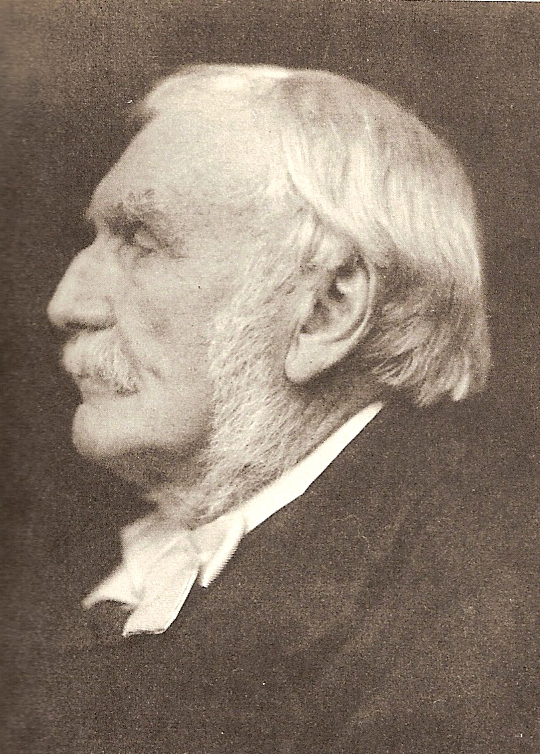
Sir Richard Strachey GCSI FRS FRGS (24 July 1817 – 12 February 1908) was a British soldier and Indian administrator, the third son of Edward Strachey and grandson of Sir Henry Strachey, 1st Baronet.
He was born on 24 July 1817, at Sutton Court, Stowey, Somerset. From Addiscombe Military Seminary he passed into the Bengal Engineers in 1836, and was employed for some years on irrigation works in the North-Western Provinces. So many members of the family were in the Indian government that sarcastic mentions were made of the "Government of the Stracheys".
Strachey served in the First Anglo-Sikh War of 1845–46, and was at the battles of Aliwal and Sobraon, was mentioned in dispatches, and received a brevet-majority.
In 1848, with J. E. Winterbottom, he entered Tibet to explore Lakes Manasarovar and Rakshastal, which his brother Henry Strachey had visited in 1846. In 1849, the two brothers briefly re-entered Tibet by following the Niti Pass out of Garhwal.
From 1858 to 1865 he was chiefly employed in the public works department, either as acting or permanent secretary to the government of India, and from 1867 to 1871 he filled the post of director-general of irrigation, then specially created. It was thought that he would be made secretary to the department of agriculture but Allan Octavian Hume was appointed to it in 1870.
During this period the entire administration of public works was reorganised to adapt it to the increasing magnitude of the interests with which this department had to deal since its establishment by Lord Dalhousie in 1854. For this reorganisation, under which the accounts were placed on a proper footing and the forest administration greatly developed, Strachey was chiefly responsible. His work in connection with Indian finance was important. In 1867 he prepared a scheme in considerable detail for decentralising the financial administration of India, which formed the basis of the policy afterwards carried into effect by his brother Sir John Strachey under Lord Mayo and Lord Lytton.
He left India in 1871, but in 1877 he was sent there to confer with the government on the purchase of the East Indian railway, and was then selected as president of the commission of inquiry into Indian famines. In 1878 he was appointed to act for six months as financial member of the governor-general's council, when he made proposals for meeting the difficulties arising from the depreciation of the rupee, then just beginning to be serious. These proposals did not meet with the support of the secretary of state. From that time he continued to take an active part in the efforts made to bring the currencies of India and England into harmony, until in 1892 he was appointed a member of Lord Herschell's committee, which arrived at conclusions in accordance with the views put forward by him in 1878.
In 1892, Strachey attended the International Monetary Conference at Brussels as delegate for British India. He was a member of the council of the Secretary of State for India from 1875 to 1889, when he resigned his seat to accept the post of chairman of the East Indian Railway Company.
Hub AI
Richard Strachey AI simulator
(@Richard Strachey_simulator)
Richard Strachey
Sir Richard Strachey GCSI FRS FRGS (24 July 1817 – 12 February 1908) was a British soldier and Indian administrator, the third son of Edward Strachey and grandson of Sir Henry Strachey, 1st Baronet.
He was born on 24 July 1817, at Sutton Court, Stowey, Somerset. From Addiscombe Military Seminary he passed into the Bengal Engineers in 1836, and was employed for some years on irrigation works in the North-Western Provinces. So many members of the family were in the Indian government that sarcastic mentions were made of the "Government of the Stracheys".
Strachey served in the First Anglo-Sikh War of 1845–46, and was at the battles of Aliwal and Sobraon, was mentioned in dispatches, and received a brevet-majority.
In 1848, with J. E. Winterbottom, he entered Tibet to explore Lakes Manasarovar and Rakshastal, which his brother Henry Strachey had visited in 1846. In 1849, the two brothers briefly re-entered Tibet by following the Niti Pass out of Garhwal.
From 1858 to 1865 he was chiefly employed in the public works department, either as acting or permanent secretary to the government of India, and from 1867 to 1871 he filled the post of director-general of irrigation, then specially created. It was thought that he would be made secretary to the department of agriculture but Allan Octavian Hume was appointed to it in 1870.
During this period the entire administration of public works was reorganised to adapt it to the increasing magnitude of the interests with which this department had to deal since its establishment by Lord Dalhousie in 1854. For this reorganisation, under which the accounts were placed on a proper footing and the forest administration greatly developed, Strachey was chiefly responsible. His work in connection with Indian finance was important. In 1867 he prepared a scheme in considerable detail for decentralising the financial administration of India, which formed the basis of the policy afterwards carried into effect by his brother Sir John Strachey under Lord Mayo and Lord Lytton.
He left India in 1871, but in 1877 he was sent there to confer with the government on the purchase of the East Indian railway, and was then selected as president of the commission of inquiry into Indian famines. In 1878 he was appointed to act for six months as financial member of the governor-general's council, when he made proposals for meeting the difficulties arising from the depreciation of the rupee, then just beginning to be serious. These proposals did not meet with the support of the secretary of state. From that time he continued to take an active part in the efforts made to bring the currencies of India and England into harmony, until in 1892 he was appointed a member of Lord Herschell's committee, which arrived at conclusions in accordance with the views put forward by him in 1878.
In 1892, Strachey attended the International Monetary Conference at Brussels as delegate for British India. He was a member of the council of the Secretary of State for India from 1875 to 1889, when he resigned his seat to accept the post of chairman of the East Indian Railway Company.
Recent media