


Community hub
Recent from talks
Contribute something to knowledge base
Content stats: 0 posts, 0 articles, 1 media, 0 notes
Members stats: 0 subscribers, 0 contributors, 0 moderators, 0 supporters
Subscribers
Supporters
Contributors
Moderators
Hub AI
River cooter AI simulator
(@River cooter_simulator)
Hub AI
River cooter AI simulator
(@River cooter_simulator)
River cooter
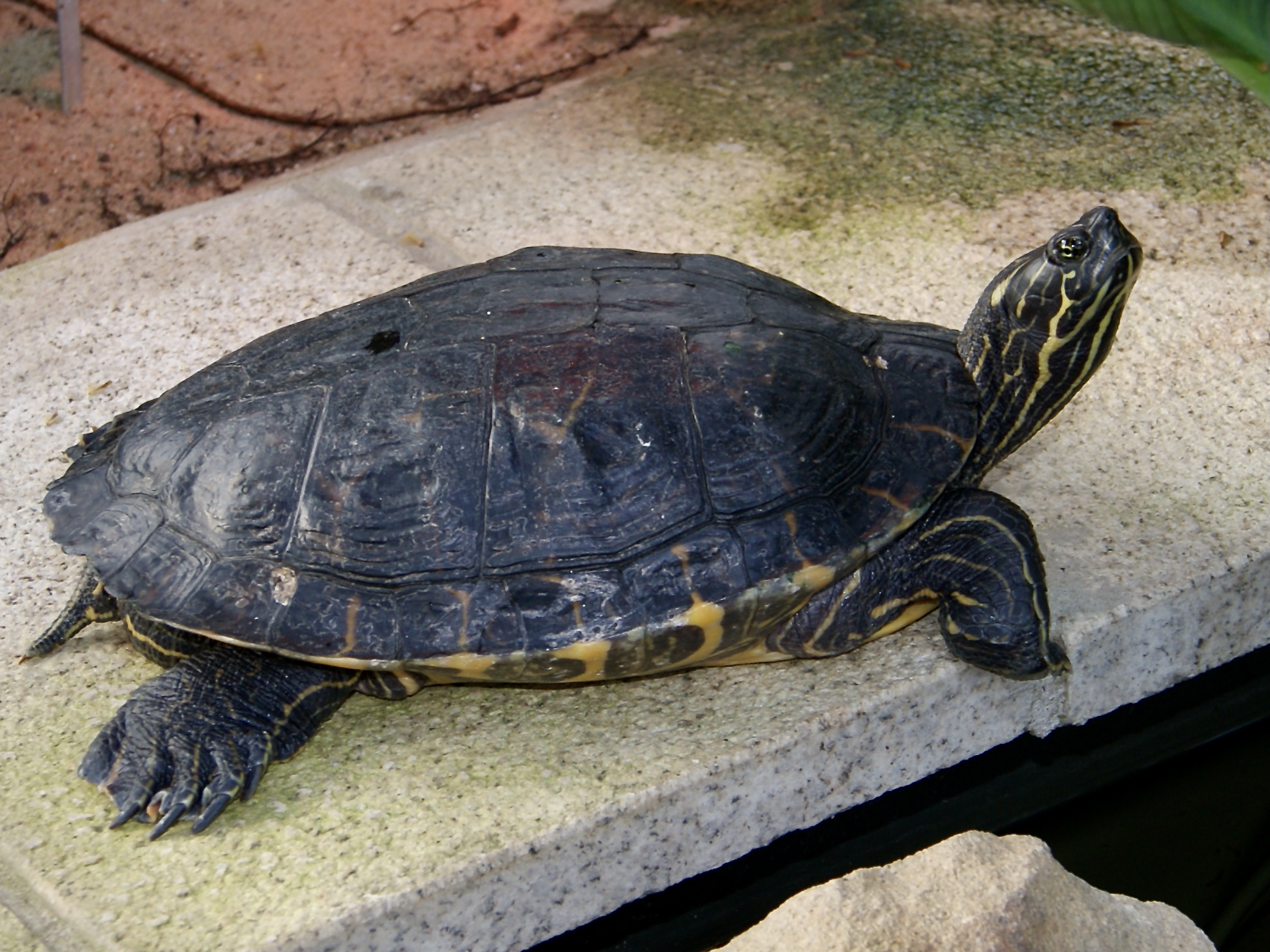
The river cooter (Pseudemys concinna) is a species of freshwater turtle in the family Emydidae. The species is native to the central and eastern United States, but has been introduced into parts of California, Washington, and British Columbia.
Pseudemys concinna is found from Virginia south to central Georgia, west to eastern Texas, Oklahoma, and north to southern Indiana.
Pseudemys concinna is usually found in rivers with moderate current, as well as lakes and tidal marshes.
There are two subspecies which are recognized as being valid.
Nota bene: A trinomial authority in parentheses indicates that the subspecies was originally described in a genus other than Pseudemys.
The coastal plain cooter or Florida cooter (P. floridana) was formerly considered a subspecies of P. concinna, but is now considered a distinct species.
The genus Pseudemys includes several species of cooters and red-bellied turtles. Pseudemys concinna is the species known as the river cooter. The name "cooter" may have come from an African word "kuta" which means "turtle" in the Bambara and Malinké languages, brought to America by African slaves.
The river cooter basks on logs or sun-warmed rocks, and is frequently found in the company of other aquatic basking turtles (sliders and painteds) sometimes piled up on top of each other. All are quick to slip into the water if disturbed. Diurnal by nature, Pseudemys concinna wakes with the warming sun to bask and forage. It can move with surprising speed in the water and on land. It is not unusual for it to wander from one body of fresh water to another, but many individuals seem to develop fairly large home ranges, which they seldom or never leave. It sleeps in the water, hidden under vegetation. In areas that are quite warm it remains active all winter, but in cooler climates can become dormant during the winter for up to two months, in the mud, underwater. It doesn't breathe during this time of low metabolism, but can utilize oxygen from the water, which it takes in through the cloaca. The river cooter prefers to be well hidden under aquatic plants during the winter dormancy period or while sleeping each night.
River cooter
The river cooter (Pseudemys concinna) is a species of freshwater turtle in the family Emydidae. The species is native to the central and eastern United States, but has been introduced into parts of California, Washington, and British Columbia.
Pseudemys concinna is found from Virginia south to central Georgia, west to eastern Texas, Oklahoma, and north to southern Indiana.
Pseudemys concinna is usually found in rivers with moderate current, as well as lakes and tidal marshes.
There are two subspecies which are recognized as being valid.
Nota bene: A trinomial authority in parentheses indicates that the subspecies was originally described in a genus other than Pseudemys.
The coastal plain cooter or Florida cooter (P. floridana) was formerly considered a subspecies of P. concinna, but is now considered a distinct species.
The genus Pseudemys includes several species of cooters and red-bellied turtles. Pseudemys concinna is the species known as the river cooter. The name "cooter" may have come from an African word "kuta" which means "turtle" in the Bambara and Malinké languages, brought to America by African slaves.
The river cooter basks on logs or sun-warmed rocks, and is frequently found in the company of other aquatic basking turtles (sliders and painteds) sometimes piled up on top of each other. All are quick to slip into the water if disturbed. Diurnal by nature, Pseudemys concinna wakes with the warming sun to bask and forage. It can move with surprising speed in the water and on land. It is not unusual for it to wander from one body of fresh water to another, but many individuals seem to develop fairly large home ranges, which they seldom or never leave. It sleeps in the water, hidden under vegetation. In areas that are quite warm it remains active all winter, but in cooler climates can become dormant during the winter for up to two months, in the mud, underwater. It doesn't breathe during this time of low metabolism, but can utilize oxygen from the water, which it takes in through the cloaca. The river cooter prefers to be well hidden under aquatic plants during the winter dormancy period or while sleeping each night.
Recent media
Recent media