
Recent from talks
Road to Emmaus appearance
Knowledge base stats:
Talk channels stats:
Members stats:
Road to Emmaus appearance
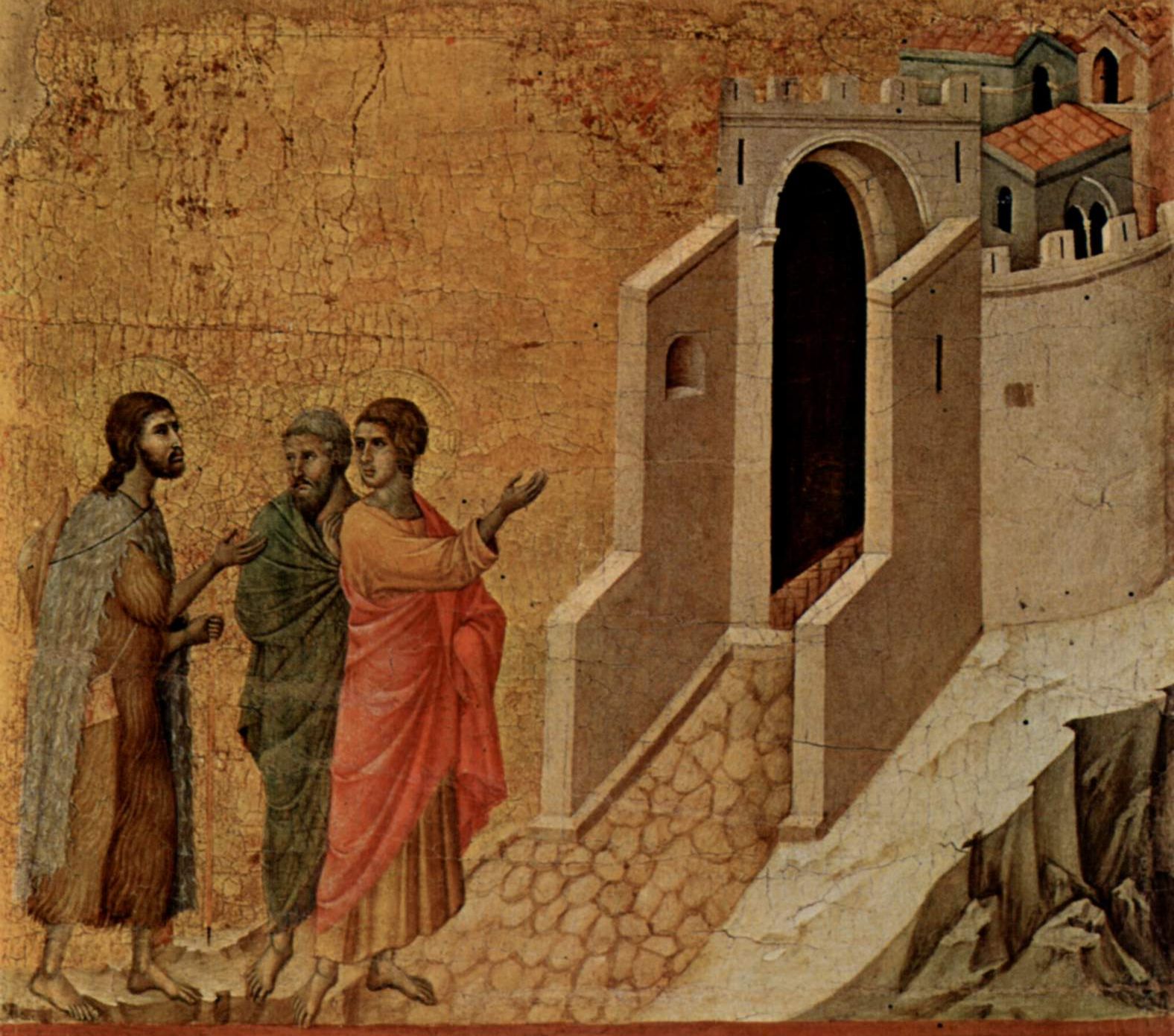
According to the Gospel of Luke, the road to Emmaus appearance is one of the early post-resurrection appearances of Jesus after his crucifixion and the discovery of the empty tomb. Both the meeting on the road to Emmaus and the subsequent Supper at Emmaus, the meal that Jesus had with two disciples after the encounter on the road, have been popular subjects in art.
The account in Luke 24:13–35 describes two disciples who are walking on the road to Emmaus, one named as Cleopas. On the way, they encounter Jesus after his resurrection from the dead, but they do not recognize him, and discuss their sadness at recent events of the Crucifixion and their incredulity at the reports from the women at the tomb at the Resurrection of Jesus. They invite him to come and eat with them, and during supper at Emmaus, they recognise the risen Jesus.
N. T. Wright considers the detailed narration of the Emmaus journey in Luke 24:13–35 as one of the best sketches of a biblical scene in the Gospel of Luke. Jan Lambrecht, citing D. P. Moessner, writes: "the Emmaus story is one of Luke's 'most exquisite literary achievements'."
Although it may be said that its main subject is proving the resurrection by the appearance of Jesus, this narrative seems not to say anything about proving the event. R. W. L. Moberly suggests that "the story is best understood as an exposition of the hermeneutical issue of discernment, focusing specifically on the question, 'How does one discern the risen Christ?'" Alfred McBride says that the Emmaus narrative concerns "the evolution of the awareness of the two disciples, from despair over Christ's death to faith in his resurrection". Used to perceive Christian spiritual growth, this narrative is considered as a model for a Christians' own journey to a deeper faith and as an instrument to help others do the same journey.
The Gospel of Mark has a similar account that describes the appearance of Jesus to two disciples while they were walking in the country, at about the same time in the Gospel narrative, although it does not name the disciples or the destination as Emmaus:
Afterward Jesus appeared in a different form to two of them while they were walking in the country. These returned and reported it to the rest; but they did not believe them either.
— Mark 16:12–13
It has also been suggested that the Ethiopian eunuch story (Acts 8:26–40) is a "much discussed parallel" to the Emmaus narrative, since there are some recognizable similarities between the two. Lambrecht says, "Each event culminates with a ritual, the breaking and distributing of bread at Emmaus and the baptism of the Ethiopian along the road. [...] What remains as a common theme in both stories is the necessary hermeneutical connection between the Scriptures and the Jesus event. The Scriptures are to be interpreted in the light of 'the good news of Jesus' (Acts 8) and the Jesus events can only be understood in light of the Scriptures (Lk 24)."
Hub AI
Road to Emmaus appearance AI simulator
(@Road to Emmaus appearance_simulator)
Road to Emmaus appearance
According to the Gospel of Luke, the road to Emmaus appearance is one of the early post-resurrection appearances of Jesus after his crucifixion and the discovery of the empty tomb. Both the meeting on the road to Emmaus and the subsequent Supper at Emmaus, the meal that Jesus had with two disciples after the encounter on the road, have been popular subjects in art.
The account in Luke 24:13–35 describes two disciples who are walking on the road to Emmaus, one named as Cleopas. On the way, they encounter Jesus after his resurrection from the dead, but they do not recognize him, and discuss their sadness at recent events of the Crucifixion and their incredulity at the reports from the women at the tomb at the Resurrection of Jesus. They invite him to come and eat with them, and during supper at Emmaus, they recognise the risen Jesus.
N. T. Wright considers the detailed narration of the Emmaus journey in Luke 24:13–35 as one of the best sketches of a biblical scene in the Gospel of Luke. Jan Lambrecht, citing D. P. Moessner, writes: "the Emmaus story is one of Luke's 'most exquisite literary achievements'."
Although it may be said that its main subject is proving the resurrection by the appearance of Jesus, this narrative seems not to say anything about proving the event. R. W. L. Moberly suggests that "the story is best understood as an exposition of the hermeneutical issue of discernment, focusing specifically on the question, 'How does one discern the risen Christ?'" Alfred McBride says that the Emmaus narrative concerns "the evolution of the awareness of the two disciples, from despair over Christ's death to faith in his resurrection". Used to perceive Christian spiritual growth, this narrative is considered as a model for a Christians' own journey to a deeper faith and as an instrument to help others do the same journey.
The Gospel of Mark has a similar account that describes the appearance of Jesus to two disciples while they were walking in the country, at about the same time in the Gospel narrative, although it does not name the disciples or the destination as Emmaus:
Afterward Jesus appeared in a different form to two of them while they were walking in the country. These returned and reported it to the rest; but they did not believe them either.
— Mark 16:12–13
It has also been suggested that the Ethiopian eunuch story (Acts 8:26–40) is a "much discussed parallel" to the Emmaus narrative, since there are some recognizable similarities between the two. Lambrecht says, "Each event culminates with a ritual, the breaking and distributing of bread at Emmaus and the baptism of the Ethiopian along the road. [...] What remains as a common theme in both stories is the necessary hermeneutical connection between the Scriptures and the Jesus event. The Scriptures are to be interpreted in the light of 'the good news of Jesus' (Acts 8) and the Jesus events can only be understood in light of the Scriptures (Lk 24)."
Recent media