



Community hub
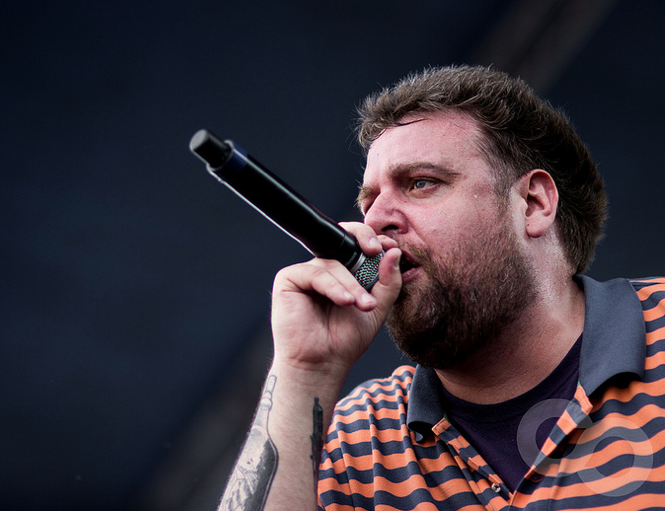
Rob Sonic
View on WikipediaKey Information


Robert Smith, better known by his stage name Rob Sonic, is an American rapper and record producer from the Bronx, New York.[3] He has been a member of the groups Sonic Sum and Hail Mary Mallon.[4] He is a founder of the record label Skypimps Music.[5]
Biography
[edit]Rob Sonic is originally from Washington, D.C.[6] As a child, he moved to New York.[7] He started rapping at age 12.[8]
In 2011, Smith released the album Are You Gonna Eat That? on Rhymesayers Entertainment with Aesop Rock and DJ Big Wiz under the alias Hail Mary Mallon. The group's second album, Bestiary, was released in 2014 on the same label.[6]
In 2004, he released his debut solo studio album, Telicatessen, on Definitive Jux.[9] In 2007, he released Sabotage Gigante on the label.[10] He released Alice in Thunderdome in 2014,[3] Defriender in 2018,[11] and Latrinalia in 2021.[12]
Discography
[edit]Studio albums
[edit]- Telicatessen (2004)
- Sabotage Gigante (2007)
- Alice in Thunderdome (2014)
- Defriender (2018)
- Latrinalia (2021)
Compilation albums
[edit]- Barf (2017)
Singles
[edit]- "Death Vendor" / "Dylsexia" (2004)
- "Shoplift" (2004)
- "Fatman and Littleboy" / "The Over Under" (2006)
- "Rock the Convoy" (2007)
- "All the Drugs (Do Nothing)" (2017)
- "Couple Skate" (2017)
- "JJ Sad" (2018)
- "Frankie (Can't Relax)" (2018)
- "Ithaca" (2018)
- "All the Drugs: Ohio Dirt Mix" (2018)
- "Bikini" (2019)
- "Boca Raton" (2020)
Productions
[edit]- Aesop Rock – "Winners Take All" from Fast Cars, Danger, Fire and Knives (2005)
- Aesop Rock – "Dark Heart News" from None Shall Pass (2007)
Guest appearances
[edit]- The Infesticons – "Chase Theme" from Gun Hill Road (2000)
- El-P – "Truancy" from Fantastic Damage (2002)
- Funkstörung – "Mr. Important" from Disconnected (2004)
- Hangar 18 – "One Night at the Bar" (2004)
- C-Rayz Walz – "Walk Through" from Year of the Beast (2005)
- Blue Sky Black Death – "Long Division" from A Heap of Broken Images (2006)
- El-P – "Flyentology" from I'll Sleep When You're Dead (2007)
- Aesop Rock – "Dark Heart News" from None Shall Pass (2007)
- Tobacco – "Lick the Witch" from LA UTI (2010)
- Aesop Rock – "Dokken Rules" and "BMX" from Skelethon (2012)
- Illogic and Blockhead – "Nails" from Preparing for Capture (2012)
- Armand Hammer – "Post Haste" from Half Measures (2013)
- Onry Ozzborn – "Not Really" from Duo (2016)
- Aesop Rock – "Forward Compatibility Engine" from Integrated Tech Solutions (2023)
- Sal Crosby & Bons Reeb (feat. Denmark Vessey) – "Fear of" (2024)
Compilation appearances
[edit]- "F.U. for Failure Ugly" on Definitive Jux Presents II (2002)
- "Dylsexia" on Definitive Jux Presents III (2004)
- "Shoplift (El-P Remix)" on Definitive Jux Teaser 2005 (2005)
- "Brand New Vandals" on Definitive Swim (2007)
- "Domestic Animals" on Definitive Jux Presents IV (2009)
References
[edit]- ^ Brown, Marisa. "Rob Sonic - Biography". AllMusic. Retrieved June 7, 2020.
- ^ "Potholes Interview: Rob Sonic On Making His Own Beats, His New Album, And Hail Mary Mallon (page 1 of 3)". Potholes in My Blog. November 4, 2014. Retrieved June 7, 2020.
- ^ a b Kangas, Chaz (August 15, 2014). "Exclusive Premiere: Rob Sonic's "Jesus Christ Supertramp" Video". The Village Voice. Archived from the original on September 12, 2018. Retrieved June 7, 2020.
- ^ Harris, David (July 7, 2011). "Interview: Aesop Rock, Rob Sonic and DJ Big Wiz of Hail Mary Mallon". Spectrum Culture. Retrieved June 7, 2020.
- ^ Horowitz, Matt (January 30, 2019). "Exclusive Interview: Rob Sonic". Grown Up Rap. Retrieved June 7, 2020.
- ^ a b McGarvey, Evan (May 8, 2008). "Sonic Sum: Films". Pitchfork. Retrieved June 7, 2020.
- ^ "Rob Sonic Interview". The Giant Peach. Retrieved June 7, 2020.
- ^ "Potholes Interview: Rob Sonic On Making His Own Beats, His New Album, And Hail Mary Mallon (page 2 of 3)". Potholes in My Blog. November 4, 2014. Retrieved June 7, 2020.
- ^ "Telicatessen by Rob Sonic". Metacritic. CBS Interactive. Retrieved June 7, 2020.
- ^ Patrin, Nate (January 24, 2008). "Rob Sonic: Sabotage Gigante". Pitchfork. Retrieved June 7, 2020.
- ^ Ugarte, Eddie (December 7, 2018). "New Music: Friday Roll Out! With Cocaine Piss, Rob Sonic". Ghettoblaster. Retrieved June 7, 2020.
- ^ "Latrinalia, by Rob Sonic". Rob Sonic. Retrieved 2021-11-23.
External links
[edit]| Authority control databases: Artists |
|---|

Rob Sonic
View on GrokipediaEarly life and background
Childhood and upbringing
Robert Smith, better known by his stage name Rob Sonic, was born in Washington, D.C.[1][11][12] Following a relocation as a teenager, Smith was raised in the Bronx, New York, where he immersed himself in the urban environment that shaped his early interests in music and hip-hop culture.[12][13] This move from the D.C. area to the Bronx exposed him to the vibrant, street-level hip-hop scene of New York City during his formative years.[14] Smith began rapping during junior high school, around the age of 11 or 12, initially focusing on rhyming rather than production as he explored various musical styles.[1][11] His early experiences included freestyling in local settings, drawing from the diverse influences of the Bronx's underground rap community that surrounded him as a young teen.[13]Initial musical influences
Rob Sonic's initial forays into music were deeply rooted in the East Coast hip-hop scene, particularly after moving from Washington, D.C., to the Bronx as a teenager. Growing up, he was immersed in the vibrant underground culture of New York, where the raw energy of street cyphers and local battles shaped his early artistic identity. This environment, characterized by the gritty innovation of Bronx hip-hop, provided a formative backdrop for his development, exposing him to the improvisational flow and competitive spirit that defined the era's emergent talents.[15][16] Introduced to hip-hop at age 11 by his older brother, Sonic drew significant inspiration from pioneering figures and sounds of the B-Boy era. He cited Rakim's intricate lyricism and the futuristic electronic influences of tracks like Afrika Bambaataa and Soul Sonic Force's "Planet Rock" (1982) as pivotal, alongside experimental producers such as Kraftwerk, Art of Noise, and Malcolm McLaren's eclectic fusions in songs like "Buffalo Gals" (1982). These elements—blending dense rhymes with innovative sampling and breakbeat rhythms—fueled his admiration for the underground rappers and producers who prioritized creativity over commercial polish, encouraging him to experiment with rhythm and wordplay in informal settings.[15][1] Self-taught from the outset, Sonic began writing raps around age 11 during middle school, honing his skills through casual battles where he would freestyle for small stakes like lunch money. This hands-on approach extended to beat-making, as he sought to capture the sounds echoing in his mind using rudimentary equipment, laying the groundwork for his dual role as rapper and producer. Participation in Bronx cyphers and informal recordings further solidified these foundational abilities, allowing him to refine his delivery and timing amid the collaborative chaos of the local scene, which later informed his entry into group projects.[15]Career
Early career and group affiliations
Rob Sonic entered the hip-hop scene in 1998, marking the beginning of his professional career as a rapper and producer in the Bronx underground. That year, he co-founded the group Sonic Sum alongside Fred Ones, Eric M.O., and Preservation (also known as DJ Jun), forming a collective focused on abstract hip-hop with experimental production and dense lyrical content.[17] As the frontman and primary MC, Sonic handled both rapping and production duties within the group, contributing to their signature sound that blended electronic elements with raw lyricism.[1] Sonic Sum's debut album, The Sanity Annex, was released in 2000 on Ozone Music, earning critical praise for its innovative approach and positioning the group as a notable act in the indie hip-hop landscape. The album received acclaim from outlets including SPIN, which named it the "2nd Best Album of the Year that No One Heard," as well as The Source, The Wire, XXL, NME, Urb, and CMJ, highlighting its impact in the U.S., Europe, and Japan.[18] Sonic's contributions as a producer and lyricist were central, with tracks showcasing his ability to craft intricate beats and narratives drawn from urban experiences. The group remained active through underground performances in New York City, building a grassroots following in the local scene.[19] During this period, Sonic established key connections in the indie hip-hop world, including shared management with El-P, fostering a friendship and mutual respect that led to his involvement with the Definitive Jux (Def Jux) label community. He participated in early collaborative projects and performances alongside Def Jux artists, such as joint shows in 2002, which helped solidify his presence in the underground circuit before his formal signing to the label in 2003.[19] These group affiliations and initial roles laid the groundwork for his transition to solo work.Solo discography and milestones
Rob Sonic's solo career began with the release of his debut album Telicatessen on September 7, 2004, through the independent label Definitive Jux, marking his emergence as a distinct voice in underground hip-hop after prior group affiliations. The album, self-produced by Sonic, blended elements of electronica, industrial, and IDM with rap structures, creating expansive soundscapes featuring new wave synths and cybernetic drum patterns that balanced experimentalism with accessibility through memorable hooks. Critics praised its sonic adventure, with one review noting that Sonic "absorbs elements of earlier electronica, industrial and IDM to create delectably expansive, engrossing parfaits of sound," earning it an 8/10 rating for its role in establishing his mechanically precise delivery and abstract, esoteric lyrics dense with wordplay.[20] Sonic's sophomore effort, Sabotage Gigante, arrived on September 25, 2007, also via Definitive Jux, expanding on the personal-political themes of Telicatessen with more universal abstractions and fractured anti-narratives. The album incorporated experimental elements such as reappropriated slogans, CB radio jargon, and collapsing metaphors over repetitive hard drum patterns and flanged vocals, though some critiques highlighted its languid flow and reduced urgency compared to the debut's post-9/11 dread and schizo style. Reception was mixed, with a Pitchfork score of 6.9/10 commending its "approachable incoherence" and dense lyrical quadruplespeak that demanded active listening, while PopMatters rated it 3/10, viewing it as a disappointment that elaborated on earlier lines but lacked innovation. This release solidified Sonic's reputation for lyrical density, often requiring multiple listens to unpack its sharp, punchy phrasing.[21][22] Following a hiatus after Definitive Jux's closure in 2009, Sonic returned with Alice in Thunderdome on August 26, 2014, released through OK-47 Records, his third solo album and a strong effort that showcased growth in technical rapping amid brooding, post-apocalyptic vibes. The project marked a pivotal reemergence, blending abstract lyricism with vivid storytelling, and was lauded as a "dope" work that ought to elevate his profile beyond niche audiences. Transitioning to independence, Sonic founded Skypimps Music, self-releasing Defriender on December 4, 2018, a solid project featuring experimental trap-influenced beats and collaborations like those with Mr. Dibbs, praised for its return to form with clever, unapologetic wordplay. His fifth studio album, Latrinalia, followed on September 24, 2021, via Skypimps, acting as a soundtrack to contemporary chaos with self-produced tracks exploring graffiti-inspired themes through poetic similes and quick-witted metaphors, earning acclaim as his best work yet for its brooding uniqueness. This shift from label-backed releases to self-production highlighted a milestone in artistic control, allowing Sonic to prioritize craft over commercial pressures after over two decades in hip-hop.[23][24][25][26] In 2024, Sonic continued his independent streak with the free Bandcamp single "Christmas Song 24" on December 20, a festive yet characteristically twisted track that underscored his ongoing output outside traditional album cycles. These milestones, including the label transition to Skypimps and consistent critical nods for his dense, innovative lyricism, trace Sonic's evolution from Definitive Jux's experimental vanguard to a self-sustained auteur in abstract hip-hop.[27]Major collaborations
One of Rob Sonic's most prominent collaborations is the hip-hop group Hail Mary Mallon, formed with fellow Def Jux alumnus Aesop Rock and DJ Big Wiz. The group originated during joint tours beginning around 2005, evolving into a formal project by 2009 to create material tailored for live performances, drawing from their shared New York roots and old-school hip-hop influences. The name "Hail Mary Mallon" was selected during a brainstorming session in a tour van, referencing Typhoid Mary (Mary Mallon) as a nod to persistence and historical intrigue, while emphasizing a playful yet gritty dynamic.[28][29] Hail Mary Mallon's debut album, Are You Gonna Eat That?, was released on Rhymesayers Entertainment in 2011, marking their first full-length shared release. The creative process involved intensive collaboration over four to five months, where Aesop Rock and Rob Sonic developed beats and lyrics simultaneously, incorporating personal anecdotes—like Rob Sonic's childhood memories for tracks such as "Breakdance Beach"—and inside jokes for songs like "Grubstake," resulting in a dense, humorous exploration of everyday absurdities. This approach fostered a competitive yet ego-free environment, allowing the duo to refine ideas through mutual critique without overproducing.[28] Their follow-up, Bestiary, arrived in November 2014 via Rhymesayers, expanding on the debut's sound with Aesop Rock producing ten tracks and Rob Sonic handling three, including standout cuts like "Jonathan" and "Whales." The process remained organic and partnership-driven, with the members exchanging beats freely and providing honest feedback to balance their distinct styles—Aesop's intricate wordplay complementing Rob Sonic's punchy, narrative-driven flows—while avoiding the rigidity of solo endeavors. Extensive touring in support of both albums, often with DJ Big Wiz on cuts, solidified the group's chemistry and appeal.[29] Beyond Hail Mary Mallon, Rob Sonic's post-2004 efforts have facilitated occasional one-off team-ups and contributions to larger underground projects, such as production and verses on collective releases with East Coast affiliates, though without forming additional enduring groups. As of 2025, he continues to appear on tracks like the remix of "Vanity Plates" and "Drive" by other artists.[11] These partnerships, including shared stages and limited-edition compilations, have amplified his presence in the indie rap scene by leveraging Rhymesayers' network and his reputation for versatile, beat-heavy contributions. Overall, collaborations like Hail Mary Mallon elevated Rob Sonic's visibility in underground hip-hop, bridging his solo work with broader audiences through critically acclaimed joint releases and sustained tour momentum.[24][29]Musical style and artistry
Lyrical approach and themes
Rob Sonic's lyrical approach is characterized by dense, abstract wordplay that blends stream-of-consciousness flows with intricate metaphors and puns, often creating a hypnotic, mechanically precise delivery reminiscent of underground New York rap traditions.[20] His early work, such as the 2004 album Telicatessen, features esoteric cyber fantasies and rapid-fire enunciation that demands close listening to unpack layered meanings, establishing a style heavy on punchlines and surreal tangents.[20] Recurring themes in Sonic's lyrics revolve around urban alienation, surreal humor, social commentary, and personal introspection, often drawn from New York City's chaotic underbelly. In Sabotage Gigante (2007), he shifts from post-9/11 personal dread to broader critiques of consumerism, war, and political figures like the Bush administration.[22] Collaborations like Hail Mary Mallon highlight surreal humor through funny, travel-inspired references to "general weirdness" and absurd scenarios, such as truck-stop murder fantasies or missing persons choruses, blending levity with darker introspection on everyday chaos.[28] Urban alienation emerges in ties to "messed up stories" from NYC history, like Typhoid Mary-inspired group naming, evoking unintentional harm amid relatable struggles.[30] Sonic's style has evolved from punchline-heavy raps in his debut era to more narrative-driven storytelling in later works, particularly Latrinalia (2021), where abstract ideas give way to psychological depth and structured tales.[26] Tracks like "Hammer of Chaos" transition from quick-witted similes to stylized prose narratives exploring graffiti culture and inner turmoil, reflecting a confident, unapologetic maturation in his brooding, self-reflective content.[26] This progression emphasizes clever phrase-twisting and rapid-fire delivery, unique to his Bronx-honed cadence, while maintaining surreal humor to offset heavier social observations.[26]Production techniques and evolution
Rob Sonic has primarily self-produced his solo albums, handling writing, instrumentation, and mixing to maintain creative control throughout his discography. His approach relies heavily on sample-based beats, incorporating electronic synthesizers, live guitars, and bass to blend hip-hop with rock and industrial influences. For instance, on his 2004 debut Telicatessen, he utilized hardware like the Akai MPC 2000 XL sampler, ARP Odyssey and Little Brother synthesizers, Roland Juno-106, Korg MS-2000, Yamaha SK-20, Fender Rhodes Piano Bass, and Technics SL-1200 turntables to craft collage-style tracks that vary in structure per song.[24] This setup enabled layered sampling techniques, where disparate elements—such as new wave synths, cybernetic drum patterns, and industrial white noise—are stacked to form dense "walls of sound," often featuring throbbing basslines that fuse unconventional rhythms with standard 4/4 hip-hop grooves.[20] Sonic's production techniques emphasize distorted effects and experimental sonics, drawing from electronica, IDM, and rock aesthetics to create a raw, mechanical edge during his Definitive Jux era. Tracks on Telicatessen exemplify this through aggressive, space-boogie funk vibes layered with vintage Company Flow-inspired elements, prioritizing sonic fit for his delivery over rigid genre conventions.[20] In the broader hip-hop landscape, his hardware-centric workflow positions him as an independent producer who favors tactile tools for organic manipulation, though he has not publicly detailed specific software preferences in later years. This method allows for unconventional rhythms that disrupt traditional beats, such as off-kilter percussion blended with rock-infused guitar riffs. Post-2014, following the dissolution of Definitive Jux around 2010, Sonic's production evolved toward more polished, introspective sounds under his own Skypimps Music imprint, reflecting a refined focus on personal craft over label-driven output. On Defriender (2018), he self-produced all tracks over a three-year period, starting with over 45 instrumental sketches before adding vocals, resulting in a cleaner aesthetic with crunchy guitar licks, prominent bass solos, and sustained electronic textures that maintain his signature density but with greater clarity and emotional nuance.[31] This shift marks a departure from the raw urgency of his Def Jux work, incorporating subtler distortions and rhythmic variations—evident in the album's blend of hip-hop foundations with rock experimentation—while upholding layered sampling as a core technique.[24] His independent evolution underscores a broader role in underground hip-hop, where self-reliance fosters innovative, genre-blurring production unhindered by commercial constraints.Discography
Studio albums
Rob Sonic's debut studio album, Telicatessen, was released on September 7, 2004, by Definitive Jux, blending hip-hop with elements of electronica, industrial, and IDM to create expansive soundscapes that marked a standout in the label's 2004 catalog.[32][20] His second album, Sabotage Gigante, arrived on September 25, 2007, also via Definitive Jux, shifting toward broader political themes with dense, abstract lyrics delivered over synthesized, fuzzed-out production that evoked an approachable yet chaotic incoherence.[21] After a seven-year hiatus from solo releases, Alice in Thunderdome emerged on August 26, 2014, through OK-47 Records, serving as a triumphant return with post-apocalyptic vibes and intricate, Aesop Rock-affiliated lyricism that rewards repeated listens.[33][23] Defriender, self-produced and released on December 4, 2018, by Skypimps Music, continued Sonic's indie hip-hop trajectory with experimental soundscapes and sharp lyricism that solidified his distinctive voice in the genre.[34][35] His fifth studio effort, Latrinalia, came out on September 24, 2021, via Skypimps Music, functioning as both a soundtrack to contemporary global unrest and a pinnacle of his evolving abstract hip-hop style, characterized by unapologetic phrase-twisting and sonic innovation.[8][26]EPs and compilation albums
Rob Sonic has released a limited number of EPs and compilation albums, primarily focusing on instrumental collections and seasonal projects outside his full-length studio efforts. These works often serve as retrospectives of his production catalog or lighthearted, limited-run offerings shared directly with fans via Bandcamp.[6] One notable compilation is Barf (Rob Sonic Instrumentals 2004-2017), released on November 8, 2017. This 28-track collection gathers previously unreleased instrumental versions spanning Sonic's early career, drawing from sessions for albums like Telicatessen and Sabotage Gigante, and highlighting his evolution as a beatmaker with gritty, sample-heavy beats characteristic of his abstract hip-hop style.[36] In 2019, Sonic followed with Defriender Instrumentals, issued on March 8 as a companion to his 2018 album Defriender. The 10-track release strips away vocals to showcase the raw production layers, including warped synths and percussive loops on cuts like "Honeymoon Suite Inst." and "Air D&D Inst.," allowing listeners to appreciate the foundational elements of his collaborative work with artists such as Aesop Rock.[31] Sonic released Latrinalia Instrumentals on October 1, 2021, as a companion to his album Latrinalia. This instrumental version highlights the production elements, including intricate beats and sonic textures underlying the lyrical content.[37] Sonic has also ventured into holiday-themed releases, starting a loose series of free Bandcamp tracks including Christmas Song (December 23, 2022) and Christmas Jordans (December 24, 2023). The most recent, Christmas Song 24 (It's Free), dropped on December 20, 2024, as a single festive rap over upbeat, seasonal production, continuing his tradition of annual yuletide drops that blend humor and introspection without tying into broader album cycles.[38][39][27]Contributions to hip-hop
Productions for other artists
Rob Sonic has provided production for select tracks by fellow Definitive Jux artists, showcasing his distinctive beat-making approach characterized by layered samples, gritty textures, and unconventional rhythms that complement dense lyrical content. His most notable external credits come from collaborations with Aesop Rock, where Sonic's beats emphasize atmospheric tension and experimental flair distinct from his self-productions. These contributions highlight his role in the underground hip-hop scene during the mid-2000s, bridging personal artistry with label synergies without overshadowing the lead artist's vision.[40] On Aesop Rock's 2005 EP Fast Cars, Danger, Fire and Knives, Sonic produced the track "Winners Take All," a brooding cut that deploys militaristic samples and sparse percussion to underscore themes of disillusionment and survival. The beat's minimalist structure, built around echoing synths and rhythmic stabs, allows Aesop Rock's intricate wordplay to dominate while adding a sense of urgency and isolation. Released via Definitive Jux, this production exemplifies Sonic's ability to craft moody, narrative-driven instrumentals tailored for conceptual hip-hop.[41][42] Sonic revisited this partnership on Aesop Rock's 2007 album None Shall Pass, handling production for "Dark Heart News," which features Sonic on vocals alongside the lead. The track's ominous tone is achieved through warped vocal chops, rumbling basslines, and disjointed drum patterns that evoke urban paranoia and introspection, evolving Sonic's style toward more cinematic elements post his solo debut Sabotage Gigante. This beat integrates seamlessly into the album's eclectic soundscape, produced primarily by Blockhead and El-P, and underscores Sonic's versatility in supporting high-profile peers within the Def Jux roster.[43]Guest appearances and features
Rob Sonic has made several notable guest appearances on tracks by other hip-hop artists, often contributing his distinctive rapid-fire lyrical style and abstract wordplay to collaborative efforts within the underground scene. These one-off features, spanning from the mid-2000s to the present, highlight his versatility as a rapper beyond his solo and group projects, frequently aligning with producers and emcees from labels like Definitive Jux and independent outlets. His contributions appear on both full-length albums and singles, emphasizing thematic elements like urban decay and surrealism that complement his broader artistry.[44] While primarily known for sustained partnerships such as Hail Mary Mallon with Aesop Rock, these guest spots represent isolated vocal collaborations that have helped solidify his presence in the alternative hip-hop ecosystem, particularly through appearances on Def Jux-adjacent compilations and indie releases.[10] The following table enumerates select notable guest features from 2004 onward, focusing on vocal contributions:| Year | Artist(s) | Track Title | Album/Single | Notes/Source |
|---|---|---|---|---|
| 2004 | Funkstörung | Mr. Important | Disconnected | Electronic-hip-hop fusion; Rob Sonic provides verses over glitchy production. |
| 2004 | Hangar 18 (feat. El-P, Camu Tao, Cryptic One, Murs) | One Night at the Bar | Traditional Drinking Songs: The Barhoppin' Single | Multi-artist posse cut on a Def Jux-related drinking-themed EP.[45] |
| 2005 | C-Rayz Walz | Walk Through | Year of the Beast | Intense lyrical exchange on a track addressing personal struggle and resilience.[46] |
| 2006 | Blue Sky Black Death (feat. Mike Ladd) | Long Division | A Heap of Broken Images | Extended abstract verses amid atmospheric beats on a compilation-style duo album.[47] |
| 2012 | Aesop Rock | Dokken Rules | Skelethon | Playful, high-energy feature nodding to '80s rock; bonus track on the album. |
| 2013 | Armand Hammer | Post Haste | Half Measures | Dense, poetic bars on a mixtape exploring abstract narratives.[48] |
| 2016 | Onry Ozzborn | Not Really | Duo | Collaborative EP track with introspective flows over Latrell James production.[49] |
| 2023 | Aesop Rock | Forward Compatibility Engine | Integrated Tech Solutions | Futuristic-themed verses enhancing the album's tech-noir vibe. |
| 2024 | Deadbeat Donnie & Sunny Darko | SNAPZ | SNAPZ (feat. Rob Sonic) - Single | Energetic single blending trap influences with Sonic's punchy delivery.[50] |
| 2024 | Nerves Baddington | Bees and Blow | Bees and Blow (feat. Rob Sonic) - Single | Humorous, offbeat feature on an independent release.[51] |
| 2025 | Oscar Goldman | Pest Control | Pest Control (feat. Rob Sonic) - Single | Recent single with sharp, satirical lyrics produced by Rob Sonic himself.[52] |