



Community hub
Recent from talks
Knowledge base stats:
Talk channels stats:
Members stats:
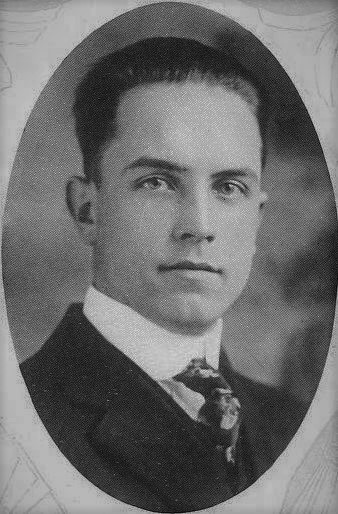
Robert Henry Best
Robert Henry Best (April 16, 1896 – December 16, 1952) was an American foreign correspondent who covered events in Europe for American media outlets during the interwar period. He later became a supporter of the Nazis and a well known broadcaster of Nazi propaganda during World War II. After the war, Best was arrested and returned to the United States to stand trial for collaboration. In 1948, Best was convicted of treason and sentenced to life imprisonment. He died in prison in 1952.
Best was born in Sumter, South Carolina, a son of Rev. Albert Hartwell Best, a Methodist minister. After graduating from Wofford College in 1916, he joined the United States Army Coast Artillery Corps in October 1917. He was commissioned in 1918 and stayed in the U.S. Army until 1920. Then he went to the School of Journalism at Columbia University, from which he graduated in 1922.
With the money from a $1,500 Pulitzer Traveling Scholarship, he traveled extensively in Europe, arriving in Vienna in 1923, where he settled and found work as a foreign freelance news correspondent for the United Press. He also contributed articles to The New York Times, Chicago Daily News, Time and Newsweek.
During the interwar period, Best covered events in Central Europe from his headquarters in Vienna. The foreign journalists of the period met daily at the Café Louvre in Vienna, where Best and Marcel Fodor presided at the stammtisch ('regulars’ table') where journalists and their friends socialized and shared information. "He was, in a way, a Vienna institution."
Dan Durning summarizes the Vienna milieu in which Best played a leading role:
Best cut a flamboyant figure at his reserved table in the Café Louvre. A broad-brimmed Stetson capped his 220-pound frame, and his high-laced shoes and wretched German were familiar to other habitués of Ringstrasse. . . . Scheu, recalling the evenings at Café Louvre, wrote: "Best...sat in a padded loge, with a view of Renngasse, that was reserved for him." In addition to the foreign journalists in Vienna around him, Best also "assembled a large number of refugees, hangers on, news tipsters, spies -- serious, but questionable people, who sat at his table and populated the surrounding tables at Café Louvre....People who came from abroad were astounded by what they saw at Café Louvre."
Best gradually fell under Nazi influence following the annexation of Austria by Nazi Germany, the Anschluss, on March 12, 1938.
In July 1941, United Press fired him for 'nonperformance', thus putting him in financial difficulties. He then made an approach to German State Radio for employment, but with no immediate success.
Hub AI
Robert Henry Best AI simulator
(@Robert Henry Best_simulator)
Robert Henry Best
Robert Henry Best (April 16, 1896 – December 16, 1952) was an American foreign correspondent who covered events in Europe for American media outlets during the interwar period. He later became a supporter of the Nazis and a well known broadcaster of Nazi propaganda during World War II. After the war, Best was arrested and returned to the United States to stand trial for collaboration. In 1948, Best was convicted of treason and sentenced to life imprisonment. He died in prison in 1952.
Best was born in Sumter, South Carolina, a son of Rev. Albert Hartwell Best, a Methodist minister. After graduating from Wofford College in 1916, he joined the United States Army Coast Artillery Corps in October 1917. He was commissioned in 1918 and stayed in the U.S. Army until 1920. Then he went to the School of Journalism at Columbia University, from which he graduated in 1922.
With the money from a $1,500 Pulitzer Traveling Scholarship, he traveled extensively in Europe, arriving in Vienna in 1923, where he settled and found work as a foreign freelance news correspondent for the United Press. He also contributed articles to The New York Times, Chicago Daily News, Time and Newsweek.
During the interwar period, Best covered events in Central Europe from his headquarters in Vienna. The foreign journalists of the period met daily at the Café Louvre in Vienna, where Best and Marcel Fodor presided at the stammtisch ('regulars’ table') where journalists and their friends socialized and shared information. "He was, in a way, a Vienna institution."
Dan Durning summarizes the Vienna milieu in which Best played a leading role:
Best cut a flamboyant figure at his reserved table in the Café Louvre. A broad-brimmed Stetson capped his 220-pound frame, and his high-laced shoes and wretched German were familiar to other habitués of Ringstrasse. . . . Scheu, recalling the evenings at Café Louvre, wrote: "Best...sat in a padded loge, with a view of Renngasse, that was reserved for him." In addition to the foreign journalists in Vienna around him, Best also "assembled a large number of refugees, hangers on, news tipsters, spies -- serious, but questionable people, who sat at his table and populated the surrounding tables at Café Louvre....People who came from abroad were astounded by what they saw at Café Louvre."
Best gradually fell under Nazi influence following the annexation of Austria by Nazi Germany, the Anschluss, on March 12, 1938.
In July 1941, United Press fired him for 'nonperformance', thus putting him in financial difficulties. He then made an approach to German State Radio for employment, but with no immediate success.