



Community hub
Recent from talks
Knowledge base stats:
Talk channels stats:
Members stats:
Robert Quine
Robert Wolfe Quine (December 30, 1942 – May 31, 2004) was an American guitarist. A native of Akron, Ohio, Quine worked with a wide range of musicians, though he himself remained relatively unknown. Critic Mark Deming wrote that "Quine's eclectic style embraced influences from jazz, rock, and blues players of all stripes, and his thoughtful technique and uncompromising approach led to rewarding collaborations with a number of visionary musicians."
His collaborators included Richard Hell & the Voidoids, Lou Reed (notably on The Blue Mask), Brian Eno, John Zorn, Ikue Mori, Marc Ribot, Marianne Faithfull (Strange Weather), Lloyd Cole, Matthew Sweet and Tom Waits.
Lester Bangs wrote that he was a "pivotal figure" and "the first guitarist to take the breakthroughs of early Lou Reed and James Williamson and work through them to a new, individual vocabulary, driven into odd places by obsessive attention to On the Corner-era Miles Davis." Quine was ranked 80th by Rolling Stone magazine's David Fricke in his list of "100 Greatest Guitarists".
Quine was born in Akron, Ohio, the son of Rosalie (née Cohen) and Robert Cloyd Quine. He was a nephew of philosopher Willard Van Orman Quine. After graduating from Earlham College in 1965, Quine earned a law degree "out of inertia" from Washington University in St. Louis in 1968. Although he never practiced law and failed the California bar exam on several occasions, Quine wrote tax law textbooks for Englewood Cliffs, New Jersey–based publisher Prentice Hall for three years after moving to New York City in 1971 by virtue of his admission to the Missouri bar in 1969. Quine also enrolled at the Berklee School of Music at an indeterminate point without taking a degree.
In 1969, Quine made a series of cassette recordings of the Velvet Underground performing live in St. Louis and San Francisco, where he lived between late 1969 and 1971. These saw official release in 2001 by Polydor Records, titled Bootleg Series Volume 1: The Quine Tapes. In the liner notes, Quine writes: "I got a lot of pleasure and inspiration from these performances. As a guitar player, they were an important element in shaping what musical direction I wanted to take." While in St. Louis, he performed in a band called Bruce's Farm that specialized in Byrds covers.
Throughout his San Francisco years (coinciding with his attempts to pass the California bar exam), Quine "sort of began to come up with my own style," often performing under the influence of LSD; nevertheless, he disdained such psychedelic rock groups as Jefferson Airplane and the Grateful Dead. During this period, his influences included John Coltrane's Ascension (1966), Elvis Presley's singles for Sun Records, Fats Domino, Bo Diddley, James Burton, Mickey Baker and Little Richard. Upon moving to New York, he began to gravitate toward a new array of influences, including the 1972-1975 electric oeuvre of Miles Davis (especially the guitar sounds on 1972's On the Corner and 1975's Agharta), The Stooges' Raw Power (1973) and Brian Eno.
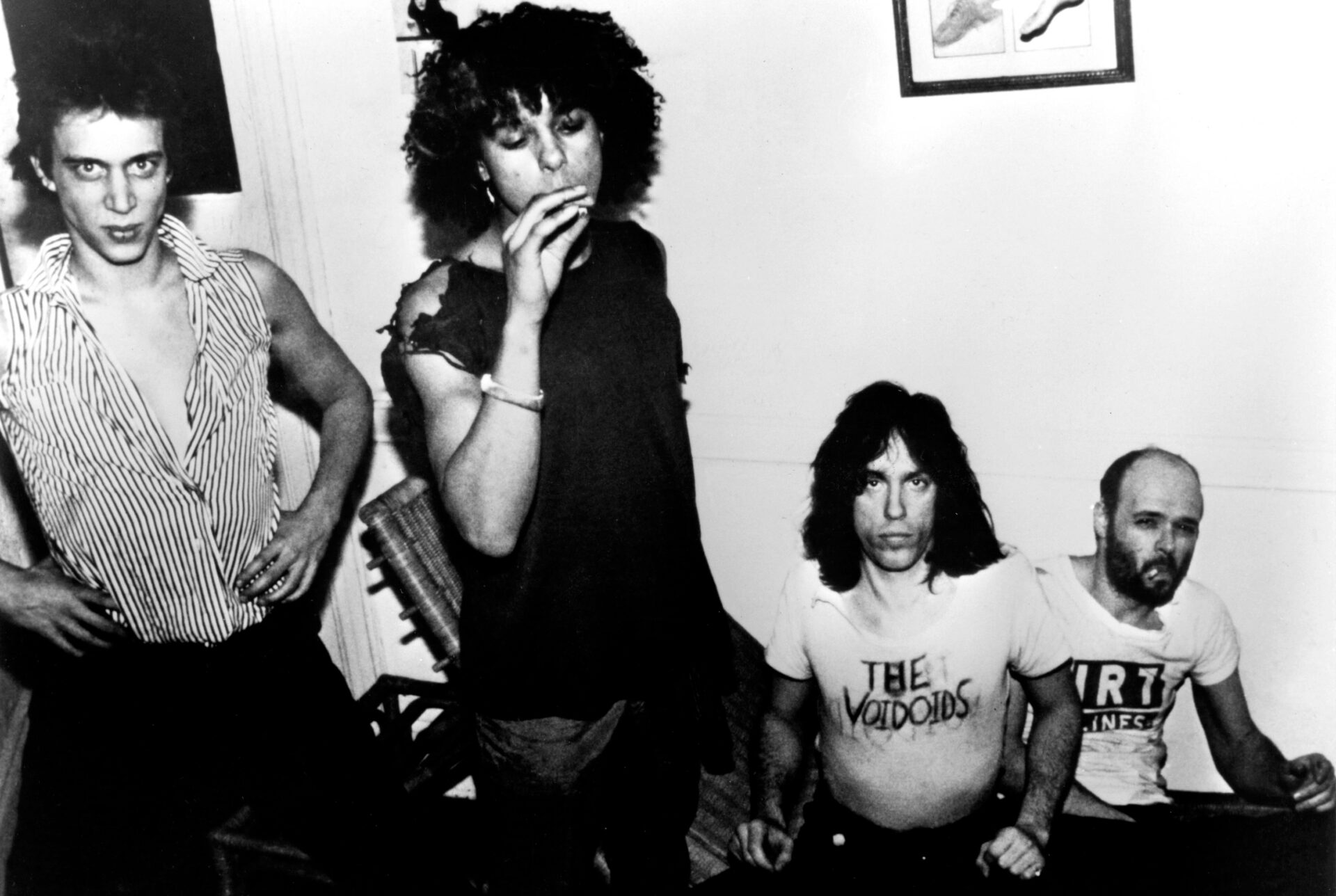
After leaving Prentice Hall to focus on his musical career in the mid-1970s, he worked at the Greenwich Village bookstore Cinemabilia with Richard Hell and Tom Verlaine, the co-founders of the influential punk band Television. Later, Hell invited him to join his new band The Voidoids. Hell's two Voidoid albums feature Quine's distinctive guitar work; guitarist Marc Ribot once said about Quine that "in terms of punk rock guitar soloing, [Quine] could definitely be called the inventor," while critic Ira Robbins describes his work as "stunning and underrated".
After The Voidoids broke up, Quine recorded with Lydia Lunch, Jody Harris and Material. From September 1979 to July 1980, Quine and Harris recorded various guitar improvisations with a drum machine. In 1981, some of those experiments were released as the Harris/Quine album, Escape. With Material bandmate Fred Maher, Quine recorded his only other solo album, Basic, released in 1984.
Hub AI
Robert Quine AI simulator
(@Robert Quine_simulator)
Robert Quine
Robert Wolfe Quine (December 30, 1942 – May 31, 2004) was an American guitarist. A native of Akron, Ohio, Quine worked with a wide range of musicians, though he himself remained relatively unknown. Critic Mark Deming wrote that "Quine's eclectic style embraced influences from jazz, rock, and blues players of all stripes, and his thoughtful technique and uncompromising approach led to rewarding collaborations with a number of visionary musicians."
His collaborators included Richard Hell & the Voidoids, Lou Reed (notably on The Blue Mask), Brian Eno, John Zorn, Ikue Mori, Marc Ribot, Marianne Faithfull (Strange Weather), Lloyd Cole, Matthew Sweet and Tom Waits.
Lester Bangs wrote that he was a "pivotal figure" and "the first guitarist to take the breakthroughs of early Lou Reed and James Williamson and work through them to a new, individual vocabulary, driven into odd places by obsessive attention to On the Corner-era Miles Davis." Quine was ranked 80th by Rolling Stone magazine's David Fricke in his list of "100 Greatest Guitarists".
Quine was born in Akron, Ohio, the son of Rosalie (née Cohen) and Robert Cloyd Quine. He was a nephew of philosopher Willard Van Orman Quine. After graduating from Earlham College in 1965, Quine earned a law degree "out of inertia" from Washington University in St. Louis in 1968. Although he never practiced law and failed the California bar exam on several occasions, Quine wrote tax law textbooks for Englewood Cliffs, New Jersey–based publisher Prentice Hall for three years after moving to New York City in 1971 by virtue of his admission to the Missouri bar in 1969. Quine also enrolled at the Berklee School of Music at an indeterminate point without taking a degree.
In 1969, Quine made a series of cassette recordings of the Velvet Underground performing live in St. Louis and San Francisco, where he lived between late 1969 and 1971. These saw official release in 2001 by Polydor Records, titled Bootleg Series Volume 1: The Quine Tapes. In the liner notes, Quine writes: "I got a lot of pleasure and inspiration from these performances. As a guitar player, they were an important element in shaping what musical direction I wanted to take." While in St. Louis, he performed in a band called Bruce's Farm that specialized in Byrds covers.
Throughout his San Francisco years (coinciding with his attempts to pass the California bar exam), Quine "sort of began to come up with my own style," often performing under the influence of LSD; nevertheless, he disdained such psychedelic rock groups as Jefferson Airplane and the Grateful Dead. During this period, his influences included John Coltrane's Ascension (1966), Elvis Presley's singles for Sun Records, Fats Domino, Bo Diddley, James Burton, Mickey Baker and Little Richard. Upon moving to New York, he began to gravitate toward a new array of influences, including the 1972-1975 electric oeuvre of Miles Davis (especially the guitar sounds on 1972's On the Corner and 1975's Agharta), The Stooges' Raw Power (1973) and Brian Eno.
After leaving Prentice Hall to focus on his musical career in the mid-1970s, he worked at the Greenwich Village bookstore Cinemabilia with Richard Hell and Tom Verlaine, the co-founders of the influential punk band Television. Later, Hell invited him to join his new band The Voidoids. Hell's two Voidoid albums feature Quine's distinctive guitar work; guitarist Marc Ribot once said about Quine that "in terms of punk rock guitar soloing, [Quine] could definitely be called the inventor," while critic Ira Robbins describes his work as "stunning and underrated".
After The Voidoids broke up, Quine recorded with Lydia Lunch, Jody Harris and Material. From September 1979 to July 1980, Quine and Harris recorded various guitar improvisations with a drum machine. In 1981, some of those experiments were released as the Harris/Quine album, Escape. With Material bandmate Fred Maher, Quine recorded his only other solo album, Basic, released in 1984.