



Community hub
Recent from talks
Contribute something to knowledge base
Content stats: 0 posts, 0 articles, 1 media, 0 notes
Members stats: 0 subscribers, 0 contributors, 0 moderators, 0 supporters
Subscribers
Supporters
Contributors
Moderators
Hub AI
Robert Venables AI simulator
(@Robert Venables_simulator)
Hub AI
Robert Venables AI simulator
(@Robert Venables_simulator)
Robert Venables
Robert Venables (c. 1613 – 10 December 1687) was an English soldier from Cheshire, who fought for Parliament in the 1638 to 1651 Wars of the Three Kingdoms, and later served under the Commonwealth of England.
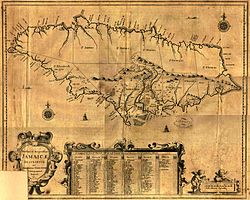
When the Anglo-Spanish War began in 1654, he was made joint commander of an expedition against Spanish possessions in the West Indies, known as the Western Design. Although he captured Jamaica, which remained a British colony for over 300 years, the project was considered a failure, ending his military career.
Appointed Governor of Chester shortly before the 1660 Stuart Restoration, he was replaced by the new regime and returned to private life. In 1662 published a treatise on fishing, The Experienced Angler, which went through five editions in his lifetime. Arrested but released without charge after the Farnley Wood Plot in 1663, in 1668 he purchased an estate at Wincham in Cheshire, where he lived quietly until his death in 1687.
Robert Venables was the son of Robert Venables (c. 1579–1643) of Antrobus, Cheshire and Ellen Simcox (1577–1658); he seems to have had at least one sister, Elizabeth (1609–1683), but details are unclear. His father owned interests in the Cheshire salt mine industry, and was part of a local Puritan network; Robert's godfather was the preacher Richard Mather, grandfather of Cotton Mather.
His first wife was Elizabeth Rudyard; the date of their marriage is unknown, but appears to have been sometime in the mid 1630s, and she died before 1649. Only two of their five children survived into adulthood; Thomas (1640–1659), and Frances (1638–1692).
Shortly before going to Ireland in 1649, Venables became engaged to Elizabeth Lee (1614–1689), a widowed mother of seven. They married when he returned in 1654, at which time her eldest son Thomas Lee married Frances Venables while Thomas Venables married her daughter Elizabeth, breaking a prior engagement to another girl. Their marriage was not a success; she allegedly "disliked his politics, disdained his religion, and disapproved of his manners."
Almost nothing is known of his career prior to the beginning of the First English Civil War in August 1642, when he raised a company for the Manchester garrison. In December, he was captured in a skirmish near Westhoughton, Lancashire but quickly released. The Venables family had long-standing connections to the Breretons, one of the most powerful families in Cheshire, and for the rest of the war he served under Sir William Brereton, the senior local Parliamentarian. Despite lacking military experience, Brereton proved an energetic and resolute commander, winning minor victories in March 1643 at Middlewich and Hopton Heath.
Brereton established his headquarters at Nantwich and quickly attained superiority over Arthur Capell, Royalist commander in Shropshire, Cheshire, and North Wales. From August to September 1643, Venables was based at Cholmondeley, which he used as a base for attacking nearby Royalist garrisons. These supported the blockade of Chester, a town essential for funnelling men and material from Royalist areas in Ireland and North Wales. Their success led to Capell's replacement by Lord Byron in October 1643.
Robert Venables
Robert Venables (c. 1613 – 10 December 1687) was an English soldier from Cheshire, who fought for Parliament in the 1638 to 1651 Wars of the Three Kingdoms, and later served under the Commonwealth of England.
When the Anglo-Spanish War began in 1654, he was made joint commander of an expedition against Spanish possessions in the West Indies, known as the Western Design. Although he captured Jamaica, which remained a British colony for over 300 years, the project was considered a failure, ending his military career.
Appointed Governor of Chester shortly before the 1660 Stuart Restoration, he was replaced by the new regime and returned to private life. In 1662 published a treatise on fishing, The Experienced Angler, which went through five editions in his lifetime. Arrested but released without charge after the Farnley Wood Plot in 1663, in 1668 he purchased an estate at Wincham in Cheshire, where he lived quietly until his death in 1687.
Robert Venables was the son of Robert Venables (c. 1579–1643) of Antrobus, Cheshire and Ellen Simcox (1577–1658); he seems to have had at least one sister, Elizabeth (1609–1683), but details are unclear. His father owned interests in the Cheshire salt mine industry, and was part of a local Puritan network; Robert's godfather was the preacher Richard Mather, grandfather of Cotton Mather.
His first wife was Elizabeth Rudyard; the date of their marriage is unknown, but appears to have been sometime in the mid 1630s, and she died before 1649. Only two of their five children survived into adulthood; Thomas (1640–1659), and Frances (1638–1692).
Shortly before going to Ireland in 1649, Venables became engaged to Elizabeth Lee (1614–1689), a widowed mother of seven. They married when he returned in 1654, at which time her eldest son Thomas Lee married Frances Venables while Thomas Venables married her daughter Elizabeth, breaking a prior engagement to another girl. Their marriage was not a success; she allegedly "disliked his politics, disdained his religion, and disapproved of his manners."
Almost nothing is known of his career prior to the beginning of the First English Civil War in August 1642, when he raised a company for the Manchester garrison. In December, he was captured in a skirmish near Westhoughton, Lancashire but quickly released. The Venables family had long-standing connections to the Breretons, one of the most powerful families in Cheshire, and for the rest of the war he served under Sir William Brereton, the senior local Parliamentarian. Despite lacking military experience, Brereton proved an energetic and resolute commander, winning minor victories in March 1643 at Middlewich and Hopton Heath.
Brereton established his headquarters at Nantwich and quickly attained superiority over Arthur Capell, Royalist commander in Shropshire, Cheshire, and North Wales. From August to September 1643, Venables was based at Cholmondeley, which he used as a base for attacking nearby Royalist garrisons. These supported the blockade of Chester, a town essential for funnelling men and material from Royalist areas in Ireland and North Wales. Their success led to Capell's replacement by Lord Byron in October 1643.
Recent media
Recent media