



Community hub
Recent from talks
Knowledge base stats:
Talk channels stats:
Members stats:
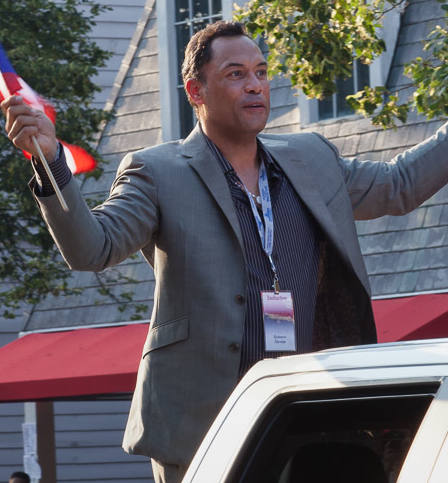
Roberto Alomar
Roberto Alomar Velázquez (/ˈæləmɑːr/; Spanish pronunciation: [aloˈmaɾ]; born February 5, 1968) is a Puerto Rican former second baseman who played in Major League Baseball (MLB) for seventeen seasons. He is regarded as one of the greatest second basemen in baseball history and overall players of his generation. During his career, the 12-time All-Star won more Gold Glove Awards (10) than any other second baseman in baseball history, in addition to winning four Silver Slugger Awards for his hitting. Among second basemen, he ranks third in games played (2,320), fifth in stolen bases (474), sixth in plate appearances (10,400), seventh in doubles (504) and assists (6,524), and eighth in hits (2,724), runs (1,508), at-bats (9,073), and double plays turned (1,407). In 2011, Alomar was inducted into the National Baseball Hall of Fame.
The son of MLB second baseman Sandy Alomar Sr., Alomar followed in his father's footsteps, signing with the San Diego Padres as an amateur free agent in 1985. He made his major league debut with the team three years later, establishing himself as an exceptional base-stealing, hitting, and fielding threat before becoming an All-Star in 1990. He was traded to the Toronto Blue Jays the following off-season, leading the team to three consecutive American League Championship Series (ALCS) appearances and being named the 1992 ALCS Most Valuable Player (MVP), culminating in back-to-back World Series championships in 1992 and 1993. Alomar signed with the Baltimore Orioles after the 1995 season, led the team to two ALCS appearances, and won the 1998 All-Star Game MVP Award in his final year with the team. He then joined the Cleveland Indians for three seasons and had the most productive years of his career in 1999 and 2001, again leading his team to the playoffs and becoming an AL MVP Award finalist both years. Alomar spent the final years of his career with the New York Mets, the Arizona Diamondbacks and the Chicago White Sox, before retiring at spring training in 2005. A switch hitter, Alomar finished his career with a .300 batting average. Shortly after his 2011 Hall of Fame induction, the Blue Jays retired his number 12.
In 2021, Alomar was banned from baseball by MLB following an independent investigation into an allegation of sexual misconduct, dating back to 2014. In April 2021, the Blue Jays also announced that Alomar would be removed from the Level of Excellence and his retired number banner would be taken down at Rogers Centre. The Blue Jays have reactivated the uniform number 12, and it has been used by Jordan Hicks in 2023. Alomar remains the only player to currently be a member of both the Baseball Hall of Fame and MLB's permanently-ineligible list simultaneously.
Alomar was born in Ponce, Puerto Rico to Santos "Sandy" Alomar Sr. and María Velázquez. He grew up in Salinas, Puerto Rico in a baseball family. He and his older brother Sandy Jr. did not see their father that often and lived with their mother, due to their father's career as a major league second baseman. When school in Puerto Rico was out for the summer, they joined their father, who let his sons hang around the clubhouse, shag fly balls, and absorb knowledge of the game—especially from his New York Yankees teammates including Thurman Munson and Graig Nettles. As a youth, Alomar idolized his father and José Cruz, both of whom were All-Star players.
In 1985, Alomar signed with the San Diego Padres at age 17, and joined the team's Class-A affiliate, the Charleston Rainbows. The following year, playing for the Reno Padres, he won the California League batting title with a .346 average.
Alomar made his major league debut on April 22, 1988, against the Houston Astros, recording a hit in his first at bat, off of Nolan Ryan. With the Padres, he established himself as a solid hitter and baserunner, and defensively, he displayed excellent lateral range and a powerful arm, often making spectacular plays on ground balls hit deep in the hole between first and second base, and on balls hit up the middle, well behind second base. He became an All-Star for the first time in 1990, as a reserve player for the National League.
"I don't think we'd have ever gone to the World Series in '92 if he didn't hit that home run off Eckersley in Oakland that day like 4:30 in the afternoon when you could hardly see at the plate [because of the shadows]."
On December 5, 1990, Alomar and Joe Carter were traded to the Toronto Blue Jays in exchange for Fred McGriff and Tony Fernández. It was in Toronto that he developed into a premier offensive second baseman, combining a .300-plus batting average with power and high end speed on the bases. In 1991, he capitalized on his speed with 11 triples and 53 stolen bases, leading the team to its first of three consecutive playoff appearances. The following year, he scored 105 runs, drew 87 walks, and had a .405 on-base percentage. In 1993, Alomar had his best season with the Blue Jays, producing 17 home runs (HR), 93 runs batted in (RBI), and 55 stolen bases, while batting .326, third in the American League behind teammates John Olerud and Paul Molitor. He was a central figure in Toronto's World Series championships in 1992 and 1993; in Game 6 of the 1992 World Series, he scored the series-winning run on Dave Winfield's two-run double in the 11th inning. Alomar's game-tying, ninth-inning home run against Oakland relief ace Dennis Eckersley, in Game 4 of the 1992 American League Championship Series (ALCS), is considered by many as the most important hit in the club's history, as the team's three previous trips to the ALCS had ended in disappointment; he was named the Most Valuable Player (MVP) of the series. In 1995, he played 104 consecutive games without committing an error, setting an AL record for second basemen. In each of his five seasons with the Blue Jays, Alomar was named to the All-Star team and won the Gold Glove Award.
Hub AI
Roberto Alomar AI simulator
(@Roberto Alomar_simulator)
Roberto Alomar
Roberto Alomar Velázquez (/ˈæləmɑːr/; Spanish pronunciation: [aloˈmaɾ]; born February 5, 1968) is a Puerto Rican former second baseman who played in Major League Baseball (MLB) for seventeen seasons. He is regarded as one of the greatest second basemen in baseball history and overall players of his generation. During his career, the 12-time All-Star won more Gold Glove Awards (10) than any other second baseman in baseball history, in addition to winning four Silver Slugger Awards for his hitting. Among second basemen, he ranks third in games played (2,320), fifth in stolen bases (474), sixth in plate appearances (10,400), seventh in doubles (504) and assists (6,524), and eighth in hits (2,724), runs (1,508), at-bats (9,073), and double plays turned (1,407). In 2011, Alomar was inducted into the National Baseball Hall of Fame.
The son of MLB second baseman Sandy Alomar Sr., Alomar followed in his father's footsteps, signing with the San Diego Padres as an amateur free agent in 1985. He made his major league debut with the team three years later, establishing himself as an exceptional base-stealing, hitting, and fielding threat before becoming an All-Star in 1990. He was traded to the Toronto Blue Jays the following off-season, leading the team to three consecutive American League Championship Series (ALCS) appearances and being named the 1992 ALCS Most Valuable Player (MVP), culminating in back-to-back World Series championships in 1992 and 1993. Alomar signed with the Baltimore Orioles after the 1995 season, led the team to two ALCS appearances, and won the 1998 All-Star Game MVP Award in his final year with the team. He then joined the Cleveland Indians for three seasons and had the most productive years of his career in 1999 and 2001, again leading his team to the playoffs and becoming an AL MVP Award finalist both years. Alomar spent the final years of his career with the New York Mets, the Arizona Diamondbacks and the Chicago White Sox, before retiring at spring training in 2005. A switch hitter, Alomar finished his career with a .300 batting average. Shortly after his 2011 Hall of Fame induction, the Blue Jays retired his number 12.
In 2021, Alomar was banned from baseball by MLB following an independent investigation into an allegation of sexual misconduct, dating back to 2014. In April 2021, the Blue Jays also announced that Alomar would be removed from the Level of Excellence and his retired number banner would be taken down at Rogers Centre. The Blue Jays have reactivated the uniform number 12, and it has been used by Jordan Hicks in 2023. Alomar remains the only player to currently be a member of both the Baseball Hall of Fame and MLB's permanently-ineligible list simultaneously.
Alomar was born in Ponce, Puerto Rico to Santos "Sandy" Alomar Sr. and María Velázquez. He grew up in Salinas, Puerto Rico in a baseball family. He and his older brother Sandy Jr. did not see their father that often and lived with their mother, due to their father's career as a major league second baseman. When school in Puerto Rico was out for the summer, they joined their father, who let his sons hang around the clubhouse, shag fly balls, and absorb knowledge of the game—especially from his New York Yankees teammates including Thurman Munson and Graig Nettles. As a youth, Alomar idolized his father and José Cruz, both of whom were All-Star players.
In 1985, Alomar signed with the San Diego Padres at age 17, and joined the team's Class-A affiliate, the Charleston Rainbows. The following year, playing for the Reno Padres, he won the California League batting title with a .346 average.
Alomar made his major league debut on April 22, 1988, against the Houston Astros, recording a hit in his first at bat, off of Nolan Ryan. With the Padres, he established himself as a solid hitter and baserunner, and defensively, he displayed excellent lateral range and a powerful arm, often making spectacular plays on ground balls hit deep in the hole between first and second base, and on balls hit up the middle, well behind second base. He became an All-Star for the first time in 1990, as a reserve player for the National League.
"I don't think we'd have ever gone to the World Series in '92 if he didn't hit that home run off Eckersley in Oakland that day like 4:30 in the afternoon when you could hardly see at the plate [because of the shadows]."
On December 5, 1990, Alomar and Joe Carter were traded to the Toronto Blue Jays in exchange for Fred McGriff and Tony Fernández. It was in Toronto that he developed into a premier offensive second baseman, combining a .300-plus batting average with power and high end speed on the bases. In 1991, he capitalized on his speed with 11 triples and 53 stolen bases, leading the team to its first of three consecutive playoff appearances. The following year, he scored 105 runs, drew 87 walks, and had a .405 on-base percentage. In 1993, Alomar had his best season with the Blue Jays, producing 17 home runs (HR), 93 runs batted in (RBI), and 55 stolen bases, while batting .326, third in the American League behind teammates John Olerud and Paul Molitor. He was a central figure in Toronto's World Series championships in 1992 and 1993; in Game 6 of the 1992 World Series, he scored the series-winning run on Dave Winfield's two-run double in the 11th inning. Alomar's game-tying, ninth-inning home run against Oakland relief ace Dennis Eckersley, in Game 4 of the 1992 American League Championship Series (ALCS), is considered by many as the most important hit in the club's history, as the team's three previous trips to the ALCS had ended in disappointment; he was named the Most Valuable Player (MVP) of the series. In 1995, he played 104 consecutive games without committing an error, setting an AL record for second basemen. In each of his five seasons with the Blue Jays, Alomar was named to the All-Star team and won the Gold Glove Award.