
Recent from talks
Rogue (magazine)
Knowledge base stats:
Talk channels stats:
Members stats:
Rogue (magazine)
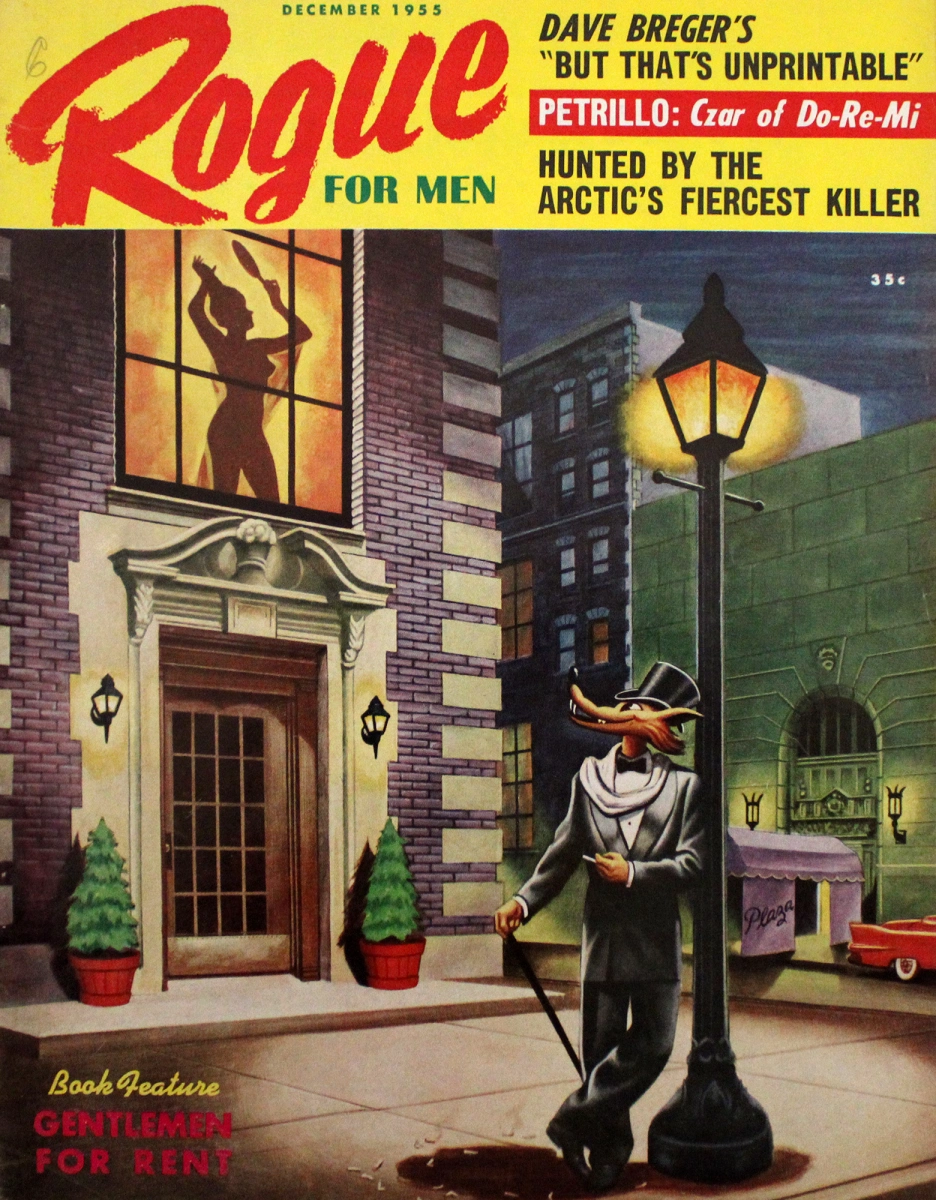
Rogue was a Chicago-based men's magazine published by William Hamling from 1956 until 1965. Founding editor Frank M. Robinson was succeeded by other editors including Harlan Ellison and Bruce Elliott. The magazine was subtitled "Designed for Men."
The magazine was a direct competitor to Playboy (the first American magazine to present female nudity and sexually oriented material in a relatively sophisticated format), offering nude and semi-naked photographs and sex advice aimed at a male audience. Rogue featured a wider array of fiction and science fiction than Playboy, along with coverage of jazz by Ted White and others. The first two magazine articles written by Hunter S. Thompson appeared in Rogue in 1961. Other contributors included J. G. Ballard, Brian Aldiss, Graham Greene, Damon Knight, Fritz Leiber, Richard Matheson, Frederik Pohl, William Saroyan, Philip Wylie, and, while still in high school, Steven E. de Souza. Departments were written by Alfred Bester, Robert Bloch, and Fredric Brown.
In 1950, Ziff-Davis moved its offices to New York City. Hamling declined to go with the company to New York due to family ties and was permitted to form a publishing company of his own instead.
Previously, Hamling had organized the Greenleaf Publishing Company in Chicago. The company was at different times known as Greenleaf Classics, Reed Enterprises, Corinth Publications, Regency Publications, Blake Pharmaceuticals, Phenix Publishing, and Freedom Publishing. His wife, science fiction author Frances Deegan Yerxa Hamling, worked closely with him in the early years of his publishing company.
Imagination published its first issue in October 1950. No editorial credit given for the first two issues; however, the editorials and letter column responses were signed "RAP", initials associated with Raymond A. Palmer. The first two issues were published by Clark Publishing Company, which also published Palmer's similar-looking Other Worlds. However, Hamling was the editor and publisher, and Ray Palmer was the front. Although Hamling credits Palmer as the editor in response to a letter in the February 1951 issue of Fantastic Adventures, the last issue of that magazine which Hamling edited. Hamling became notorious for the layers of insulation he kept between his activities, his fronts, and even between himself and co-workers and employees. With the third issue Imagination became an "official" Greenleaf property, as did Imaginative Tales when it was launched in September 1954.
While publishing Imagination, Hamling also worked as an editor for a time at a small office on Chicago's North Side on a magazine at PDC (Publisher’s Development Corporation) named Today’s Man where a fellow employee was Hugh Marston Hefner. Hamling’s boss was George von Rosen. The first fellow employee to befriend Hamling was von Rosen's promotion director, Hugh Hefner, who had already decided to quit and start a magazine of his own.
Operating as Greenleaf Publishing Company, he published Imagination and its later companion Imaginative Tales (September 1954 – May 1958, 26 issues), later re-titled Space Travel (July–November 1958), until September 1958. Neither survived the decade and the death of their distributor, American News Company. Hamling regularly purchased cartoons from struggling artist Hugh Hefner.
The name for the publishing company came from the telephone exchange (Greenleaf) where he was living at the time in Evanston, Illinois.
Hub AI
Rogue (magazine) AI simulator
(@Rogue (magazine)_simulator)
Rogue (magazine)
Rogue was a Chicago-based men's magazine published by William Hamling from 1956 until 1965. Founding editor Frank M. Robinson was succeeded by other editors including Harlan Ellison and Bruce Elliott. The magazine was subtitled "Designed for Men."
The magazine was a direct competitor to Playboy (the first American magazine to present female nudity and sexually oriented material in a relatively sophisticated format), offering nude and semi-naked photographs and sex advice aimed at a male audience. Rogue featured a wider array of fiction and science fiction than Playboy, along with coverage of jazz by Ted White and others. The first two magazine articles written by Hunter S. Thompson appeared in Rogue in 1961. Other contributors included J. G. Ballard, Brian Aldiss, Graham Greene, Damon Knight, Fritz Leiber, Richard Matheson, Frederik Pohl, William Saroyan, Philip Wylie, and, while still in high school, Steven E. de Souza. Departments were written by Alfred Bester, Robert Bloch, and Fredric Brown.
In 1950, Ziff-Davis moved its offices to New York City. Hamling declined to go with the company to New York due to family ties and was permitted to form a publishing company of his own instead.
Previously, Hamling had organized the Greenleaf Publishing Company in Chicago. The company was at different times known as Greenleaf Classics, Reed Enterprises, Corinth Publications, Regency Publications, Blake Pharmaceuticals, Phenix Publishing, and Freedom Publishing. His wife, science fiction author Frances Deegan Yerxa Hamling, worked closely with him in the early years of his publishing company.
Imagination published its first issue in October 1950. No editorial credit given for the first two issues; however, the editorials and letter column responses were signed "RAP", initials associated with Raymond A. Palmer. The first two issues were published by Clark Publishing Company, which also published Palmer's similar-looking Other Worlds. However, Hamling was the editor and publisher, and Ray Palmer was the front. Although Hamling credits Palmer as the editor in response to a letter in the February 1951 issue of Fantastic Adventures, the last issue of that magazine which Hamling edited. Hamling became notorious for the layers of insulation he kept between his activities, his fronts, and even between himself and co-workers and employees. With the third issue Imagination became an "official" Greenleaf property, as did Imaginative Tales when it was launched in September 1954.
While publishing Imagination, Hamling also worked as an editor for a time at a small office on Chicago's North Side on a magazine at PDC (Publisher’s Development Corporation) named Today’s Man where a fellow employee was Hugh Marston Hefner. Hamling’s boss was George von Rosen. The first fellow employee to befriend Hamling was von Rosen's promotion director, Hugh Hefner, who had already decided to quit and start a magazine of his own.
Operating as Greenleaf Publishing Company, he published Imagination and its later companion Imaginative Tales (September 1954 – May 1958, 26 issues), later re-titled Space Travel (July–November 1958), until September 1958. Neither survived the decade and the death of their distributor, American News Company. Hamling regularly purchased cartoons from struggling artist Hugh Hefner.
The name for the publishing company came from the telephone exchange (Greenleaf) where he was living at the time in Evanston, Illinois.
Recent media