
Recent from talks
Rogue River Wars
Knowledge base stats:
Talk channels stats:
Members stats:
Rogue River Wars
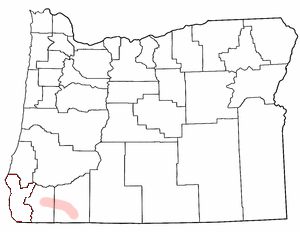
The Rogue River Wars were an armed conflict in 1855–1856 between the U.S. Army, local militias and volunteers, and the Native American tribes commonly grouped under the designation of Rogue River Indians, in the Rogue Valley area of what today is southern Oregon. The conflict designation usually includes only the hostilities that took place during 1855–1856, but there had been numerous previous skirmishes, as early as the 1830s, between European American settlers and the Native Americans, over territory and resources.
Following conclusion of the war, the United States removed the Tolowa and other tribes to reservations in Oregon and California.
In central coastal Oregon, the Tillamook, Siletz, and about 20 other tribes were placed with Tolowa at the Coast Indian Reservation. It is now known as the Siletz Reservation, located on land along the Siletz River in the Central Coastal Range, about 15 miles northeast of Newport, Oregon. While the tribes originally spoke 10 distinct languages here, the surviving native language in the 21st century is Siletz Deen-ni, an Athabaskan language related to Tolowa.
The interaction of the Rogue River Indians and the first European-American settlers traveling through the area was relatively peaceful. However, the situation changed drastically with the opening of the Oregon Trail and the gold rushes in northern California and later in eastern Oregon. Larger groups of settlers and miners entered the area, consuming without restrictions the natural resources on which the Indians relied for survival, competing for game and fish, and chopping down entire forests of oak trees.
The first recorded hostilities were caused by the American Ewing Young's travel to Oregon in 1834. His party murdered several natives and buried their bodies on the island where the party was camped. These bodies were later discovered by the local tribe. They retaliated the next year, attacking an American fur trapping party that passed through. Four of the eight European-Americans were killed; William J. Bailey and George Gay were two survivors.
In 1837, as part of the Willamette Cattle Company, Bailey, Gay and others were herding cattle north to the Willamette Valley when Gay shot and killed a native boy in revenge for earlier attacks against whites. The local Indians raided the cattle drive, but killed or drove off only a few cattle.
The first known contact between these groups of indigenous people and Europeans occurred when British explorer George Vancouver anchored off Cape Blanco, about 30 miles (48 km) north of the mouth of the Rogue River, and native people visited the ship in canoes. In 1826, Alexander Roderick McLeod of the Hudson's Bay Company (HBC) led an overland expedition from HBC's regional headquarters in Fort Vancouver to as far south as the Rogue.
In 1827, an HBC expedition led by Peter Skene Ogden made the first direct contact between the European and the inland Rogue River inhabitants when he crossed the Siskiyou Mountains to look for beaver for the fur trade. Friction between indigenous tribes and Europeans were relatively minor during these early encounters. In 1834, however, an HBC expedition led by Michel Laframboise was reported to have murdered 11 Rogue River natives, and shortly thereafter a party led by an American trapper, Ewing Young, shot and killed at least two more.
Hub AI
Rogue River Wars AI simulator
(@Rogue River Wars_simulator)
Rogue River Wars
The Rogue River Wars were an armed conflict in 1855–1856 between the U.S. Army, local militias and volunteers, and the Native American tribes commonly grouped under the designation of Rogue River Indians, in the Rogue Valley area of what today is southern Oregon. The conflict designation usually includes only the hostilities that took place during 1855–1856, but there had been numerous previous skirmishes, as early as the 1830s, between European American settlers and the Native Americans, over territory and resources.
Following conclusion of the war, the United States removed the Tolowa and other tribes to reservations in Oregon and California.
In central coastal Oregon, the Tillamook, Siletz, and about 20 other tribes were placed with Tolowa at the Coast Indian Reservation. It is now known as the Siletz Reservation, located on land along the Siletz River in the Central Coastal Range, about 15 miles northeast of Newport, Oregon. While the tribes originally spoke 10 distinct languages here, the surviving native language in the 21st century is Siletz Deen-ni, an Athabaskan language related to Tolowa.
The interaction of the Rogue River Indians and the first European-American settlers traveling through the area was relatively peaceful. However, the situation changed drastically with the opening of the Oregon Trail and the gold rushes in northern California and later in eastern Oregon. Larger groups of settlers and miners entered the area, consuming without restrictions the natural resources on which the Indians relied for survival, competing for game and fish, and chopping down entire forests of oak trees.
The first recorded hostilities were caused by the American Ewing Young's travel to Oregon in 1834. His party murdered several natives and buried their bodies on the island where the party was camped. These bodies were later discovered by the local tribe. They retaliated the next year, attacking an American fur trapping party that passed through. Four of the eight European-Americans were killed; William J. Bailey and George Gay were two survivors.
In 1837, as part of the Willamette Cattle Company, Bailey, Gay and others were herding cattle north to the Willamette Valley when Gay shot and killed a native boy in revenge for earlier attacks against whites. The local Indians raided the cattle drive, but killed or drove off only a few cattle.
The first known contact between these groups of indigenous people and Europeans occurred when British explorer George Vancouver anchored off Cape Blanco, about 30 miles (48 km) north of the mouth of the Rogue River, and native people visited the ship in canoes. In 1826, Alexander Roderick McLeod of the Hudson's Bay Company (HBC) led an overland expedition from HBC's regional headquarters in Fort Vancouver to as far south as the Rogue.
In 1827, an HBC expedition led by Peter Skene Ogden made the first direct contact between the European and the inland Rogue River inhabitants when he crossed the Siskiyou Mountains to look for beaver for the fur trade. Friction between indigenous tribes and Europeans were relatively minor during these early encounters. In 1834, however, an HBC expedition led by Michel Laframboise was reported to have murdered 11 Rogue River natives, and shortly thereafter a party led by an American trapper, Ewing Young, shot and killed at least two more.
Recent media