Hubbry Logo
Rogue ValleyRogue ValleyMain
Open search
Rogue Valley
Community hub
Rogue Valley
logo
8 pages, 0 posts
0 subscribers
Be the first to start a discussion here.
Rogue Valley
Rogue Valley
from Wikipedia

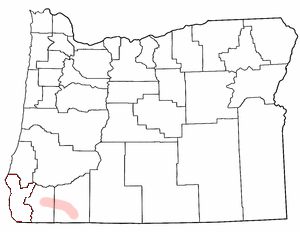
The Rogue Valley is a valley region in southwestern Oregon in the United States. Located along the middle Rogue River and its tributaries in Josephine and Jackson counties, the valley forms the cultural and economic heart of Southern Oregon near the California border. The largest communities in the Rogue Valley are Medford, Ashland, and Grants Pass. The most populated part of the Rogue Valley is not along the Rogue proper, but along the smaller Bear Creek tributary.

Key Information

The valley forms a relatively isolated enclave west of the Cascade Range along the north side of the Siskiyou Mountains. It is separated from the nearby coast by a high section of the Southern Oregon Coast Range. The valley is characterized by a mild climate that allows a long growing season, especially for many varieties of fruits, nuts and herbs. A regional manufacturing industry is centered in Medford, the most highly populated area of the valley. In recent years the valley has emerged as a wine-growing region and it is the location of the Rogue Valley AVA (American Viticultural Area). The mild climate and relative isolation have made the valley a popular retirement destination. The community of Ashland is famous for the Oregon Shakespeare Festival and Mount Ashland Ski Area. Interstate 5 follows the valley through Ashland, Medford and Grants Pass.

History

[edit]
The central Rogue Valley

In the early 19th century, the first European Americans began to pass through the valley, inhabited by the Shasta, Takelma, and Rogue River Athabaskan tribes of Native Americans. The early fur traders named this river the "River of the Rogues". White settlers began to arrive in the valley after the Donation Land Act, which allocated 640 acres (2.6 km2) of land to each married couple. Between 1836 and 1856, the valley was the scene of a series of bloody conflicts between European Americans and the Rogue River tribes. In 1850, gold was discovered[1] on the Rogue River; the next year gold was discovered in the nearby mountains. Early mining activity was centered on the lower Rogue River, on Althouse Creek in Josephine County, and near the now-restored town of Jacksonville, west of Medford. During the gold rush, some $70 million was extracted from the area.

Climate

[edit]
Medford
Climate chart (explanation)
J
F
M
A
M
J
J
A
S
O
N
D
 
 
2.4
 
 
48
32
 
 
2
 
 
54
34
 
 
1.7
 
 
59
36
 
 
1.4
 
 
65
40
 
 
1.3
 
 
73
45
 
 
0.6
 
 
82
51
 
 
0.3
 
 
92
57
 
 
0.4
 
 
91
56
 
 
0.6
 
 
84
49
 
 
1.1
 
 
70
42
 
 
3
 
 
53
36
 
 
3.4
 
 
46
30
Average max. and min. temperatures in °F
Precipitation totals in inches
Metric conversion
J
F
M
A
M
J
J
A
S
O
N
D
 
 
61
 
 
9
0
 
 
51
 
 
12
1
 
 
43
 
 
15
2
 
 
36
 
 
18
4
 
 
33
 
 
23
7
 
 
15
 
 
28
11
 
 
7.6
 
 
33
14
 
 
10
 
 
33
13
 
 
15
 
 
29
9
 
 
28
 
 
21
6
 
 
76
 
 
12
2
 
 
86
 
 
8
−1
Average max. and min. temperatures in °C
Precipitation totals in mm
Grants Pass
Climate chart (explanation)
J
F
M
A
M
J
J
A
S
O
N
D
 
 
4.8
 
 
48
34
 
 
4
 
 
55
34
 
 
3.4
 
 
60
36
 
 
2.1
 
 
66
39
 
 
1.4
 
 
74
44
 
 
0.7
 
 
81
49
 
 
0.3
 
 
90
54
 
 
0.3
 
 
90
52
 
 
0.6
 
 
84
46
 
 
1.9
 
 
70
39
 
 
5
 
 
53
37
 
 
6.4
 
 
46
36
Average max. and min. temperatures in °F
Precipitation totals in inches
Metric conversion
J
F
M
A
M
J
J
A
S
O
N
D
 
 
122
 
 
9
1
 
 
102
 
 
13
1
 
 
86
 
 
16
2
 
 
53
 
 
19
4
 
 
36
 
 
23
7
 
 
18
 
 
27
9
 
 
7.6
 
 
32
12
 
 
7.6
 
 
32
11
 
 
15
 
 
29
8
 
 
48
 
 
21
4
 
 
127
 
 
12
3
 
 
163
 
 
8
2
Average max. and min. temperatures in °C
Precipitation totals in mm
Ashland
Climate chart (explanation)
J
F
M
A
M
J
J
A
S
O
N
D
 
 
2.4
 
 
49
30
 
 
1.9
 
 
54
31
 
 
2
 
 
58
33
 
 
1.8
 
 
63
36
 
 
1.7
 
 
71
39
 
 
0.8
 
 
79
47
 
 
0.5
 
 
88
51
 
 
0.5
 
 
87
50
 
 
0.7
 
 
80
44
 
 
1.4
 
 
68
37
 
 
3
 
 
54
32
 
 
3.3
 
 
47
29
Average max. and min. temperatures in °F
Precipitation totals in inches
Metric conversion
J
F
M
A
M
J
J
A
S
O
N
D
 
 
61
 
 
9
−1
 
 
48
 
 
12
−1
 
 
51
 
 
14
1
 
 
46
 
 
17
2
 
 
43
 
 
22
4
 
 
20
 
 
26
8
 
 
13
 
 
31
11
 
 
13
 
 
31
10
 
 
18
 
 
27
7
 
 
36
 
 
20
3
 
 
76
 
 
12
0
 
 
84
 
 
8
−2
Average max. and min. temperatures in °C
Precipitation totals in mm
Snow in Phoenix

Unlike the rest of Western Oregon, because of the rain shadow effect resulting from the close range of the Cascades and Siskiyous, the Rogue Valley is relatively dry when compared to the coast and Portland. Most of the valley has a hot-summer Mediterranean climate. Winters are chilly and rainy, but relatively dry and slightly colder when compared to the rest of western Oregon, with frequent fog, and occasional snow. Summers are hot and sunny, but dry, with low humidity. Temperatures surpass 100 °F (37.8 °C) on an average of 10–15 days during the summer.[citation needed] Because of the combination of heat and dry air, wildfires are a problem during the summer, and frequently, smoke will fill up the valley for weeks, reducing visibility and air quality. On average, the first frost occurs October 22, and the last on May 6.[citation needed] The Rogue Valley is in USDA plant hardiness zones 7–9.[2] Sub-zero temperatures are extremely rare in the valley; the Rogue Valley International-Medford Airport has not recorded such extreme cold weather since December 21, 1990, when the temperature dropped to −2 °F (−18.9 °C).[3]

Due to the valley's generally mild climate, it is used as a region to grow pears, and there are multiple vineyards. Medford has, on average, 175 sunny days per year, compared to 80 on average for the Willamette Valley, and 65 on average for the coast.[citation needed]

See also

[edit]

References

[edit]
Revisions and contributorsEdit on WikipediaRead on Wikipedia
from Grokipedia
The Rogue Valley is a fertile agricultural and recreational region in southwestern , , centered along the middle Rogue River and its tributaries in Jackson and Josephine counties. Nestled between the to the east and the to the west, it follows the corridor and includes major population centers such as Medford, Ashland, Grants Pass, and Jacksonville. With a combined population of approximately 308,000 residents across its two counties as of 2023–2024 estimates, the valley benefits from a warmer compared to much of , supporting diverse viticulture and orchards. Human occupation of the Rogue Valley dates back at least 8,000–10,000 years, with indigenous groups including the Takelma, Shasta, and Dakubetede tribes relying on the river for fishing, hunting deer and , and gathering acorns, berries, and wokas seeds. Euro-American contact began in the 1820s through trappers like , who explored the area for furs. The 1846 opened a southern route through the valley for emigrants, facilitating settlement. Gold discoveries in 1851 near Jacksonville sparked a rush that established the region's first permanent communities, though it also ignited the Rogue River Wars (1855–1856), violent conflicts that displaced Native populations to reservations like Siletz and Grand Ronde following the 1853 Treaty of Table Rock. The valley's name originated from French-Canadian trappers' term "rogue" or "rascal" for the resistant indigenous peoples. Economically, the Rogue Valley transitioned from 19th-century mining and logging to agriculture and tourism in the 20th century, with pear production and hydraulic gold mining peaking in the 1870s–1880s before timber harvesting expanded post-1890s. Established as an American Viticultural Area in 1991, it now produces notable wines from varietals like Merlot, Pinot Noir, and Chardonnay, benefiting from high-elevation vineyards and warm growing conditions. The 215-mile Rogue River, a federally designated Wild and Scenic waterway since 1968, drives recreation through Class I–IV whitewater rafting, steelhead fishing, and scenic floats, while cultural attractions include the Oregon Shakespeare Festival in Ashland and the Britt Music & Arts Festival in Jacksonville. Medford, the valley's largest city and transportation hub via Rogue Valley International-Medford Airport, anchors commerce and healthcare for southern Oregon.

Geography

Location and extent

The Rogue Valley is situated in southwestern Oregon, United States, encompassing the middle reaches of the Rogue River and its tributaries primarily within Jackson and Josephine counties. This region forms the cultural and economic core of , lying adjacent to the to the north and extending toward the border to the south. The Rogue River serves as the primary waterway traversing the valley. Geographically centered around 42°26′N 122°56′W, the valley spans roughly 70 miles north-south by 60 miles east-west. Its boundaries are generally defined by the surrounding mountain ranges, including the to the east and the to the west, with the core lowlands aligning closely with the Rogue Valley (AVA), which begins at the junction with the Josephine-Douglas county line north of Grants Pass and extends southwesterly along to Wolf Creek, then follows historical rail lines and roads to the Rogue River, tracing the river northwest to the Siskiyou National Forest boundary near Galice, and proceeding along forest edges, highways, and elevation contours (e.g., 2,600 feet) to enclose the fertile basin. These limits approximate the valley's lowlands while excluding higher surrounding elevations, though the broader valley includes additional settled areas along the I-5 corridor. Administratively, the Rogue Valley includes significant portions managed as part of the Rogue River-Siskiyou National Forest, which borders the region and integrates federal lands into its western and southern extents. The area falls under the jurisdiction of local entities such as the Rogue Valley Council of Governments, which coordinates planning across Jackson and Josephine counties without extensions into other counties like Coos. This configuration underscores the valley's role as a distinct physiographic and socioeconomic unit within Oregon's diverse landscape.

Topography and geology

The Rogue Valley in southwestern is characterized by a flat to rolling valley floor at elevations ranging from 1,200 to 1,500 feet (366 to 457 meters) above sea level, providing a broad, open landscape conducive to agriculture and settlement. This lowland is encircled by rugged uplands, including the to the southwest and the to the northeast, where peaks exceed 7,000 feet (2,134 meters), such as at 7,533 feet (2,297 meters). Prominent features like the Table Rocks, flat-topped mesas of rising 800 feet (244 meters) above the valley floor, exemplify the dramatic relief shaped by differential erosion. Geologically, the Rogue Valley owes its formation to tectonic uplift beginning in the epoch around 23 million years ago, followed by extensive erosion during the Pleistocene, which carved the basin through softer rock layers amid surrounding harder terrains. The subsurface is dominated by sedimentary rocks from ancient marine environments, notably the Hornbrook Formation consisting of sandstones, mudstones, and conglomerates deposited in a shallow seaway, overlain by Eocene alluvial sediments of the Payne Cliffs Formation. Volcanic influences from activity contribute and flows, including 7-million-year-old lavas that cap features like the Table Rocks, reflecting ongoing subduction-related in the region's 300-million-year geologic record. The valley floor's fertile alluvial soils, derived primarily from Pleistocene river sediments deposited by the Rogue River and its tributaries, form a productive mantle supporting and farming. These include silt loams such as Newberg fine sandy loam along floodplains and terraces, as well as gravelly loams like those in the Ruch and Kerby series, which offer good drainage but vary in clay content from weathered Tertiary volcanics. In sub-basins like the Applegate Valley to the southwest and the Illinois Valley extension to the south, similar alluvial and fan deposits prevail, with occasional serpentine-influenced soils in the latter. Regional fault lines, part of the broader Pacific Northwest tectonic framework including the nearby , contribute to low but present seismic potential, though no major active surface faults rupture within the valley itself.

Hydrology and rivers

The Rogue River, the primary waterway defining the hydrological framework of the Rogue Valley, originates at Boundary Springs in within the at an elevation of approximately 5,200 feet and flows 215 miles generally southwestward through the valley before reaching the at . The river's path through the Rogue Valley features a relatively gentle , averaging 9 feet per mile in the middle basin, which facilitates sediment deposition and supports the valley's fertile alluvial soils. The broader Rogue River Basin encompasses 5,164 square miles, draining parts of southwestern and a small portion of northern California, with the river's average annual discharge measured at about 7,800 cubic feet per second near its mouth, though flows at valley outlets like Grants Pass average around 3,000–5,000 cubic feet per second depending on seasonal variations and upstream regulation. Major tributaries, including the Applegate River, , and Bear Creek, contribute significantly to the basin's hydrology, collectively feeding into the and expanding the total drainage area to support an annual yield of approximately 2.5 million acre-feet at key gauging points like Grants Pass. The Applegate River, originating in the , joins the Rogue near Grants Pass after draining 698 square miles (1,810 km²), while the adds substantial volume from its 930-square-mile watershed in the , entering near Agness. Bear Creek, a key local tributary in the upper valley near Medford, drains 374 square miles and provides critical seasonal flows for the central Rogue Valley. These tributaries enhance the river's overall capacity, with combined contributions enabling peak flows that can exceed 100,000 cubic feet per second during winter storms. Water management in the Rogue Basin focuses on flood control, generation, and support through strategic . The Lost Creek Dam, completed in 1977 on the upper Rogue River, serves multiple purposes including flood mitigation (reducing peak flows by up to 46,000 cubic feet per second), production, and augmentation, with a total storage capacity of 315,000 acre-feet. Similarly, the Applegate Dam, operational since 1980 on the Applegate River, provides 65,000 acre-feet of flood storage and supports downstream flow regulation. diversions from these systems and direct river withdrawals sustain approximately 100,000 acres of farmland across the basin as of 1985, primarily in the Bear Creek and Little Butte Creek subbasins, where annual water rights total over 3,250 cubic feet per second; more recent estimates indicate expanded use to over 120,000 acres amid ongoing demands. The Rogue River's hydrology also presents environmental challenges, notably seasonal flooding risks and impacts on migration. Major floods, such as the 1964 event that peaked at 152,000 cubic feet per second at Grants Pass, have historically caused extensive damage in the valley, though dams now attenuate 10-year flood peaks by 20–30%. The river serves as a vital migration corridor for anadromous , particularly , with pre-dam historical runs estimated at 45,500 spring Chinook and 75,000 fall Chinook adults annually (as of 1985 estimates), supporting robust populations before habitat alterations and barriers reduced access to upstream spawning grounds; recent ODFW conservation efforts have improved returns, with natural spring Chinook exceeding 15,000 in some years post-2010s. Modern management includes flow releases from reservoirs to maintain minimum perennial flows of at least 735 cubic feet per second at the mouth per statute (ORS 536.300), aiding passage and mitigating temperature spikes that exceed 82°F in summer.

Climate and environment

Climate patterns

The Rogue Valley features a under the Köppen classification Csb, defined by mild, wet winters and hot, dry summers. This regime results in an annual average temperature of approximately 54°F in Medford, the valley's largest city, with seasonal shifts from cooler, damper conditions in winter to arid heat in summer. Precipitation in the Rogue Valley totals 18–30 inches annually, concentrated primarily from through May, while summers experience extended periods often lasting up to 90 days without significant rainfall. These patterns stem from the region's position in the rain shadow of the , leading to lower moisture levels compared to coastal areas. Winter storms driven by Pacific weather systems deliver most of the rain, with typically the wettest month at around 3 inches in Medford. Temperature extremes highlight the valley's variability, with summer highs averaging 85–90°F from to and winter lows rarely dipping below 25°F. Microclimates arise due to elevational differences, where valley floors remain warmer than surrounding , fostering subtle local variations in heat retention and frost risk. Topographical features like the further modulate these patterns by blocking some marine influences. Since 2000, has amplified drought frequency in the Rogue Valley, with multi-year dry spells becoming more persistent amid rising temperatures. The 2021 heat dome exemplified this trend, pushing temperatures to 115°F in Medford on June 28—a record extreme that underscored increasing vulnerability to prolonged heat events. These shifts align with broader regional patterns of warmer, drier conditions projected through the century.

Ecosystems and biodiversity

The Rogue Valley in southwestern Oregon encompasses a diverse array of habitats shaped by its Mediterranean climate and varied topography, including oak savannas, mixed conifer forests along the valley edges, and riparian zones along major rivers like the Rogue. Oak savannas, dominated by Oregon white oak (Quercus garryana) and California black oak (Quercus kelloggii), form open woodlands interspersed with grasslands on the valley floor and lower slopes, providing critical transitions between upland prairies and forested areas. Mixed conifer forests, featuring ponderosa pine (Pinus ponderosa) and Douglas-fir (Pseudotsuga menziesii), occur on the surrounding foothills and uplands, supporting late-successional structures that enhance landscape resilience. Riparian zones along rivers consist of dense galleries of willows (Salix spp.) and black cottonwoods (Populus trichocarpa), which stabilize banks, filter sediments, and sustain high biodiversity in aquatic-terrestrial interfaces. The valley's flora is remarkably diverse, with hundreds of native vascular plant species adapted to its Mediterranean conditions, including over 200 wildflowers documented on sites like the Table Rocks alone. Characteristic species include ponderosa pine in upland forests and various manzanitas (Arctostaphylos spp.), such as the locally prominent hairy manzanita (Arctostaphylos columbiana), which thrive in chaparral-like shrublands and contribute to fire-adapted ecosystems. However, invasive species pose significant threats; Scotch broom (Cytisus scoparius), an aggressive woody shrub, invades oak woodlands and grasslands, outcompeting natives and altering understory composition across disturbed areas in the valley. Fauna in the Rogue Valley reflects its habitat mosaic, with key mammals like the (Odocoileus hemionus columbianus), a common grazer in oak savannas and riparian areas, and (Cervus canadensis roosevelt), whose local herd in the Rogue-South Fort Rock unit numbers around 2,600 individuals. Avian species include the (Haliaeetus leucocephalus), a recovering predator often observed along river corridors where it nests and forages. Aquatic biodiversity features threatened (Oncorhynchus kisutch) in the Rogue River basin, with populations part of the Southern Oregon/Northern California Coast Evolutionarily Significant Unit showing low annual adult returns in the thousands amid ongoing declines due to habitat loss and barriers. Conservation efforts focus on habitat restoration and control to preserve this . The Rogue Basin Coordinating Council, established in 1995 under Oregon's watershed enhancement program, coordinates multi-stakeholder initiatives for riparian planting, wetland protection, and ecosystem resilience across the valley. Protected areas like the Table Rocks, a 4,864-acre preserve jointly managed by the and , safeguard rare plants such as the dwarf woolly meadowfoam (Limnanthes floccosa ssp. pumila) and conserve habitats critical for endemic invertebrates and amphibians.

History

Indigenous peoples and prehistory

The Rogue Valley in southwestern has been inhabited by for at least 8,000 to 10,000 years, with the Takelma (also known as Dagelma), Shasta, and Athabascan groups such as the Dakubetede serving as the primary groups in the region prior to European contact. The Takelma occupied the middle and upper Rogue River drainage, including areas around Bear Creek Valley and extending eastward to the Cascade crest, while the Shasta inhabited southern portions near the and . These semi-sedentary societies established seasonal villages along riverbanks and creeks, utilizing semi-subterranean rectangular pit houses for winter habitation and lighter wickiups for summer use, facilitating access to riverine and upland resources. Archaeological evidence from the Rogue Valley reveals extensive pre-contact occupation, with numerous sites documenting human activity across the landscape. Surveys in areas like the Elk Creek drainage have identified over 30 sites, including villages, seasonal camps, and task-specific locations with artifacts such as projectile points, milling stones, and pithouse remains dating back to 6,500 B.C. Broader investigations in the Rogue River National Forest have recorded dozens more, such as rock shelters and open camps along Little Butte Creek and Big Butte Creek, featuring grinding tools and evidence of acorn processing from over 6,000 years ago. Petroglyphs near and sites like the Flat Creek indicate ceremonial and subsistence activities spanning 8,000 years, with trade networks extending to coastal and Klamath Basin groups for , shells, and pine nuts. These findings, including Siskiyou Utility Ware from A.D. 900–1500, underscore cultural continuity through phases like the Rogue phase (250 B.C.–contact). The Takelma and Shasta maintained a economy deeply integrated with the valley's ecology, relying on abundant runs in the Rogue River—estimated at tens to hundreds of thousands of fish annually in pre-contact times—for protein through weirs, spears, and drying racks. Complementary resources included gathering from native oaks, processed via leaching and grinding into staples, and spring harvesting of camas bulbs for roasting and storage, alongside deer and with bows, fire drives, and dogs. Oral traditions reinforced these lifeways, with creation stories and myths linking the Rogue River to ancestral spirits, such as tales of (Talsunne) as a sacred being overseeing the landscape and seasonal cycles. At European contact in the early 1800s, Indigenous populations in the valley numbered in the several thousands, centered in villages along the rivers.

European settlement and conflicts

European exploration of the Rogue Valley began in the 1820s with fur trappers employed by the (HBC), who traversed the region while following Native American trails through the and along the Rogue River. These early expeditions, led by figures such as Thomas McKay and Finan McDonald in 1825, marked the first documented Euro-Canadian presence in the valley, primarily focused on trapping beaver and other furs for the burgeoning North American trade. By the early 1830s, HBC operations had expanded southward, with John Work leading a significant in 1833 that passed through the Rogue Valley en route to , providing some of the earliest written accounts of the area's geography and resources during his return journey from the . Work's expedition, part of the HBC's broader efforts to map and exploit Pacific Slope territories, highlighted the valley's potential for future settlement while noting interactions with local Takelma and Shasta communities. The 1846 Applegate Trail, blazed by Jesse Applegate and Levi Scott as a southern alternative to the Oregon Trail's final segment, passed through the Rogue Valley and facilitated emigrant travel, contributing to early settlement by avoiding the crossing. Tensions between incoming and Indigenous peoples escalated in the mid-1850s, culminating in the of 1855–1856, a series of brutal conflicts involving U.S. military forces, volunteer militias, and tribes including the Takelma, Shasta, and Tututni. Sparked by a of white at the Whisky Creek camp in October 1855, the wars saw intense fighting across , with key battles at —where federal troops under repelled a large Indigenous force in June 1856—and Grave Creek, site of earlier skirmishes that drew in reinforcements from . The conflicts resulted in approximately 250–450 Indigenous deaths from combat, disease, and starvation, alongside 94–182 Euro-American casualties, devastating tribal populations and leading to the forced relocation of survivors to remote reservations. U.S. forces, numbering around 3,000 at peak mobilization, employed scorched-earth tactics that displaced entire communities, effectively clearing the valley for further colonization. The of 1850 accelerated Euro-American settlement in , granting up to 640 acres of land to married couples and 320 acres to single men who improved the property, drawing over 7,000 claimants statewide by 1855, many of whom targeted the fertile Rogue Valley. In the valley, this influx spurred the establishment of permanent communities, with approximately 1,000 settlers filing claims by mid-decade amid growing rumors of mineral wealth and . Jacksonville emerged as a central hub, founded in 1851 following gold discoveries and officially designated the of newly formed Jackson County in 1852, serving as the territorial government's administrative center for . These early claims often overlapped with Indigenous territories, exacerbating conflicts as settlers cleared forests and diverted water sources previously used by native villages. Efforts to formalize land cessions through treaties proved largely ineffective, as exemplified by the unratified Table Rock Treaty of 1853, negotiated between U.S. Superintendent of Indian Affairs Joel Palmer and Rogue River tribal leaders at a council near present-day White City. The agreement, which aimed to cede over 2.5 million acres in exchange for reservations and annuities, was signed by representatives of the Takelma, Shasta, and other bands but never received congressional approval, leaving tribal land rights in limbo and fueling resentment. Lindsay Applegate, a prominent and leader, played a role in related negotiations and enforcement, though his involvement underscored the treaty's failure to prevent violence. By 1860, these unfulfilled pacts and the wars had displaced the majority of , reducing their presence in the Rogue Valley to less than 10% of pre-contact estimates, with survivors confined to reservations like Grand Ronde and Siletz, where populations continued to decline due to poor conditions and disease. This demographic shift solidified Euro-American dominance, paving the way for agricultural expansion on former tribal lands.

Economic development and modernization

The discovery of in 1851 along Jackson Creek near present-day Jacksonville sparked the Rogue Valley's initial economic boom, attracting thousands of prospectors from and elsewhere during the . This influx led to the rapid establishment of mining camps that evolved into permanent settlements, with operations yielding significant early output and fueling local commerce. The rush prompted the Oregon Territorial Legislature to create Jackson County on January 12, 1852, designating Jacksonville as its seat to organize the growing population and administrative needs. Josephine County followed in 1856 for similar reasons in the southern portion of the valley. The arrival of the Oregon and California Railroad in 1887 marked a pivotal shift toward diversified and resource extraction, as the line's completion over connected Medford to broader markets in Portland and . This infrastructure facilitated the expansion of fruit orchards and lumber mills, transforming the valley's economy from mining-dependent to one reliant on timber harvesting and cash crops like pears and apples. By 1900, the combined population of Jackson and Josephine counties had surged to approximately 20,000 residents, reflecting the railroad's role in drawing settlers and investors. In the 20th century, the pear industry experienced a notable boom during the 1920s, with over 10,000 acres planted in the valley, supported by irrigation improvements and export demand that solidified pears as a staple crop. World War II influenced labor dynamics through the establishment of a German prisoner-of-war camp at Camp White near White City, where captives provided agricultural and forestry labor to address wartime shortages. Post-1950s infrastructure advancements, including the construction of Interstate 5 through the valley in the 1960s, enhanced connectivity and spurred suburban growth while easing transport for goods. More recent challenges and adaptations include the 2017 wildfire season, during which fires like the Chetco Bar complex burned over 190,000 acres in southwestern , threatening valley communities and prompting enhanced fire management investments. Economic diversification into technology sectors gained momentum in the 2000s, with initiatives fostering and advanced amid a shift from traditional industries. in Jackson County peaked at around 12% during the 2009 recession but declined to approximately 4% by 2023, supported by recovery in services and emerging tech employment.

Economy

Agriculture and viticulture

The Rogue Valley's agriculture is centered on production, with serving as a flagship crop. The region, encompassing Jackson and Josephine counties, is a key contributor to 's pear industry, where Jackson County alone accounts for approximately 24% of the state's pear output. In 2020, produced 210,000 tons of pears valued at over $97 million, with pears being the predominant variety grown in the Rogue Valley due to its suitable and soils. Apples and berries, including strawberries, blackberries, raspberries, and blueberries, are also significant, supported by numerous u-pick farms and orchards that highlight the area's diverse heritage. Approximately 50,000 acres of irrigated farmland underpin this production, enabling consistent yields across the valley's varied microclimates. Viticulture has emerged as a cornerstone of the Rogue Valley's agricultural economy since the , when pioneering plantings of vinifera grapes began transforming the landscape. Today, the region boasts over 50 grape varietals, including , , , and , cultivated across more than 180 vineyards and supporting more than 50 wineries with over 50 tasting rooms. The , with warm days and cool nights, fosters a wide range of styles from bold reds to aromatic whites. The Applegate Valley AVA, designated in 2001 as a sub-appellation within the broader Rogue Valley AVA (established ), spans about 700 acres under vine, emphasizing sustainable hillside plantings along the Applegate River. Irrigation systems, primarily drawn from Rogue River diversions through canals like those managed by the Rogue River Valley Irrigation District and Medford Irrigation District, sustain about 80% of the valley's agricultural activity by delivering water to over 21,000 acres via shared infrastructure. These systems, developed since the early , support both traditional orchards and emerging vineyards, though they face challenges from and efficiency needs. Sustainable practices have advanced through initiatives like the Rogue Basin Water Quality Plan, implemented in the and updated ongoing, which targets reductions in and nutrient runoff from farmlands to protect waterways. Economically, generates over $115 million in annual product value in the Rogue Valley, while the wine sector enhances this through , drawing part of Oregon's 3.74 million visitors and contributing to statewide wine-related revenues of $758 million pre-2020.

Manufacturing and services

The manufacturing sector in the Rogue Valley plays a vital role in the local economy, particularly through and wood products. , a prominent and gift company headquartered in Medford, operates extensive facilities focused on fruit packing, , and production, employing a core workforce of 1,700 that expands to over 6,700 during peak holiday seasons. The timber industry supports regional with several sawmills processing logs into and other products, contributing to Oregon's statewide output where 141 mills averaged 97 million board feet per mill in 2023, underscoring the sector's ongoing importance in rural areas like the Rogue Valley. Healthcare represents the largest service-based economic activity, anchored by Asante Rogue Regional Medical Center in Medford, which functions as a key regional referral facility within the Asante health system employing 6,000 staff across its operations. This center serves nearly 600,000 residents in and , delivering comprehensive medical services and generating $1.21 billion in annual revenue for fiscal year 2023, including $703 million in employee salaries and benefits that bolster the local economy. Retail and other services thrive in Medford, established as the Rogue Valley's primary commercial hub with multiple shopping centers, including the Rogue Valley Mall—the largest enclosed retail destination in , anchored by major stores like , , and JCPenney. The area has experienced expansion in call centers and firms, supporting and distribution roles amid broader service sector growth. The services sector dominates in the Rogue Valley, for the majority of the roughly 150,000 nonfarm jobs across Jackson and Josephine counties as of 2025, with healthcare, retail, and leading contributions. Average annual wages in the region align closely with Oregon's statewide average of $71,964 (median ~$55,000) as of 2025, reflecting stable but moderate income levels. Since 2020, has seen diversification into components, with projections for 720 additional jobs through 2031 driven by demands.

Tourism and recreation

The Rogue Valley's tourism industry plays a vital role in the regional , attracting visitors drawn to its natural beauty, outdoor adventures, and cultural offerings. In 2023, direct travel spending in Jackson and Josephine counties, the core of the Rogue Valley, totaled approximately $898 million, with visitor spending accounting for $779.3 million of that figure. This activity supported over 7,600 direct travel-related jobs and generated substantial for local infrastructure and services. The region welcomed more than 1.6 million overnight person-trips, contributing to a broader influx of tourists exploring its rivers, trails, and vineyards. In , direct travel spending rose to approximately $950 million, supporting over 8,000 jobs. Outdoor recreation forms the backbone of the valley's appeal, with the Rogue River serving as a premier destination for , , and . Guided rafting trips on the river's Wild and Scenic sections draw around 20,000 floaters annually, offering Class III and IV rapids amid stunning canyons and wildlife habitats. The river's proximity to , just a one-hour drive from Medford, enhances opportunities, with visitors accessing trails like the 3.5-mile Natural Bridge to Rogue Gorge route along the Upper Rogue for views of lava formations and cascading waters. Steelhead , particularly during the winter and summer runs, engages thousands of anglers each year, with historical data indicating up to 50,000 angler-days of effort on the middle Rogue during peak seasons. The (BLM) and U.S. Forest Service maintain key infrastructure, including portions of the 40-mile Rogue River National Recreation Trail, which parallels the river and provides multi-day backpacking experiences through diverse ecosystems. Cultural attractions bolster the valley's recreational draw, particularly in Ashland and Jacksonville. The , held annually in Ashland since 1935, features professional theater productions in three venues and attracts approximately 400,000 visitors annually as of 2024, injecting millions into local businesses through extended stays and dining. Similarly, the Britt Music & Arts Festival, established in 1963 in Jacksonville's historic Peter Britt Gardens amphitheater, hosts around 50,000 attendees across 25-30 summer concerts and events, blending orchestral performances with contemporary artists against a backdrop of forested hills. These festivals highlight the valley's blend of arts and nature, encouraging immersive experiences like garden picnics and stargazing. Wine tourism thrives along the Rogue Valley's designated trails, where over 50 tasting rooms showcase varietals like , , and from more than 180 vineyards. The Rogue Valley Wine Trail and sub-routes, such as the Applegate Valley with its 18 wineries, offer self-guided tours through scenic orchards and foothills, often paired with pairings. Events like the annual Pear Blossom Festival in Medford, dating to 1954, celebrate the valley's agricultural heritage with a drawing 25,000-30,000 spectators and 4,000 participants, featuring runs, fairs, and highlights of local pears and . This experiential focus distinguishes wine tourism here, emphasizing intimate tastings and harvest-season excursions rather than large-scale production.

Communities and culture

Major settlements

Medford serves as the largest city in the Rogue Valley and Jackson County, with a population of 86,301 as of July 1, 2024. Founded on , 1883, as a rail hub by developers Brobeck and Ira J. Phipps to capitalize on the arrival of the and California Railroad, the city quickly developed around its . The urban layout spans approximately 26 square miles, encompassing a mix of commercial, residential, and industrial zones centered along and the Bear Creek Valley. Ashland, located at the southern edge of the Rogue Valley, is a smaller but prominent settlement with a population of 20,935 as of July 1, 2024. Incorporated on October 13, 1874, it originated as a milling and agricultural community along Ashland Creek before expanding with the railroad's arrival. Known for its theater heritage, the city's core urban area covers about 5 square miles near Interstate 5, featuring a compact downtown grid and residential neighborhoods integrated with surrounding foothills. To the west in Josephine County, Grants Pass functions as the , with a population of 39,468 as of July 1, 2024. Established as the in 1885 after winning an election against Kerbyville, it grew from a riverside into a key transportation node with the completion of the railroad in 1883. The city's layout spans roughly 8 square miles along the Rogue River, characterized by a linear development pattern that follows the waterway, including a central downtown district and expanding suburbs. Among smaller towns, Jacksonville stands out as a site, preserving its 19th-century Gold Rush-era architecture and serving as Oregon's first before Medford's rise; it has a of 2,945 as of , 2024. Central Point, positioned between Medford and the Applegate Valley, acts as an agricultural center supporting and wine grape production, with a of 19,128 as of , 2024, and a grid-based layout integrated with surrounding farmlands.

Demographics and society

The Rogue Valley, spanning Jackson and Josephine counties in southern Oregon, has an estimated population of 309,607 as of July 1, 2024, reflecting the combined totals from recent U.S. Census Bureau data. This figure represents modest growth, with an average annual rate of approximately 0.9% since 2010, driven by migration and natural increase despite recent slowdowns in some areas. Demographically, the region exhibits limited ethnic diversity, with about 80% of residents identifying as White non-Hispanic, 12% as Hispanic or Latino, and 1% as Native American. Indigenous groups, including the Cow Creek Band of Umpqua Tribe, continue to play a role in the social fabric, residing on a 1,840-acre reservation in the area. Educational opportunities are anchored by Rogue Community College, with total enrollment of 9,280 in 2023–2024, and in Ashland, with total enrollment of 5,129 as of Fall 2024. The four-year high school graduation rate in local districts averages around 79%, below the statewide figure of 81.3% for the 2023–2024 school year but showing variability across urban and rural schools. Social challenges include a regional poverty rate of about 14%, with Jackson County at 12.9% and higher in Josephine County at 15.8% (2019–2023 ). impacts roughly 1,200 people based on available 2024 point-in-time counts, with at least 607 sheltered in Jackson County (unsheltered not counted in even year) and 554 total in Josephine County (30 sheltered, 524 unsheltered). Healthcare is accessible via three primary hospitals—Asante Rogue Regional Medical Center, Providence Medford Medical Center, and Three Rivers Community Hospital—yet rural gaps persist in services, particularly for crisis response and inpatient care.

Arts, festivals, and heritage

The Rogue Valley's performing arts scene is anchored by the (OSF), a Tony Award-winning institution founded in 1935 by Angus L. Bowmer in Ashland as a three-day event featuring two plays in the remnants of the tabernacle. Today, OSF presents around 780 performances annually across 9–11 plays, including works by Shakespeare alongside contemporary and classic pieces, drawing an audience of approximately 400,000 patrons each season amid post-pandemic recovery. Complementing this, Southern University's Theatre Arts program, designated a Center of Excellence in Fine and Performing Arts by the University System, offers degrees and graduate studies through its Oregon Center for the Arts, emphasizing professional training and public productions that engage the regional community. Annual festivals enrich the valley's cultural calendar, with the Ashland Independent Film Festival, established in 2001 by the Film Society, showcasing independent films, documentaries, and shorts through screenings, panels, and forums that sell around 20,000 tickets each year. The Oregon Chocolate Festival, held annually in Ashland since 2004, celebrates artisan chocolatiers with tastings, workshops, and a vendor marketplace featuring over 50 exhibitors, attracting record crowds in recent years for its focus on confections paired with local wines. These events foster artistic exchange and community involvement, contributing to the valley's reputation as a hub for creative gatherings, with 2024 editions showing strong attendance recovery. Heritage preservation in the Rogue Valley centers on sites that highlight its 19th-century roots, including the Jacksonville Historic District, designated a in 1961 for its intact collection of over 100 buildings from the 1850s era, such as the Greek Revival-style Jackson County Courthouse and the Beekman Bank, reflecting the region's mining and commercial history. Viticultural heritage is exemplified by early plantings like those of photographer Peter Britt, who established Oregon's first in 1852 near Jacksonville using Mission grapes from , with surviving 19th-century vines preserved at sites like Valley View Winery to demonstrate the valley's pioneering role in the state's wine industry. Cultural institutions further sustain the arts and heritage, with the Schneider Museum of Art at serving as a contemporary venue since its opening in , hosting rotating exhibitions of modern works and educational programs that draw from regional and national artists. The Britt Gardens in Jacksonville, part of the historic estate of Peter Britt, provide an outdoor amphitheater for the Britt Music & Arts Festival's summer series, featuring genres from classical to pop in a setting overlooking the Rogue Valley and accommodating up to 2,000 attendees per show. For indigenous heritage, the Takelma Cultural Center in the region promotes and about the Takelma , who inhabited the Rogue Valley for millennia, through community-based programs and exhibits on their and practices.

Transportation and infrastructure

Road and highway networks

The primary north-south artery through the Rogue Valley is Interstate 5 (I-5), which spans approximately 60 miles within the region, connecting key communities like Ashland, Medford, Central Point, and Grants Pass. This segment of I-5 serves as the main conduit for regional and interstate travel, linking Medford northward to Portland about 280 miles away and southward into California roughly 80 miles to Yreka. As part of Oregon's Pacific Highway No. 1, I-5 facilitates the transport of goods, agriculture, and tourists, with annual average daily traffic (AADT) volumes typically ranging from 30,000 to 50,000 vehicles per day in the valley corridor, particularly near Grants Pass and Medford interchanges. Complementing I-5 are state highways that provide historic alignments and scenic routes. Oregon Route 99 (OR 99), the former alignment of , parallels I-5 for about 50 miles through the valley, offering access to urban centers and serving as a key alternative during I-5 closures or for local traffic. Oregon Route 62 (OR 62), known as the Rogue Valley Expressway in parts, follows the Rogue River for scenic access to recreational areas, extending from Medford toward and providing vital connectivity for tourism and rural communities. These routes enhance regional cohesion by distributing traffic loads and supporting economic activities reliant on efficient transport. Local road networks, such as the Foothill Road corridor east of Medford, are essential for rural access and connecting foothill communities to major highways. This network supports agricultural transport and residential travel in the valley's eastern periphery, with ongoing improvements widening lanes and adding safety features to accommodate growth. Bridge infrastructure over the Rogue River includes more than 20 crossings constructed or significantly rehabilitated since the , including structures on OR 22, OR 271, and local roads like Depot Street, ensuring reliable spans for vehicular, pedestrian, and recreational use across the waterway. The Oregon Department of Transportation (ODOT) oversees maintenance of these roadways, with annual investments in the Rogue Valley region supporting pavement preservation, bridge repairs, and safety enhancements. Region 4 operations, which encompass the valley, allocate resources for routine upkeep amid increasing demands, though statewide maintenance needs suggest additional funding could address rising costs. Congestion remains a challenge in the Medford urban area, particularly at I-5 interchanges with OR 62 and OR 99, prompting targeted improvements for better flow.

Rail, air, and water transport

The Rogue Valley's rail infrastructure primarily supports , with the Central Oregon & Pacific Railroad (CORP) operating a main line parallel to Highway 99 through the region as part of its 303-mile route from , to Black Butte, . This line handles significant volumes of commodities, including 88% forest products such as , logs, and , alongside chemicals, , and farm-related goods, with 23,484 carloads recorded in 2017 generating over $16 million in revenue. The Rogue Valley Terminal Railroad (RVT), a 14-mile short line connected to CORP at White City, provides switching and transload services in the Medford , transporting , , asphalt, fly ash, and chemicals, with 1,907 carloads in 2017. Several freight trains operate daily on these lines, supporting regional industries like timber and . Passenger rail service is limited to Amtrak Thruway bus connections from the Medford station at Rogue Valley International-Medford Airport, providing daily links to the Coast Starlight train in Eugene for onward travel to Portland and other Pacific Northwest destinations. These buses offer multiple daily departures, integrating with Amtrak's regional network to serve the valley's connectivity needs without direct rail stops in the area. Rogue Valley International-Medford Airport (MFR), located three miles north of downtown Medford, serves as the region's primary air hub, with an 8,800-foot by 150-foot runway accommodating commercial and cargo operations. In 2024, it handled over 1 million passengers, marking the second-busiest year in its history and reflecting steady post-pandemic recovery. Direct flights connect to major cities including Seattle, San Francisco, Denver, Portland, Los Angeles, and Las Vegas via airlines such as Alaska Airlines, United, and Avelo. The airport also supports cargo services with flights to hubs like Los Angeles International, enhancing regional logistics for perishable goods and manufacturing exports. Recent developments include a 2025 airfield expansion that completed new taxiways and extensions to reduce delays and boost capacity, funded in part by federal grants totaling over $7 million for infrastructure like facilities and areas. Ongoing plans propose terminal upgrades to double passenger handling by 2042, including additional gates and baggage facilities. Water transport on the Rogue River focuses on recreation, with jet boat tours from Grants Pass offering thrilling excursions through the dramatic Hellgate Canyon, a narrow, rapid-filled section unsuitable for larger vessels. Operators like Hellgate Jetboat Excursions and Jerry's Rogue Jets carry tens of thousands of passengers annually—Jerry's alone averaging 35,000 from May to —providing narrated trips highlighting wildlife, history, and via specialized shallow-draft boats. Small recreational ports and launches at Grants Pass support , , and , but the canyon's and terrain prevent commercial shipping, limiting river use to and non-motorized activities.

References

Add your contribution
Related Hubs
User Avatar
No comments yet.