
Recent from talks
Diocese of Autun
Knowledge base stats:
Talk channels stats:
Members stats:
Diocese of Autun
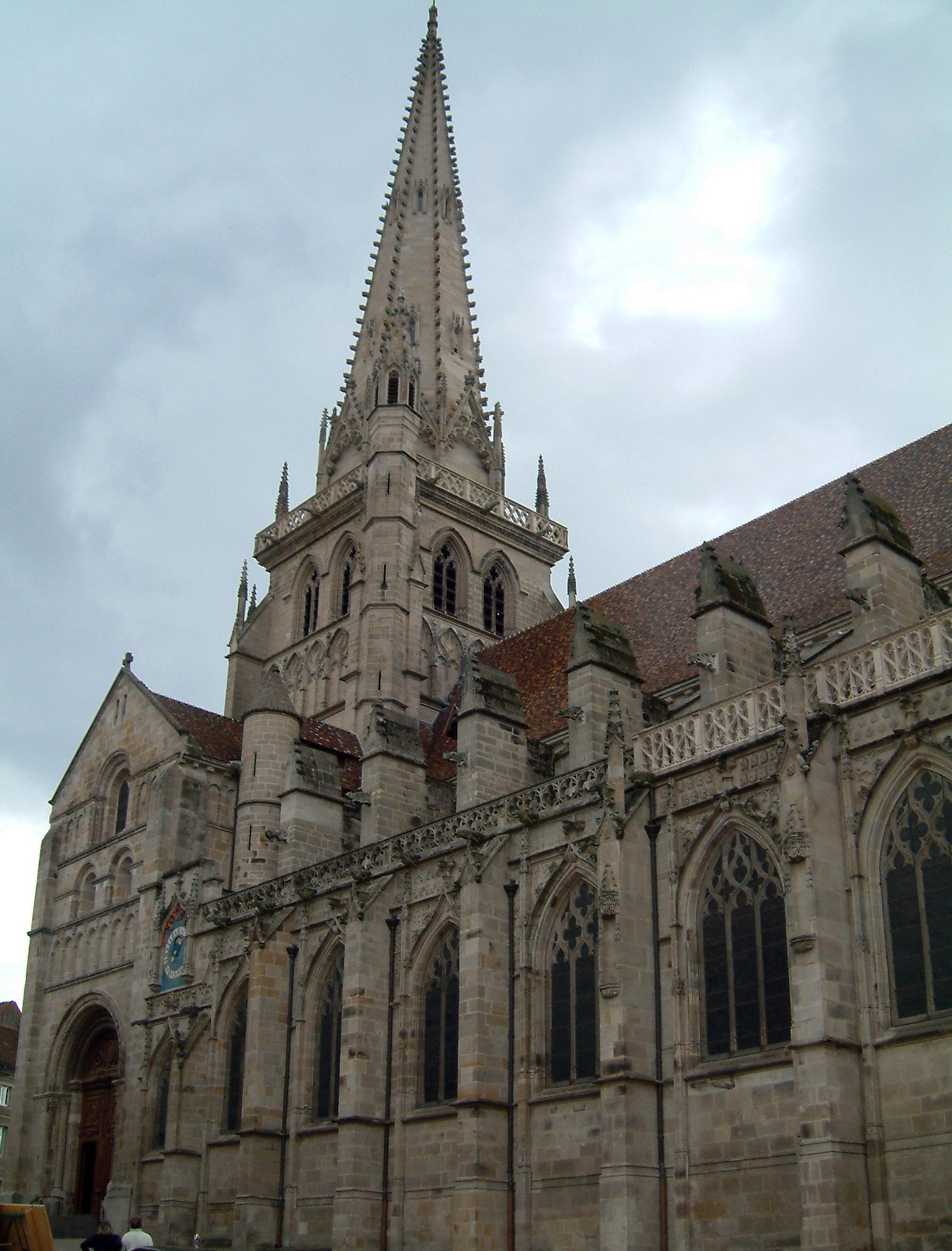
The Diocese of Autun (–Chalon-sur-Saône–Mâcon–Cluny) (Latin: Diocesis Aeduensis, Dioecesis Augustodunensis (–Cabillonensis–Matisconensis–Cluniacensis); French: Diocèse d'Autun (–Chalon-sur-Saône–Mâcon–Cluny)), more simply known as the Diocese of Autun, is a Latin Church diocese of the Catholic Church in France. The diocese comprises the entire Department of Saone et Loire, in the Region of Bourgogne.
The diocese was suffragan to the Archdiocese of Lyon under the Ancien Régime, and the Bishop of Autun held the post of Vicar of the Archbishop. The bishopric of Chalon-sur-Saône (since Roman times) and (early medieval) bishopric of Mâcon, also suffragans of Lyon, were united to Autun after the French Revolution by the Concordat signed by First Consul Napoleon Bonaparte and Pope Pius VII. For a short time, from 1802 to 1822, the enlarged diocese of Autun was suffragan to the Archbishop of Besançon. In 1822, however, Autun was again subject to the Archbishop of Lyon. The diocese of Autun is now, since 8 December 2002, suffragan to the Archbishop of Dijon. The current bishop of Autun is Benoît Rivière.
Christian teaching reached Autun at a very early period, as is known from a funeral inscription, in classical Greek, of a certain Pectorius which dates from the 3rd century.
Local recensions of the "Passion" of St. Symphorianus of Autun tell the story that, on the eve of the persecution of Septimius Severus, St. Polycarp assigned to Irenaeus two priests and a deacon (Benignus, Andochius and Thyrsus), all three of whom departed for Autun. St. Benignus went on to Langres, while the others remained at Autun. According to this legendary cycle, which dates from about the first half of the 6th century, it was not then believed at Autun that the city was an episcopal see in the time of St. Irenaeus (c. 140–211).
Another tradition current at Autun, however, names St. Amator as its first bishop and places his episcopacy about 250. The first bishop known to history, however, is Reticius, an ecclesiastical writer and contemporary of the Emperor Constantine I (306–337).
Euphronius, who became Bishop of Autun, is credited with the foundation of the first monastic house at Autun in 421, the Priory of S. Symphorien. In 1792 and 1793 the buildings were sold for the stone material and demolished. In 1993 the remains were classified as an historical monument by the French Government. In 452, Bishop Euphronius observed a comet, and sent a description of the event to Count Agrippinus, Magister Militum. Bishop Euphronius and Bishop Patiens were highly praised by Sidonius Apollinaris, son-in-law of the Emperor Avitus and Bishop of Clermont Ferrand, for conducting the election of a bishop of Chalons in a particularly upright fashion, without simony, aristocratic favoritism, or submission to the popular will. In 472 Bishop Sidonius invited Bishop Euphronius to Bourges for the election of Sidonius' Metropolitan.
Beginning in 599, the Bishop of Autun enjoyed until the late 20th century the right of wearing the pallium of a metropolitan bishop, in virtue of a privilege granted to Bishop Syagrius and his See by Pope Gregory I (590–604). Autun was to be a metropolis throughout its own locality, with second place in Gaul after Lugdunum. Gregory was very eager to have a church council in France to stamp out the vice of simony, and he appealed to Queen Brunhilda to use her influence to organize it; he especially recommended Bishop Syagrius of Autun to the Queen as his most reliable agent.
During the Merovingian era Autun was a politically important diocese. Two Bishops figured prominently in political affairs: Syagrius of Autun, bishop during the second half of the 6th century, a contemporary of Germanus, bishop of Paris, who was a native of Autun; and Leodegar (St. Léger), bishop from 663 to 680, who came into conflict with Ebroin, Mayor of the Palace of Neustria, and was put to death by order of Theoderic III.
Hub AI
Diocese of Autun AI simulator
(@Diocese of Autun_simulator)
Diocese of Autun
The Diocese of Autun (–Chalon-sur-Saône–Mâcon–Cluny) (Latin: Diocesis Aeduensis, Dioecesis Augustodunensis (–Cabillonensis–Matisconensis–Cluniacensis); French: Diocèse d'Autun (–Chalon-sur-Saône–Mâcon–Cluny)), more simply known as the Diocese of Autun, is a Latin Church diocese of the Catholic Church in France. The diocese comprises the entire Department of Saone et Loire, in the Region of Bourgogne.
The diocese was suffragan to the Archdiocese of Lyon under the Ancien Régime, and the Bishop of Autun held the post of Vicar of the Archbishop. The bishopric of Chalon-sur-Saône (since Roman times) and (early medieval) bishopric of Mâcon, also suffragans of Lyon, were united to Autun after the French Revolution by the Concordat signed by First Consul Napoleon Bonaparte and Pope Pius VII. For a short time, from 1802 to 1822, the enlarged diocese of Autun was suffragan to the Archbishop of Besançon. In 1822, however, Autun was again subject to the Archbishop of Lyon. The diocese of Autun is now, since 8 December 2002, suffragan to the Archbishop of Dijon. The current bishop of Autun is Benoît Rivière.
Christian teaching reached Autun at a very early period, as is known from a funeral inscription, in classical Greek, of a certain Pectorius which dates from the 3rd century.
Local recensions of the "Passion" of St. Symphorianus of Autun tell the story that, on the eve of the persecution of Septimius Severus, St. Polycarp assigned to Irenaeus two priests and a deacon (Benignus, Andochius and Thyrsus), all three of whom departed for Autun. St. Benignus went on to Langres, while the others remained at Autun. According to this legendary cycle, which dates from about the first half of the 6th century, it was not then believed at Autun that the city was an episcopal see in the time of St. Irenaeus (c. 140–211).
Another tradition current at Autun, however, names St. Amator as its first bishop and places his episcopacy about 250. The first bishop known to history, however, is Reticius, an ecclesiastical writer and contemporary of the Emperor Constantine I (306–337).
Euphronius, who became Bishop of Autun, is credited with the foundation of the first monastic house at Autun in 421, the Priory of S. Symphorien. In 1792 and 1793 the buildings were sold for the stone material and demolished. In 1993 the remains were classified as an historical monument by the French Government. In 452, Bishop Euphronius observed a comet, and sent a description of the event to Count Agrippinus, Magister Militum. Bishop Euphronius and Bishop Patiens were highly praised by Sidonius Apollinaris, son-in-law of the Emperor Avitus and Bishop of Clermont Ferrand, for conducting the election of a bishop of Chalons in a particularly upright fashion, without simony, aristocratic favoritism, or submission to the popular will. In 472 Bishop Sidonius invited Bishop Euphronius to Bourges for the election of Sidonius' Metropolitan.
Beginning in 599, the Bishop of Autun enjoyed until the late 20th century the right of wearing the pallium of a metropolitan bishop, in virtue of a privilege granted to Bishop Syagrius and his See by Pope Gregory I (590–604). Autun was to be a metropolis throughout its own locality, with second place in Gaul after Lugdunum. Gregory was very eager to have a church council in France to stamp out the vice of simony, and he appealed to Queen Brunhilda to use her influence to organize it; he especially recommended Bishop Syagrius of Autun to the Queen as his most reliable agent.
During the Merovingian era Autun was a politically important diocese. Two Bishops figured prominently in political affairs: Syagrius of Autun, bishop during the second half of the 6th century, a contemporary of Germanus, bishop of Paris, who was a native of Autun; and Leodegar (St. Léger), bishop from 663 to 680, who came into conflict with Ebroin, Mayor of the Palace of Neustria, and was put to death by order of Theoderic III.
Recent media