



Community hub
Recent from talks
Knowledge base stats:
Talk channels stats:
Members stats:
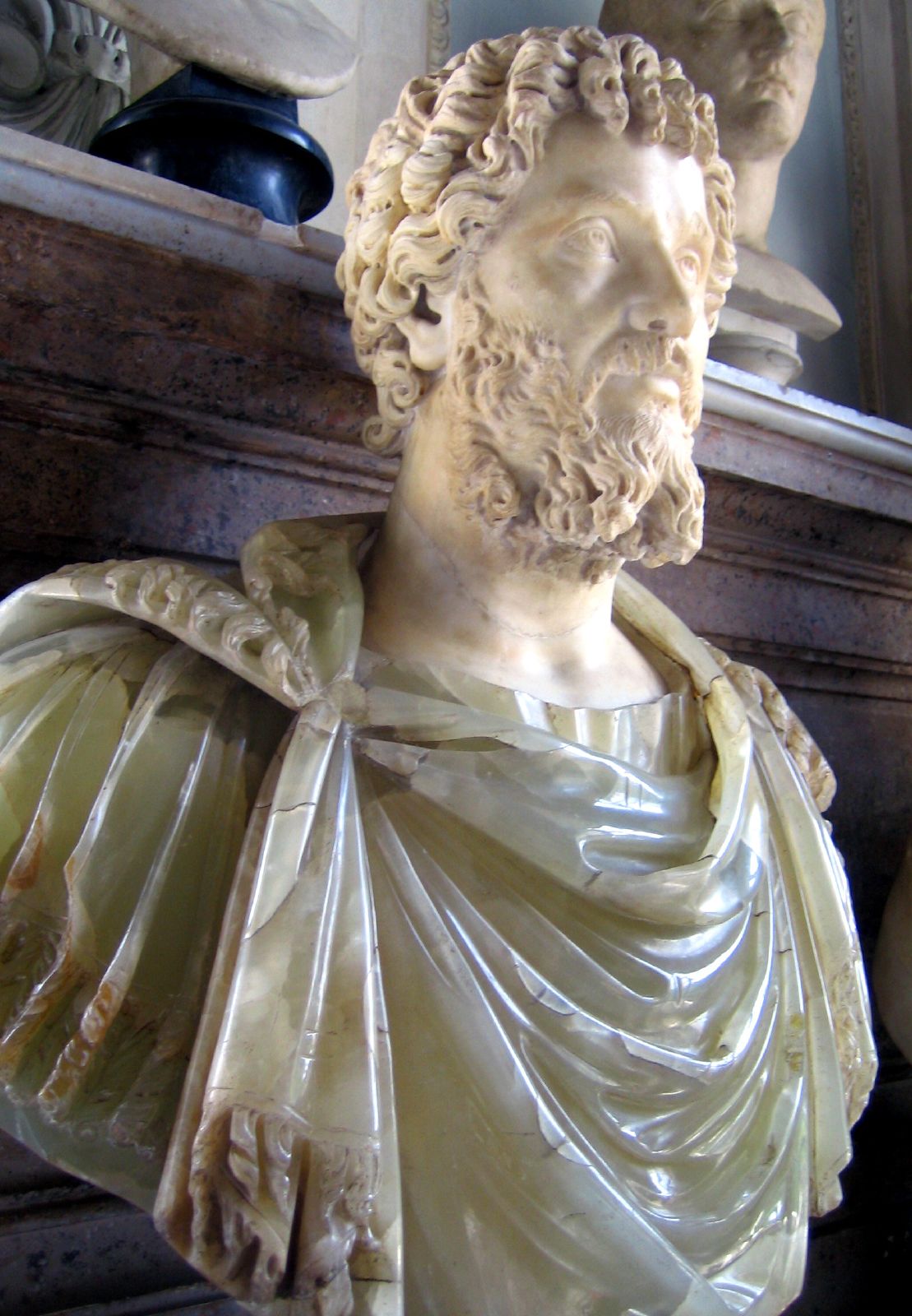
Septimius Severus
Lucius Septimius Severus (/səˈvɪərəs/; Latin: [ˈɫuːkiʊs sɛpˈtɪmiʊs sɛˈweːrʊs]; 11 April 145 – 4 February 211) was Roman emperor from 193 to 211. He was born in Leptis Magna, Libya in the Roman province of Africa. As a young man he advanced through the customary succession of offices under the reigns of Marcus Aurelius and Commodus. Severus was the final contender to seize power after the death of the emperor Pertinax in 193 during the Year of the Five Emperors.
After deposing and killing the incumbent emperor Didius Julianus, Severus fought his rival claimants, the Roman generals Pescennius Niger and Clodius Albinus. Niger was defeated in 194 at the Battle of Issus in Cilicia. Later that year Severus waged a short punitive campaign beyond the eastern frontier, annexing the Kingdom of Osroene as a new province. Severus defeated Albinus three years later at the Battle of Lugdunum in Gaul. Following the consolidation of his rule over the western provinces, Severus waged another brief, more successful war in the east against the Parthian Empire, sacking their capital Ctesiphon in 197 and expanding the eastern frontier to the Tigris. He then enlarged and fortified the Limes Arabicus in Arabia Petraea. In 202, he campaigned in Africa and Mauretania against the Garamantes, capturing their capital Garama, and expanding the Limes Tripolitanus along the southern desert frontier of the empire.
With his second wife, Julia Domna, Severus had two sons; the elder, Caracalla, was proclaimed Augustus, or co-emperor, in 198, and the younger, Geta, in 209. Severus travelled to Britain in 208, strengthening Hadrian's Wall and reoccupying the Antonine Wall. In 209 he invaded Caledonia (modern Scotland) with an army of 50,000 men but his ambitions were cut short when he died of an infectious disease in early 211 at Eboracum (modern York). His sons, advised by Julia Domna, succeeded him, thus founding the Severan dynasty. It was the last dynasty of the Roman Empire before the Crisis of the Third Century.
Born on 11 April 145 at Leptis Magna (in present-day Libya) as the son of Publius Septimius Geta and Fulvia Pia, Septimius Severus came from a wealthy and distinguished family of equestrian rank. On his mother's side, he descended from the Italian Fulvii's and on his father side, Publius Septimius Geta, hailed from a family of Punic origin. He was described as "Libyan by race", by the Roman historian and senator Cassius Dio. Due to his family background he is considered the first provincial emperor, as he was the first emperor not only born in the provinces but also into a provincial family of non-Italian origin. Severus's father, an obscure provincial, held no major political status, but he had two cousins, Publius Septimius Aper and Gaius Septimius Severus, who served as consuls under the emperor Antoninus Pius r. 138–161. His mother's ancestors had moved from Italy to North Africa; they belonged to the gens Fulvia, an Italian patrician family that originated in Tusculum.
Septimius Severus had two siblings: an elder brother, Publius Septimius Geta; and a younger sister, Septimia Octavilla. Severus's maternal cousin was the praetorian prefect and consul Gaius Fulvius Plautianus. Septimius Severus grew up in Leptis Magna and was a native Punic speaker , but he was also educated in Latin and Greek, which he spoke with a slight accent. Little else is known of the young Severus's education but, according to Cassius Dio, the boy had been eager for more education than he actually received. Presumably, Severus received lessons in oratory: at the age of 17, he gave his first public speech.
Severus sought a public career in Rome in around 162. At the recommendation of his relative Gaius Septimius Severus, the emperor Marcus Aurelius (r. 161–180) granted him entry into the senatorial ranks. Membership in the senatorial order was a prerequisite to attain positions within the cursus honorum and to gain entry into the Roman Senate. Nevertheless, it appears that Severus's career during the 160s met with some difficulties.
It is likely that he served as a vigintivir in Rome, overseeing road maintenance in or near the city, and he may have appeared in court as an advocate. At the time of Marcus Aurelius, he was the State Attorney (Advocatus fisci). However, he omitted the military tribunate from the cursus honorum and had to delay his quaestorship until he had reached the required minimum age of 25. To make matters worse, the Antonine Plague swept through the capital in 166.
With his career at a halt, Severus decided to temporarily return to Leptis, where the climate was healthier. According to the Historia Augusta, a usually unreliable source, he was prosecuted for adultery during this time but the case was ultimately dismissed. At the end of 169, Severus was of the required age to become a quaestor and journeyed back to Rome. On 5 December, he took office and was officially enrolled in the Roman Senate. Between 170 and 180 his activities went largely unrecorded, in spite of the fact that he occupied an impressive number of posts in quick succession. The Antonine Plague had thinned the senatorial ranks and, with capable men now in short supply, Severus's career advanced more steadily than it otherwise might have.
Hub AI
Septimius Severus AI simulator
(@Septimius Severus_simulator)
Septimius Severus
Lucius Septimius Severus (/səˈvɪərəs/; Latin: [ˈɫuːkiʊs sɛpˈtɪmiʊs sɛˈweːrʊs]; 11 April 145 – 4 February 211) was Roman emperor from 193 to 211. He was born in Leptis Magna, Libya in the Roman province of Africa. As a young man he advanced through the customary succession of offices under the reigns of Marcus Aurelius and Commodus. Severus was the final contender to seize power after the death of the emperor Pertinax in 193 during the Year of the Five Emperors.
After deposing and killing the incumbent emperor Didius Julianus, Severus fought his rival claimants, the Roman generals Pescennius Niger and Clodius Albinus. Niger was defeated in 194 at the Battle of Issus in Cilicia. Later that year Severus waged a short punitive campaign beyond the eastern frontier, annexing the Kingdom of Osroene as a new province. Severus defeated Albinus three years later at the Battle of Lugdunum in Gaul. Following the consolidation of his rule over the western provinces, Severus waged another brief, more successful war in the east against the Parthian Empire, sacking their capital Ctesiphon in 197 and expanding the eastern frontier to the Tigris. He then enlarged and fortified the Limes Arabicus in Arabia Petraea. In 202, he campaigned in Africa and Mauretania against the Garamantes, capturing their capital Garama, and expanding the Limes Tripolitanus along the southern desert frontier of the empire.
With his second wife, Julia Domna, Severus had two sons; the elder, Caracalla, was proclaimed Augustus, or co-emperor, in 198, and the younger, Geta, in 209. Severus travelled to Britain in 208, strengthening Hadrian's Wall and reoccupying the Antonine Wall. In 209 he invaded Caledonia (modern Scotland) with an army of 50,000 men but his ambitions were cut short when he died of an infectious disease in early 211 at Eboracum (modern York). His sons, advised by Julia Domna, succeeded him, thus founding the Severan dynasty. It was the last dynasty of the Roman Empire before the Crisis of the Third Century.
Born on 11 April 145 at Leptis Magna (in present-day Libya) as the son of Publius Septimius Geta and Fulvia Pia, Septimius Severus came from a wealthy and distinguished family of equestrian rank. On his mother's side, he descended from the Italian Fulvii's and on his father side, Publius Septimius Geta, hailed from a family of Punic origin. He was described as "Libyan by race", by the Roman historian and senator Cassius Dio. Due to his family background he is considered the first provincial emperor, as he was the first emperor not only born in the provinces but also into a provincial family of non-Italian origin. Severus's father, an obscure provincial, held no major political status, but he had two cousins, Publius Septimius Aper and Gaius Septimius Severus, who served as consuls under the emperor Antoninus Pius r. 138–161. His mother's ancestors had moved from Italy to North Africa; they belonged to the gens Fulvia, an Italian patrician family that originated in Tusculum.
Septimius Severus had two siblings: an elder brother, Publius Septimius Geta; and a younger sister, Septimia Octavilla. Severus's maternal cousin was the praetorian prefect and consul Gaius Fulvius Plautianus. Septimius Severus grew up in Leptis Magna and was a native Punic speaker , but he was also educated in Latin and Greek, which he spoke with a slight accent. Little else is known of the young Severus's education but, according to Cassius Dio, the boy had been eager for more education than he actually received. Presumably, Severus received lessons in oratory: at the age of 17, he gave his first public speech.
Severus sought a public career in Rome in around 162. At the recommendation of his relative Gaius Septimius Severus, the emperor Marcus Aurelius (r. 161–180) granted him entry into the senatorial ranks. Membership in the senatorial order was a prerequisite to attain positions within the cursus honorum and to gain entry into the Roman Senate. Nevertheless, it appears that Severus's career during the 160s met with some difficulties.
It is likely that he served as a vigintivir in Rome, overseeing road maintenance in or near the city, and he may have appeared in court as an advocate. At the time of Marcus Aurelius, he was the State Attorney (Advocatus fisci). However, he omitted the military tribunate from the cursus honorum and had to delay his quaestorship until he had reached the required minimum age of 25. To make matters worse, the Antonine Plague swept through the capital in 166.
With his career at a halt, Severus decided to temporarily return to Leptis, where the climate was healthier. According to the Historia Augusta, a usually unreliable source, he was prosecuted for adultery during this time but the case was ultimately dismissed. At the end of 169, Severus was of the required age to become a quaestor and journeyed back to Rome. On 5 December, he took office and was officially enrolled in the Roman Senate. Between 170 and 180 his activities went largely unrecorded, in spite of the fact that he occupied an impressive number of posts in quick succession. The Antonine Plague had thinned the senatorial ranks and, with capable men now in short supply, Severus's career advanced more steadily than it otherwise might have.