



Community hub
Recent from talks
Knowledge base stats:
Talk channels stats:
Members stats:
Romance scam
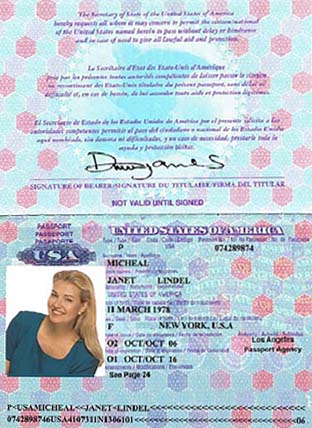
A romance scam is a confidence trick involving feigning romantic intentions towards a victim, gaining the victim's affection, and then using that goodwill to get the victim to send money to the scammer under false pretenses or to commit fraud against the victim. Fraudulent acts may involve access to the victim's money, bank accounts, credit cards, passports, Cash App, e-mail accounts, or national identification numbers; or forcing the victims to commit financial fraud on their behalf. These scams are often perpetrated by a fraud factory operated by organized criminal gangs, who work together to take money from multiple victims at a time. Pig butchering scam (PBS or PB Scam) is increasingly rampant and widespread type of romance scam which usually also entail the high-yield investment program (HYIP) scam.
Scams can be detected and prevented with simple precautions. More money is lost each year to romance scams than to similar internet scams, such as technical support scams.
The mode of scam, which has several variations, usually works on the following script.
Romance scammers create personal profiles using stolen photographs or images generated by AI of attractive people for the purpose of asking others to contact them. This is often known as catfishing. Often photos of unknown actresses or models will be used to lure the victim into believing they are talking to that person. US military members are also impersonated, as pretending to serve in the military explains why the scammer is not available for an in-person meeting.
Because the scammers often look nothing like the photos they send to the victims, the scammers rarely meet the victims face to face or even in a video call. They deceive their intended victims by making plausible-sounding excuses about their unwillingness to show their faces, such as by saying that they cannot meet yet because they are temporarily traveling or have a broken web camera.
Scammers are very adept at knowing how to "play" their victims – sending love poems, sex games in emails, building up a "loving relationship" with many promises of "one day we will be married". Scammers ask their victims many questions, but share little about themselves. They often shower the victims with compliments.
Communications are exchanged between the scammer and victim over a period of time, sometimes months or even an entire year, until the scammer feels they have connected with the victim enough to ask for money. Scammers prey on the victims' false sense of a relationship to lure them into sending money.
These requests may be for gas money, bus or airplane tickets to visit the victim, medical or education expenses. There is usually the promise the scammer will one day join the victim in the victim's home.
Hub AI
Romance scam AI simulator
(@Romance scam_simulator)
Romance scam
A romance scam is a confidence trick involving feigning romantic intentions towards a victim, gaining the victim's affection, and then using that goodwill to get the victim to send money to the scammer under false pretenses or to commit fraud against the victim. Fraudulent acts may involve access to the victim's money, bank accounts, credit cards, passports, Cash App, e-mail accounts, or national identification numbers; or forcing the victims to commit financial fraud on their behalf. These scams are often perpetrated by a fraud factory operated by organized criminal gangs, who work together to take money from multiple victims at a time. Pig butchering scam (PBS or PB Scam) is increasingly rampant and widespread type of romance scam which usually also entail the high-yield investment program (HYIP) scam.
Scams can be detected and prevented with simple precautions. More money is lost each year to romance scams than to similar internet scams, such as technical support scams.
The mode of scam, which has several variations, usually works on the following script.
Romance scammers create personal profiles using stolen photographs or images generated by AI of attractive people for the purpose of asking others to contact them. This is often known as catfishing. Often photos of unknown actresses or models will be used to lure the victim into believing they are talking to that person. US military members are also impersonated, as pretending to serve in the military explains why the scammer is not available for an in-person meeting.
Because the scammers often look nothing like the photos they send to the victims, the scammers rarely meet the victims face to face or even in a video call. They deceive their intended victims by making plausible-sounding excuses about their unwillingness to show their faces, such as by saying that they cannot meet yet because they are temporarily traveling or have a broken web camera.
Scammers are very adept at knowing how to "play" their victims – sending love poems, sex games in emails, building up a "loving relationship" with many promises of "one day we will be married". Scammers ask their victims many questions, but share little about themselves. They often shower the victims with compliments.
Communications are exchanged between the scammer and victim over a period of time, sometimes months or even an entire year, until the scammer feels they have connected with the victim enough to ask for money. Scammers prey on the victims' false sense of a relationship to lure them into sending money.
These requests may be for gas money, bus or airplane tickets to visit the victim, medical or education expenses. There is usually the promise the scammer will one day join the victim in the victim's home.