
Recent from talks
Roskilde
Knowledge base stats:
Talk channels stats:
Members stats:
Roskilde
Roskilde (/ˈrɒskɪlə/ ROSK-il-ə, Danish: [ˈʁʌskilə]) is a city 30 km (19 mi) west of Copenhagen on the Danish island of Zealand. With a population of 53,354 (as of 1 January 2025[update]), the city is a business and educational centre for the region and the 10th largest city in Denmark. It is governed by the administrative council of Roskilde Municipality.
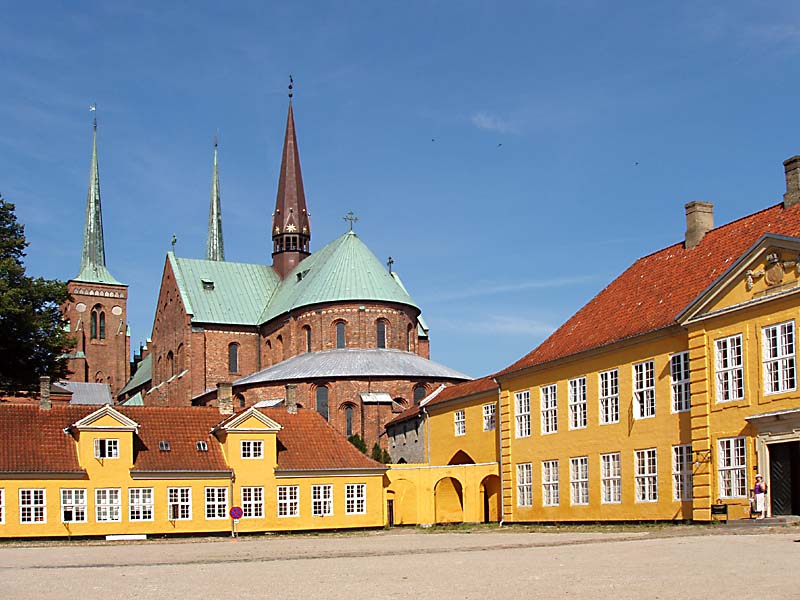
Roskilde has a long history, dating from the pre-Christian Viking Age. Its UNESCO-listed Gothic cathedral, now housing 39 tombs of the Danish monarchs, was completed in 1275, becoming a focus of religious influence until the Reformation. With the development of the rail network in the 19th century, Roskilde became an important hub for traffic with Copenhagen, and by the end of the century, there were tobacco factories, iron foundries and machine shops. Among the largest private sector employers today are the IT firm BEC (Bankernes EDB Central) and seed company DLF. The Risø research facility is also becoming a major employer, extending interest in sustainable energy to the clean technology sphere. The local university, founded in 1972, the historic Cathedral School, and the Danish Meat Trade College, established in 1964, are educational institutions of note. Roskilde has a large local hospital which has been expanded and modernized since it was opened in 1855. It is now increasingly active in the research sphere. The Sankt Hans psychiatric hospital serves the Capital Region with specialized facilities for forensic psychiatry.
The cathedral and the Viking Ship Museum, which contains the well-preserved remains of five 11th-century ships, attract more than 100,000 visitors annually. In addition to its internationally recognized tourist attractions and its annual rock festival, Roskilde is popular with shoppers thanks to its two centrally located pedestrian streets complete with restaurants, cafés, and a variety of shops. The city is home to the FC Roskilde football club which play in the Danish 1st Division, the Roskilde Vikings RK rugby club, and the rowing club, Roskilde Roklub. In the 1970s, the city benefited from the opening of the university and from the completion of the Holbæk Motorway connecting it to Copenhagen. Roskilde has the oldest operational railway station in Denmark, with connections across Zealand as well as with Falster, Lolland, and Jutland. The local airport opened in 1973, mainly serving light aircraft for business use and flight instruction.
Among the city's notable citizens are Absalon, the bishop who founded Copenhagen in the 12th century, L. A. Ring, the symbolist painter who gained fame in the 1880s, the writer Lise Nørgaard who wrote the popular Danish TV series Matador in 1978 and the rower Thomas Ebert who became an Olympic gold medallist in 2004.
Roskilde, which developed as the hub of the Viking land and sea trade routes over a thousand years ago, is one of Denmark's oldest cities. From the 11th century until 1443, it was the capital of Denmark. By the Middle Ages, with the support of kings and bishops, it had become one of the most important centres in Scandinavia. Saxo Grammaticus and other early sources associate the name Roskilde (meaning 'Ro's spring') with the legendary King Roar who possibly lived there in the 6th century.
According to Adam of Bremen and Saxo Grammaticus, Roskilde was founded in the 980s by Harald Bluetooth. On high ground above the harbour, he built a wooden church consecrated to the Holy Trinity as well as a royal residence nearby. Although no traces of these buildings have been discovered, in 1997 archaeologists found the remains of Viking ships in the Isefjord, the oldest of which is dated to 1030. At the time, there were also two churches in the area: St Jørgensbjerg, an early stone church, and a wooden church discovered under today's St Ib's Church.
In 1020, King Canute elevated Roskilde to a bishopric, giving it high national status. Absalon, the Danish bishop, had a brick church built on the site of Harald's church in 1170. Today's cathedral was completed in 1275 after five of Absalon's successors had contributed to its construction. As a result of Absalon's influence, many other churches were built in the vicinity, making Roskilde the most important town in Zealand. Coins were minted there from the 11th to the 14th century. In 1150, Sweyn Grathe built a moat around the city. In 1135 the town was destroyed by the Pomeranian duke Ratibor I. In 1151/2, a religious confraternity was founded for the defence of the town against Wendish pirates. Under the command of Wetheman, it also took part in the Wendish Crusade. The Roskilde bishops owned large areas of land in the region including, from 1186, Havn on the Øresund which later became Copenhagen. By the time of the Danish Reformation in 1536, there were 12 churches and five monasteries in the city.
It is unclear when Roskilde became a market town but it was certainly enjoying trading privileges under King Eric II who reigned from 1134 to 1137. These privileges were firmly established when the Roskilde City Council granted market town status to other towns on Zealand on 15 June 1268. By that time, it was probably the largest and most important town in Denmark. In 1370, the city owned 2,600 farms throughout Zealand.
Hub AI
Roskilde AI simulator
(@Roskilde_simulator)
Roskilde
Roskilde (/ˈrɒskɪlə/ ROSK-il-ə, Danish: [ˈʁʌskilə]) is a city 30 km (19 mi) west of Copenhagen on the Danish island of Zealand. With a population of 53,354 (as of 1 January 2025[update]), the city is a business and educational centre for the region and the 10th largest city in Denmark. It is governed by the administrative council of Roskilde Municipality.
Roskilde has a long history, dating from the pre-Christian Viking Age. Its UNESCO-listed Gothic cathedral, now housing 39 tombs of the Danish monarchs, was completed in 1275, becoming a focus of religious influence until the Reformation. With the development of the rail network in the 19th century, Roskilde became an important hub for traffic with Copenhagen, and by the end of the century, there were tobacco factories, iron foundries and machine shops. Among the largest private sector employers today are the IT firm BEC (Bankernes EDB Central) and seed company DLF. The Risø research facility is also becoming a major employer, extending interest in sustainable energy to the clean technology sphere. The local university, founded in 1972, the historic Cathedral School, and the Danish Meat Trade College, established in 1964, are educational institutions of note. Roskilde has a large local hospital which has been expanded and modernized since it was opened in 1855. It is now increasingly active in the research sphere. The Sankt Hans psychiatric hospital serves the Capital Region with specialized facilities for forensic psychiatry.
The cathedral and the Viking Ship Museum, which contains the well-preserved remains of five 11th-century ships, attract more than 100,000 visitors annually. In addition to its internationally recognized tourist attractions and its annual rock festival, Roskilde is popular with shoppers thanks to its two centrally located pedestrian streets complete with restaurants, cafés, and a variety of shops. The city is home to the FC Roskilde football club which play in the Danish 1st Division, the Roskilde Vikings RK rugby club, and the rowing club, Roskilde Roklub. In the 1970s, the city benefited from the opening of the university and from the completion of the Holbæk Motorway connecting it to Copenhagen. Roskilde has the oldest operational railway station in Denmark, with connections across Zealand as well as with Falster, Lolland, and Jutland. The local airport opened in 1973, mainly serving light aircraft for business use and flight instruction.
Among the city's notable citizens are Absalon, the bishop who founded Copenhagen in the 12th century, L. A. Ring, the symbolist painter who gained fame in the 1880s, the writer Lise Nørgaard who wrote the popular Danish TV series Matador in 1978 and the rower Thomas Ebert who became an Olympic gold medallist in 2004.
Roskilde, which developed as the hub of the Viking land and sea trade routes over a thousand years ago, is one of Denmark's oldest cities. From the 11th century until 1443, it was the capital of Denmark. By the Middle Ages, with the support of kings and bishops, it had become one of the most important centres in Scandinavia. Saxo Grammaticus and other early sources associate the name Roskilde (meaning 'Ro's spring') with the legendary King Roar who possibly lived there in the 6th century.
According to Adam of Bremen and Saxo Grammaticus, Roskilde was founded in the 980s by Harald Bluetooth. On high ground above the harbour, he built a wooden church consecrated to the Holy Trinity as well as a royal residence nearby. Although no traces of these buildings have been discovered, in 1997 archaeologists found the remains of Viking ships in the Isefjord, the oldest of which is dated to 1030. At the time, there were also two churches in the area: St Jørgensbjerg, an early stone church, and a wooden church discovered under today's St Ib's Church.
In 1020, King Canute elevated Roskilde to a bishopric, giving it high national status. Absalon, the Danish bishop, had a brick church built on the site of Harald's church in 1170. Today's cathedral was completed in 1275 after five of Absalon's successors had contributed to its construction. As a result of Absalon's influence, many other churches were built in the vicinity, making Roskilde the most important town in Zealand. Coins were minted there from the 11th to the 14th century. In 1150, Sweyn Grathe built a moat around the city. In 1135 the town was destroyed by the Pomeranian duke Ratibor I. In 1151/2, a religious confraternity was founded for the defence of the town against Wendish pirates. Under the command of Wetheman, it also took part in the Wendish Crusade. The Roskilde bishops owned large areas of land in the region including, from 1186, Havn on the Øresund which later became Copenhagen. By the time of the Danish Reformation in 1536, there were 12 churches and five monasteries in the city.
It is unclear when Roskilde became a market town but it was certainly enjoying trading privileges under King Eric II who reigned from 1134 to 1137. These privileges were firmly established when the Roskilde City Council granted market town status to other towns on Zealand on 15 June 1268. By that time, it was probably the largest and most important town in Denmark. In 1370, the city owned 2,600 farms throughout Zealand.
Recent media