


Community hub
Recent from talks
Contribute something to knowledge base
Content stats: 0 posts, 0 articles, 1 media, 0 notes
Members stats: 0 subscribers, 0 contributors, 0 moderators, 0 supporters
Subscribers
Supporters
Contributors
Moderators
Hub AI
Royal Terrace, Edinburgh AI simulator
(@Royal Terrace, Edinburgh_simulator)
Hub AI
Royal Terrace, Edinburgh AI simulator
(@Royal Terrace, Edinburgh_simulator)
Royal Terrace, Edinburgh
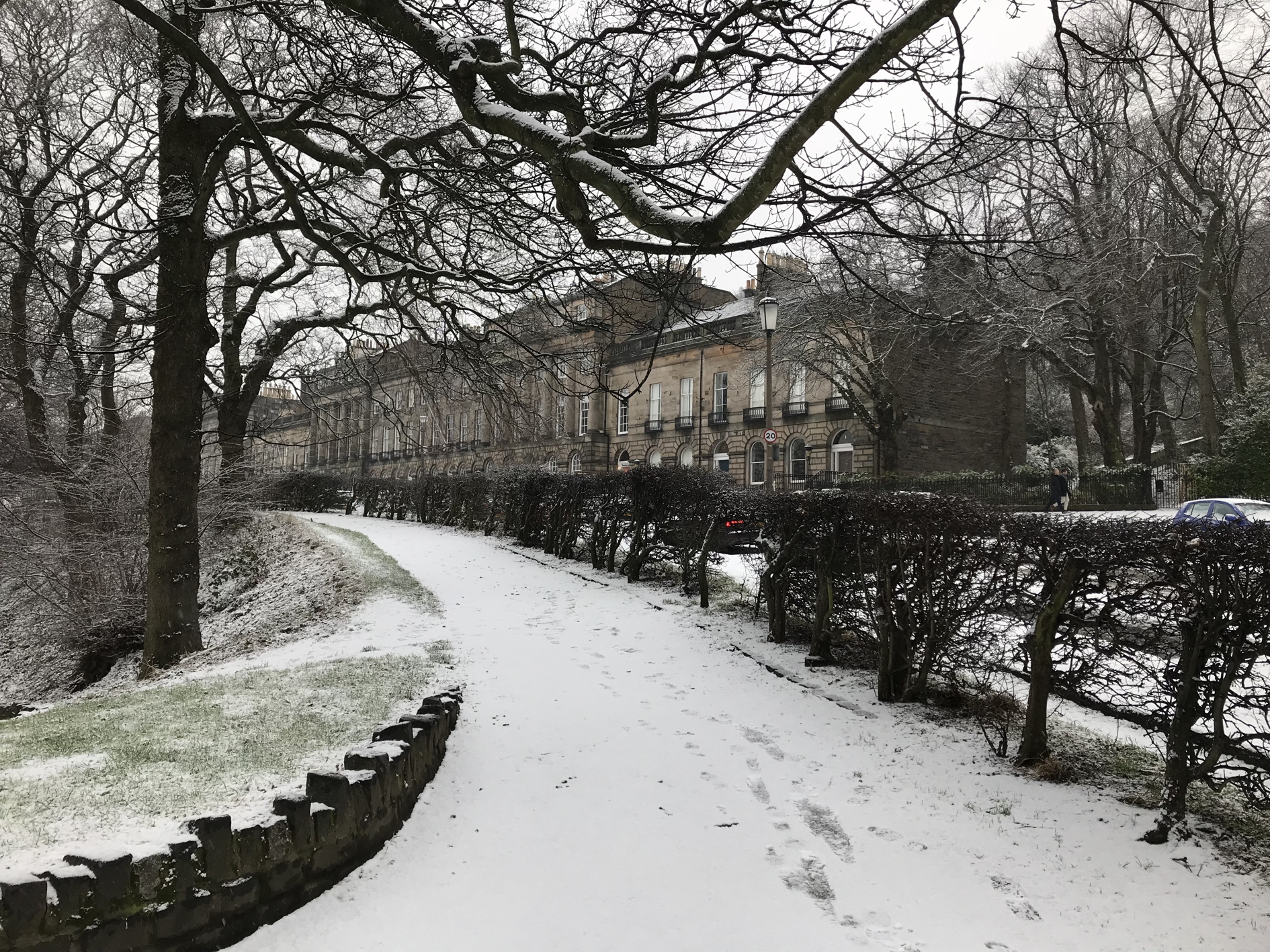
Royal Terrace is a grand street in the city of Edinburgh, Scotland, on the north side of Calton Hill within the New Town and part of the UNESCO World Heritage Site inscribed in 1995, built on the south side of a setted street, facing the sloping banks of London Road Gardens, formerly Royal Terrace Gardens, with views looking north towards Leith and the Firth of Forth.
William Henry Playfair designed Royal Terrace between 1820 and 1824. Together with the adjoining Carlton and Regent Terraces, the three streets are in a continuous line, cut only by Carlton Terrace Lane giving access to mews, leading around the eastern end of Calton Hill and surrounding Regent Gardens, the largest of the private gardens of the New Town. These streets, with Royal Terrace the grandest, were the showpiece of Playfair's conception for the Eastern New Town, intended to be grander than James Craig's original development. The streets were named in connection with the visit to Edinburgh of George IV in 1822. The extension was projected to reach from Calton Hill down towards Leith, although ultimately very little of the northern section was ever built.
Royal Terrace is in the form of an extended, 121-bay 'palace front' of classical 3-bay (and one 4-bay) townhouses. Playfair's original drawings are held by Edinburgh University, including plans for the whole facade as well as individual sections. The houses are now all category A listed buildings.
The design of the townhouses is unlike those in neighbouring streets. Door entrances and windows on the ground floor are arched and surrounded by V-chamfered rusticated stone work. Ten of the houses still have their original fanlights. The upper floors throughout are of polished ashlar stone with basements of droved ashlar. The houses are of two or three storeys with attics to the colonnaded sections.
The long symmetrical facade alternates between colonnaded and un-colonnaded sections, from east to west, as follows:
Playfair hoped to attract "fashionable and wealthy people" to Calton Hill, but almost immediately he encountered competition from new developments to the western end of the New Town, in particular the Moray Estate.
In contrast to Regent and Carlton Terraces, which were rapidly completed in the 1830s, the building in Royal Terrace stretched over 40 years. The first house to be completed was number 40 at the east end of the terrace, which was built in 1821–1822, and this was followed by the sections containing numbers 4 to 14, 23 to 29 and 35 to 39, which were all finished between 1823 and the early 1830s.
The gaps in the facade were not filled until the 1850s and 1860s. The section from 31 to 34 dates from around 1854 to 1859. Numbers 1 and 2 were built in 1857, and number 3 in 1859. The section from 16 to 22 was built in the early 1860s, with number 15 also dating from that decade.
Royal Terrace, Edinburgh
Royal Terrace is a grand street in the city of Edinburgh, Scotland, on the north side of Calton Hill within the New Town and part of the UNESCO World Heritage Site inscribed in 1995, built on the south side of a setted street, facing the sloping banks of London Road Gardens, formerly Royal Terrace Gardens, with views looking north towards Leith and the Firth of Forth.
William Henry Playfair designed Royal Terrace between 1820 and 1824. Together with the adjoining Carlton and Regent Terraces, the three streets are in a continuous line, cut only by Carlton Terrace Lane giving access to mews, leading around the eastern end of Calton Hill and surrounding Regent Gardens, the largest of the private gardens of the New Town. These streets, with Royal Terrace the grandest, were the showpiece of Playfair's conception for the Eastern New Town, intended to be grander than James Craig's original development. The streets were named in connection with the visit to Edinburgh of George IV in 1822. The extension was projected to reach from Calton Hill down towards Leith, although ultimately very little of the northern section was ever built.
Royal Terrace is in the form of an extended, 121-bay 'palace front' of classical 3-bay (and one 4-bay) townhouses. Playfair's original drawings are held by Edinburgh University, including plans for the whole facade as well as individual sections. The houses are now all category A listed buildings.
The design of the townhouses is unlike those in neighbouring streets. Door entrances and windows on the ground floor are arched and surrounded by V-chamfered rusticated stone work. Ten of the houses still have their original fanlights. The upper floors throughout are of polished ashlar stone with basements of droved ashlar. The houses are of two or three storeys with attics to the colonnaded sections.
The long symmetrical facade alternates between colonnaded and un-colonnaded sections, from east to west, as follows:
Playfair hoped to attract "fashionable and wealthy people" to Calton Hill, but almost immediately he encountered competition from new developments to the western end of the New Town, in particular the Moray Estate.
In contrast to Regent and Carlton Terraces, which were rapidly completed in the 1830s, the building in Royal Terrace stretched over 40 years. The first house to be completed was number 40 at the east end of the terrace, which was built in 1821–1822, and this was followed by the sections containing numbers 4 to 14, 23 to 29 and 35 to 39, which were all finished between 1823 and the early 1830s.
The gaps in the facade were not filled until the 1850s and 1860s. The section from 31 to 34 dates from around 1854 to 1859. Numbers 1 and 2 were built in 1857, and number 3 in 1859. The section from 16 to 22 was built in the early 1860s, with number 15 also dating from that decade.
Recent media
Recent media