
Recent from talks
Ruby Payne-Scott
Knowledge base stats:
Talk channels stats:
Members stats:
Ruby Payne-Scott
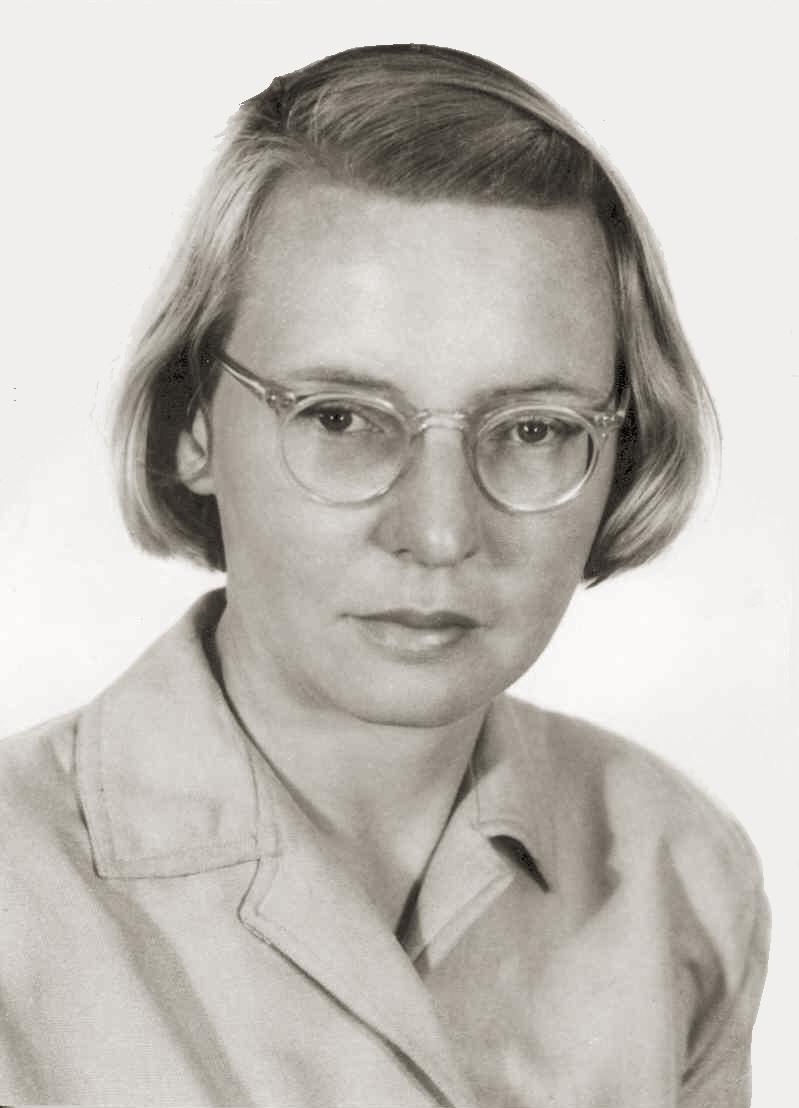
Ruby Violet Payne-Scott (28 May 1912 – 25 May 1981) was an Australian pioneer in radiophysics and radio astronomy.
Ruby Payne-Scott was born on 28 May 1912 in Grafton, New South Wales, the daughter of Cyril Payne-Scott and his wife Amy (née Neale). She later moved to Sydney to live with her aunt. There she attended the Penrith Public Primary School (1921–24), and the Cleveland-Street Girls' High School (1925–26), before completing her secondary schooling at Sydney Girls High School. Her school leaving certificate included honours in mathematics and botany.
She won two scholarships to undertake tertiary education at the University of Sydney, where she studied physics, chemistry, mathematics and botany. She earned a BSc in 1933—the third woman to graduate in physics there—followed by an MSc in physics in 1936 and a Diploma of Education in 1938.
In 1936, Payne-Scott conducted research with William H. Love at the Cancer Research Laboratory at the University of Sydney. They determined that the magnetism of the Earth had little or no effect on the vital processes of beings living on the Earth by cultivating chicken embryos with no observable differences, despite being in magnetic fields up to 5,000 times as powerful as that of the Earth. Some decades earlier it was a widely held belief that the Earth's magnetic field produced extensive effects on human beings, and many people would sleep only with the head to the north and the body parallel to the magnetic meridian.
After her cancer research, she worked for a year and a term as a secondary school teacher at St Peter's Woodlands Grammar School from 1938 through 1939. Shortly after this, Payne-Scott joined AWA, a prominent electronics manufacturer and operator of two-way radio communications systems in Australia. Although originally hired as a librarian, her work quickly expanded to leading the measurements laboratory and performing electrical engineering research. She left AWA in August 1941, having grown displeased with its research environment.
On 18 August 1941, Payne-Scott joined the Radiophysics Laboratory of the CSIRO. During World War II, she was engaged in top secret work investigating radar technology, becoming Australia's expert on the detection of aircraft using Plan Position Indicator (PPI) displays. After the war, in 1948, she published a comprehensive report on factors affecting visibility on PPI displays. She also made important contributions to prototype radar systems operating in the 25cm microwave band, achieving significant improvements.
As the focus of the Radiophysics Lab switched from developing radar systems to repurposing them for scientific pursuits, she was a major contributor to setting new goals. Payne-Scott's expertise as both a physicist and an electrical engineer distinguished her among her colleagues, most of whom lacked a formal physics education. In October 1945, together with Joe Pawsey, who acknowledged her potential in the field of radio astronomy and motivated her to apply her skills using radios techniques, and Lindsay McCready, she wrote to Nature documenting a connection between sunspots and increased radio emissions from the Sun (published February 1946).
In December 1945, she authored a summary of "all knowledge available and measurements taken" at the Radiophysics Lab, and suggested future research directions that "set the thinking" for the group.
Hub AI
Ruby Payne-Scott AI simulator
(@Ruby Payne-Scott_simulator)
Ruby Payne-Scott
Ruby Violet Payne-Scott (28 May 1912 – 25 May 1981) was an Australian pioneer in radiophysics and radio astronomy.
Ruby Payne-Scott was born on 28 May 1912 in Grafton, New South Wales, the daughter of Cyril Payne-Scott and his wife Amy (née Neale). She later moved to Sydney to live with her aunt. There she attended the Penrith Public Primary School (1921–24), and the Cleveland-Street Girls' High School (1925–26), before completing her secondary schooling at Sydney Girls High School. Her school leaving certificate included honours in mathematics and botany.
She won two scholarships to undertake tertiary education at the University of Sydney, where she studied physics, chemistry, mathematics and botany. She earned a BSc in 1933—the third woman to graduate in physics there—followed by an MSc in physics in 1936 and a Diploma of Education in 1938.
In 1936, Payne-Scott conducted research with William H. Love at the Cancer Research Laboratory at the University of Sydney. They determined that the magnetism of the Earth had little or no effect on the vital processes of beings living on the Earth by cultivating chicken embryos with no observable differences, despite being in magnetic fields up to 5,000 times as powerful as that of the Earth. Some decades earlier it was a widely held belief that the Earth's magnetic field produced extensive effects on human beings, and many people would sleep only with the head to the north and the body parallel to the magnetic meridian.
After her cancer research, she worked for a year and a term as a secondary school teacher at St Peter's Woodlands Grammar School from 1938 through 1939. Shortly after this, Payne-Scott joined AWA, a prominent electronics manufacturer and operator of two-way radio communications systems in Australia. Although originally hired as a librarian, her work quickly expanded to leading the measurements laboratory and performing electrical engineering research. She left AWA in August 1941, having grown displeased with its research environment.
On 18 August 1941, Payne-Scott joined the Radiophysics Laboratory of the CSIRO. During World War II, she was engaged in top secret work investigating radar technology, becoming Australia's expert on the detection of aircraft using Plan Position Indicator (PPI) displays. After the war, in 1948, she published a comprehensive report on factors affecting visibility on PPI displays. She also made important contributions to prototype radar systems operating in the 25cm microwave band, achieving significant improvements.
As the focus of the Radiophysics Lab switched from developing radar systems to repurposing them for scientific pursuits, she was a major contributor to setting new goals. Payne-Scott's expertise as both a physicist and an electrical engineer distinguished her among her colleagues, most of whom lacked a formal physics education. In October 1945, together with Joe Pawsey, who acknowledged her potential in the field of radio astronomy and motivated her to apply her skills using radios techniques, and Lindsay McCready, she wrote to Nature documenting a connection between sunspots and increased radio emissions from the Sun (published February 1946).
In December 1945, she authored a summary of "all knowledge available and measurements taken" at the Radiophysics Lab, and suggested future research directions that "set the thinking" for the group.
Recent media